

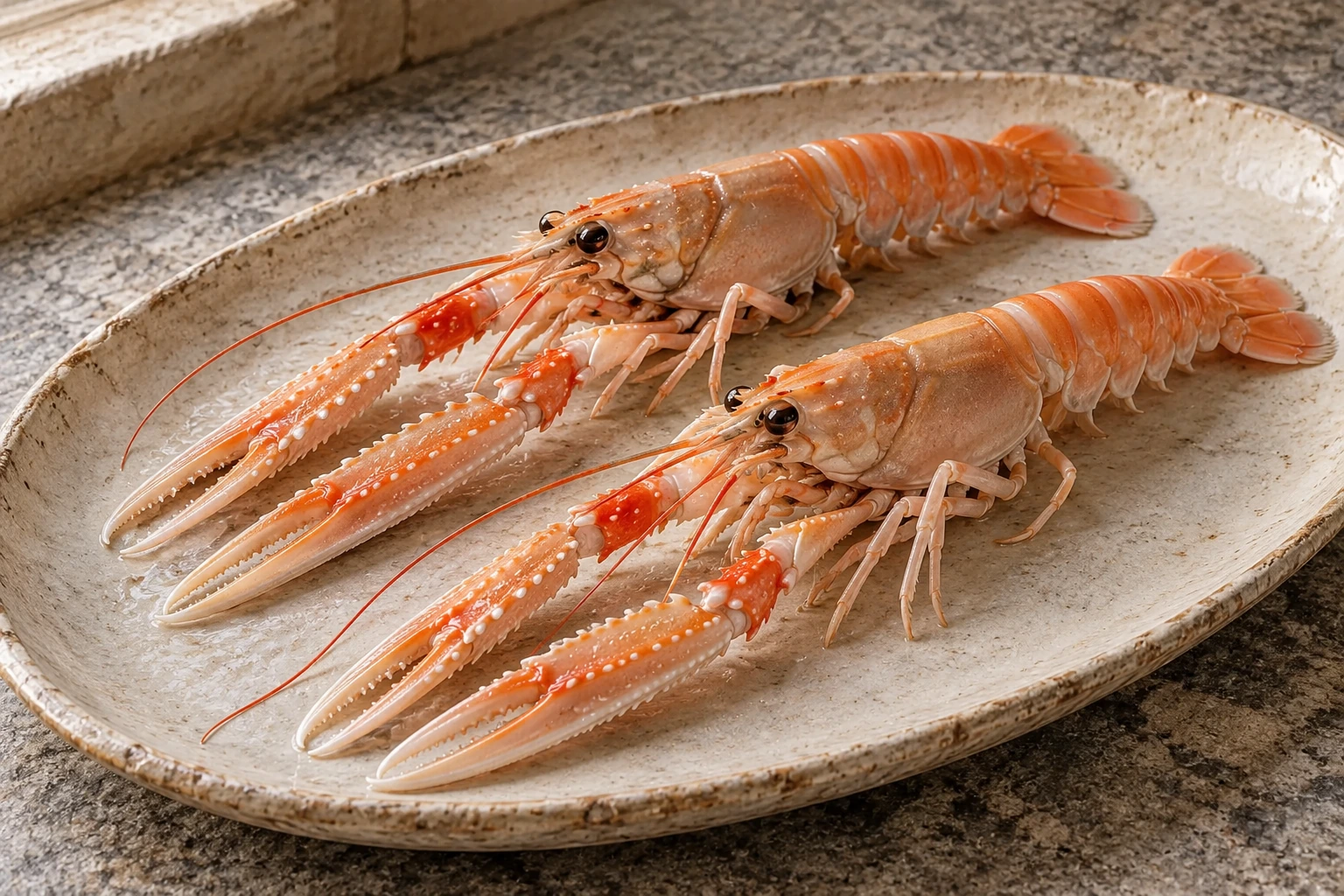
Langoustines
Scampi bring long claws, a pink-orange shell and delicate tail meat to Chioggia’s brodeto. Their shells are opened lengthways before cooking.
- Identity
- Nephrops norvegicus, a clawed decapod crustacean.
- Form for the pan
- Whole raw animals, shell opened lengthways.
Prepare the right cut
Ask the fishmonger to open the shell lengthways and prepare the scampi for the pan. Keep the meat supported by the shell rather than pulling it into small pieces. Follow the brodeto’s sequence, then lift the scampi carefully when serving so the opened shells and delicate meat stay together.
In Adriatic fish cooking
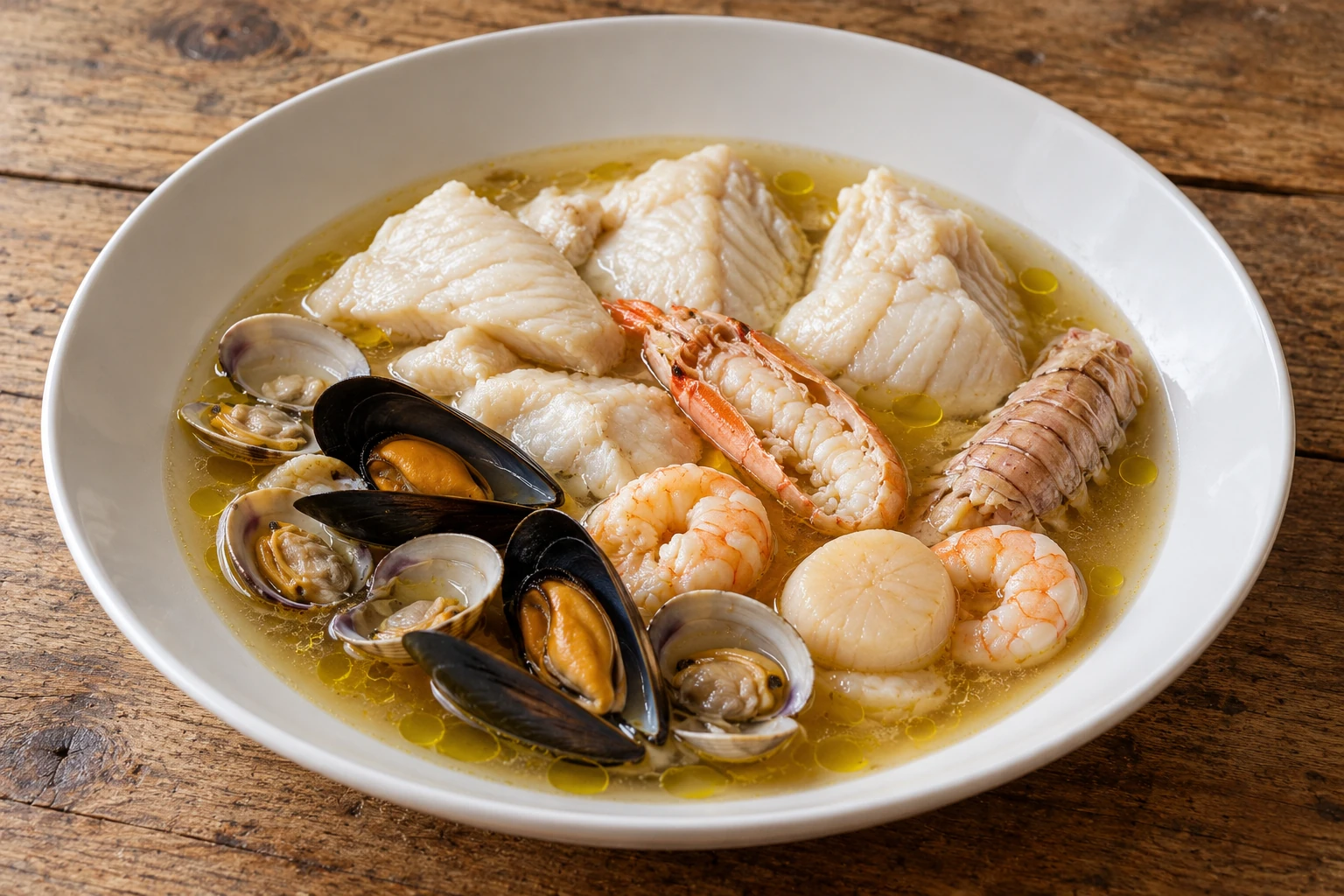
Scampi are small clawed crustaceans, distinct from both mazzancolle and cannocchie. Their narrow front claws and elongated body are useful features at the counter. In brodeto de pesse alla ciosota, the shell is cut lengthways and the scampi enter the pan with the shelled mazzancolle before the other seafood.
Cook with it
Confirm species and purchase form
Ask for whole raw Nephrops norvegicus. In English, scampi can also describe a prepared dish or a coated frozen product; langoustine names the animal more clearly. Whole shell-on animals match the preparation needed here better than precooked tails.
Keep it cold until cooking
Follow the seller’s storage directions and the package date. Keep raw seafood covered and refrigerated, separate from food ready to eat. Prepare the fish stock and seafood with clean tools and keep the cleaned pieces cold until their turn in the pan.
