

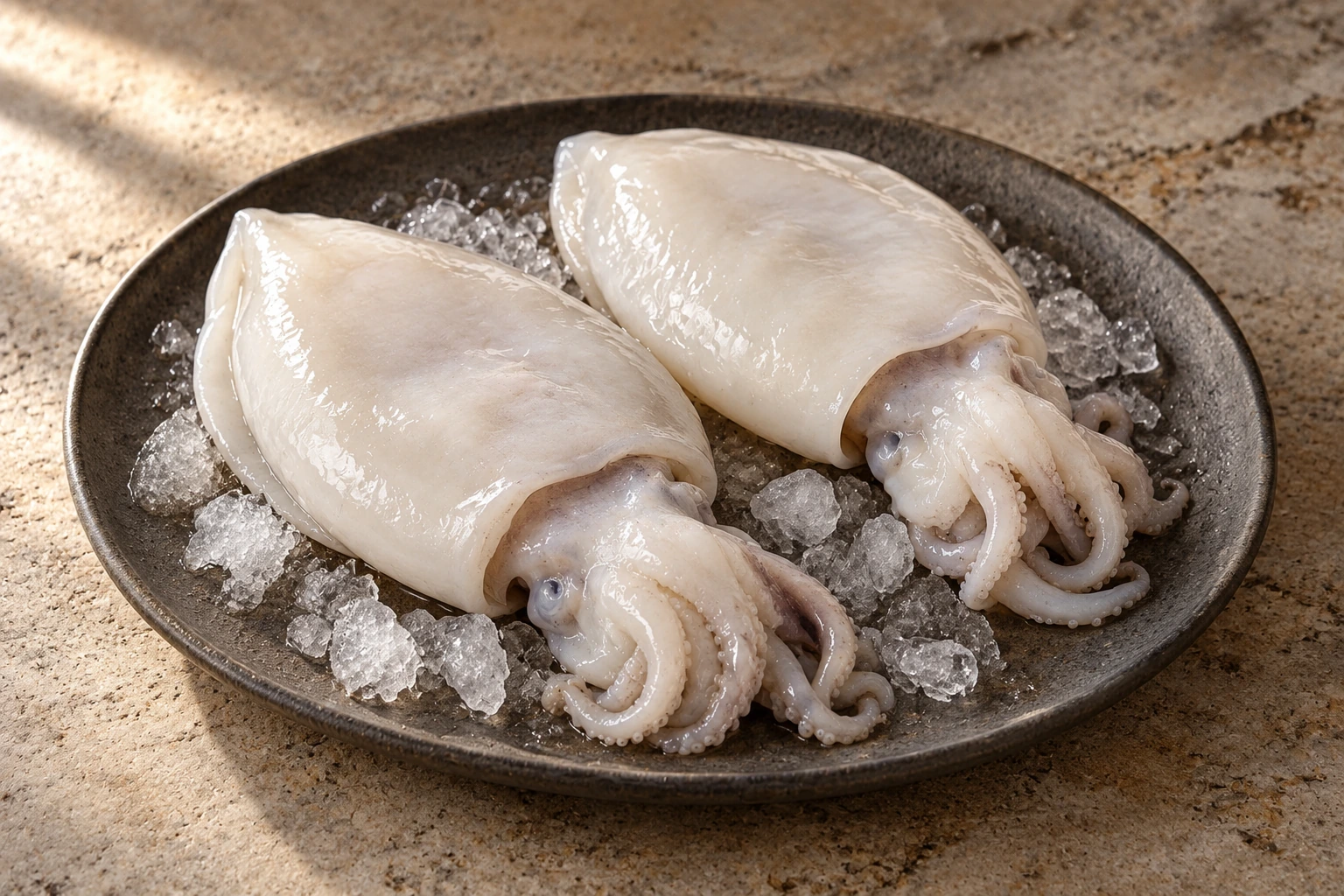
Cuttlefish
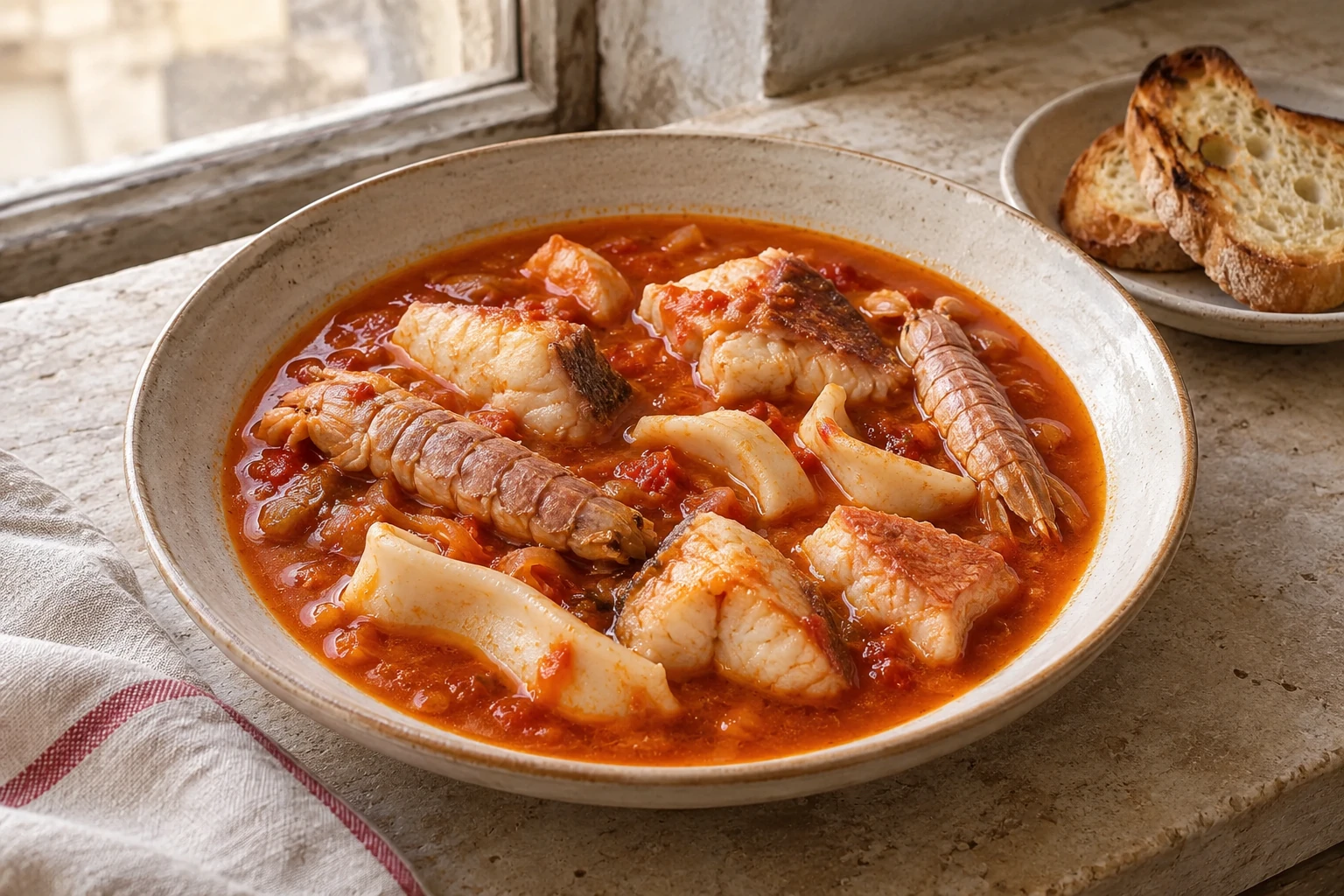
Cuttlefish gives brodetto alla fanese its first seafood addition. Its broad mantle is cut into pieces that cook before the more delicate fish and cannocchie.
- Identity
- Sepia officinalis, a cuttlefish of the family Sepiidae.
- Form for the pan
- Raw cleaned mantle and arms.
Prepare the right cut
Ask for cuttlefish cleaned of viscera, cuttlebone, beak and ink sac, then cut the mantle into even pieces. Check the head and arms for remaining hard parts. Use the cleaned weight for the recipe and add the pieces before the fish. Ink is a separate ingredient in other preparations; it does not belong automatically in this broth.
In Adriatic fish cooking
Seppia has an oval, flattened body edged by a narrow fin, with arms grouped around the mouth. Its firm flesh gives a different bite from the fish in brodetto alla fanese. The cleaned cuttlefish goes into the simmering tomato, water and vinegar base first; the fish follow, and the cannocchie are reserved for the final minutes.
Confirm species and purchase form
Ask for seppia, Sepia officinalis, and specify cleaned raw flesh. Read the species and origin even when the animal has been skinned white. Squid, baby octopus and bags of mixed cephalopod pieces are different ingredients, with different shapes and cooking behavior.
Keep it cold until cooking
Follow the seller’s storage directions and the package date. Keep raw seafood covered and refrigerated, separate from food ready to eat. Prepare the fish stock and seafood with clean tools and keep the cleaned pieces cold until their turn in the pan.
