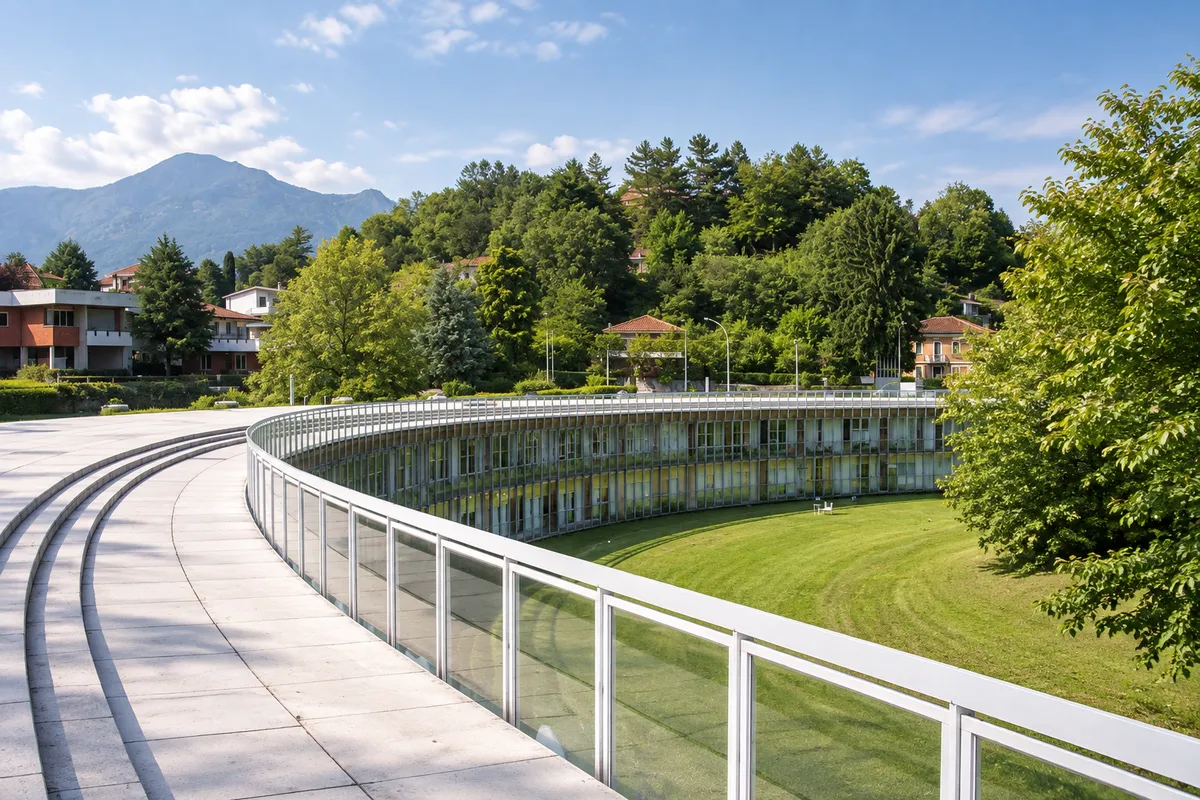
Ivrea’s industrial city is easiest to understand as a whole neighbourhood rather than a single monument. Founded in 1908 by Camillo Olivetti, the company grew from typewriters to mechanical calculators and office computers; the World Heritage property records how its factories, administration, social services and homes were planned together.
From the 1930s to the 1960s, Italian architects and planners shaped an urban landscape that UNESCO recognizes under criterion (iv). Adriano Olivetti’s Community Movement gave the project a social dimension: the city’s plan and public, residential and service buildings express a modern answer to changing industry, even though many non-residential buildings no longer serve their original purpose.
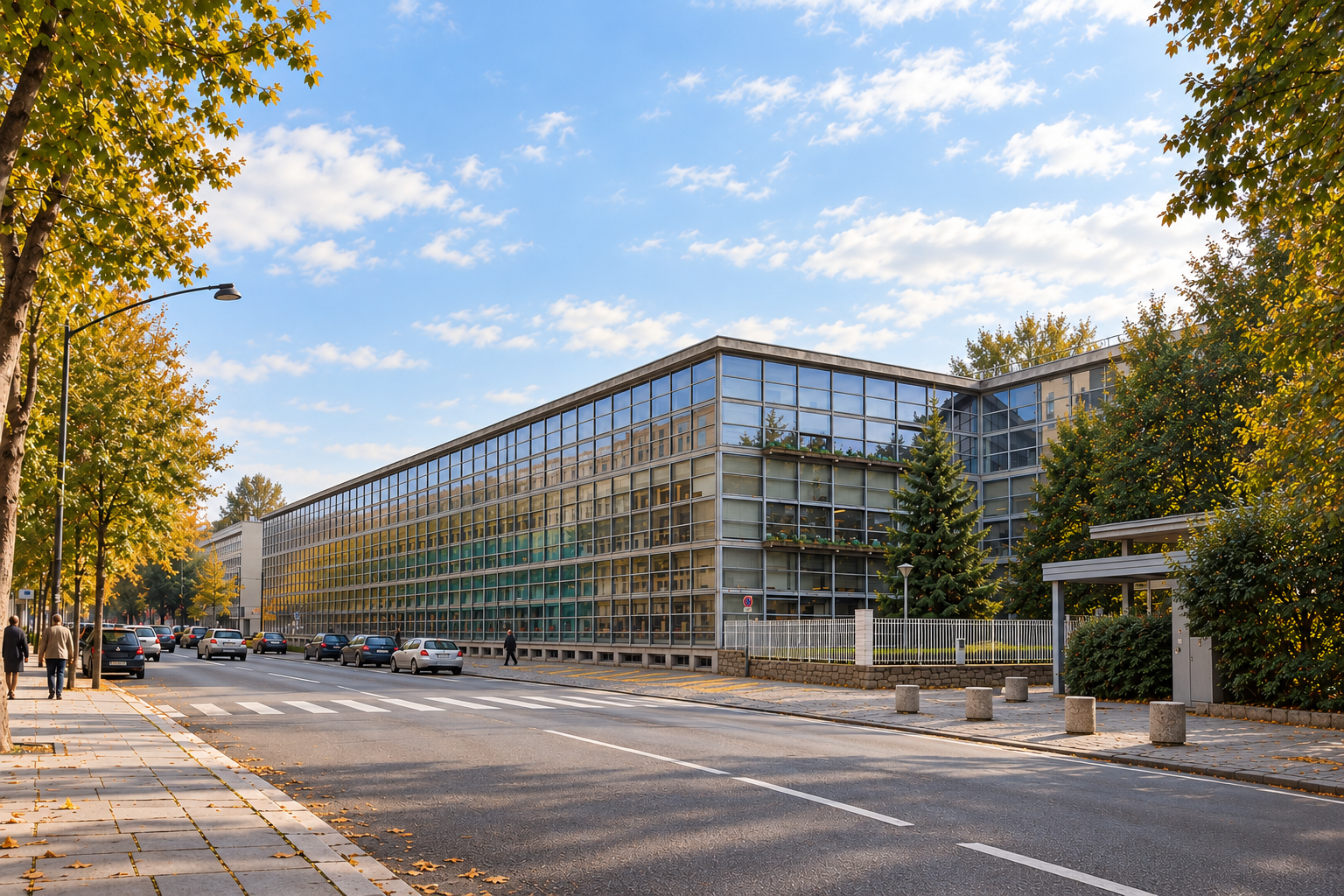
Along Via Jervis, the ICO workshops make that history tangible. Their long sequence of additions includes glass-fronted factory sections designed by Luigi Figini and Gino Pollini in the 1930s. Nearby, a nursery, social-service centre and employee housing show how the experiment extended beyond production. Most interiors are privately owned; the free Visitor Centre at Via Jervis 11 offers maps, a 3D model and examples of Olivetti products, while private interiors are accessible only on guided visits.
Begin at the Visitor Centre, then use the free VisitAMI app to orient yourself among the buildings. It is a living town, so treat the route as an outdoor architectural walk and check current Visitor Centre hours and guided-tour arrangements before setting out. For a wider itinerary, continue with our Piedmont guide.
At a glance
- Built
- Twentieth-century industrial modernism and social architecture
- UNESCO
- World Heritage Site