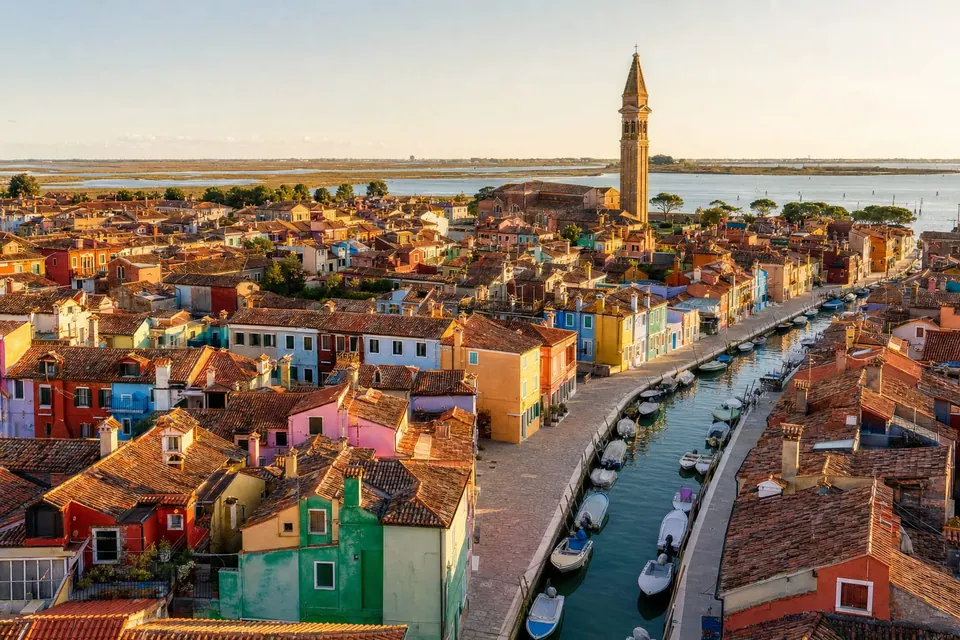
Fishermen on this lagoon island, administered for centuries from neighboring Torcello, are said to have painted their houses in bold, saturated colors so they could spot home through fog from far out on the water; whatever the origin, the tradition survives under a municipal rule that any repainting must match the shade already registered for that particular house.
Burano rose to prominence in the sixteenth century when women here began making needle lace, a technique reportedly introduced through Venice's ties with Cyprus, that went on to dress European courts; a handful of lacemakers, and the Museo del Merletto, keep the tradition visible today, though most lace sold in shop windows now is machine-made elsewhere. The island's leaning campanile, tilted for so long that Galileo himself is said to have taken an interest, rises over a population of under 3,000 packed into one of the most densely built stretches of the lagoon.