

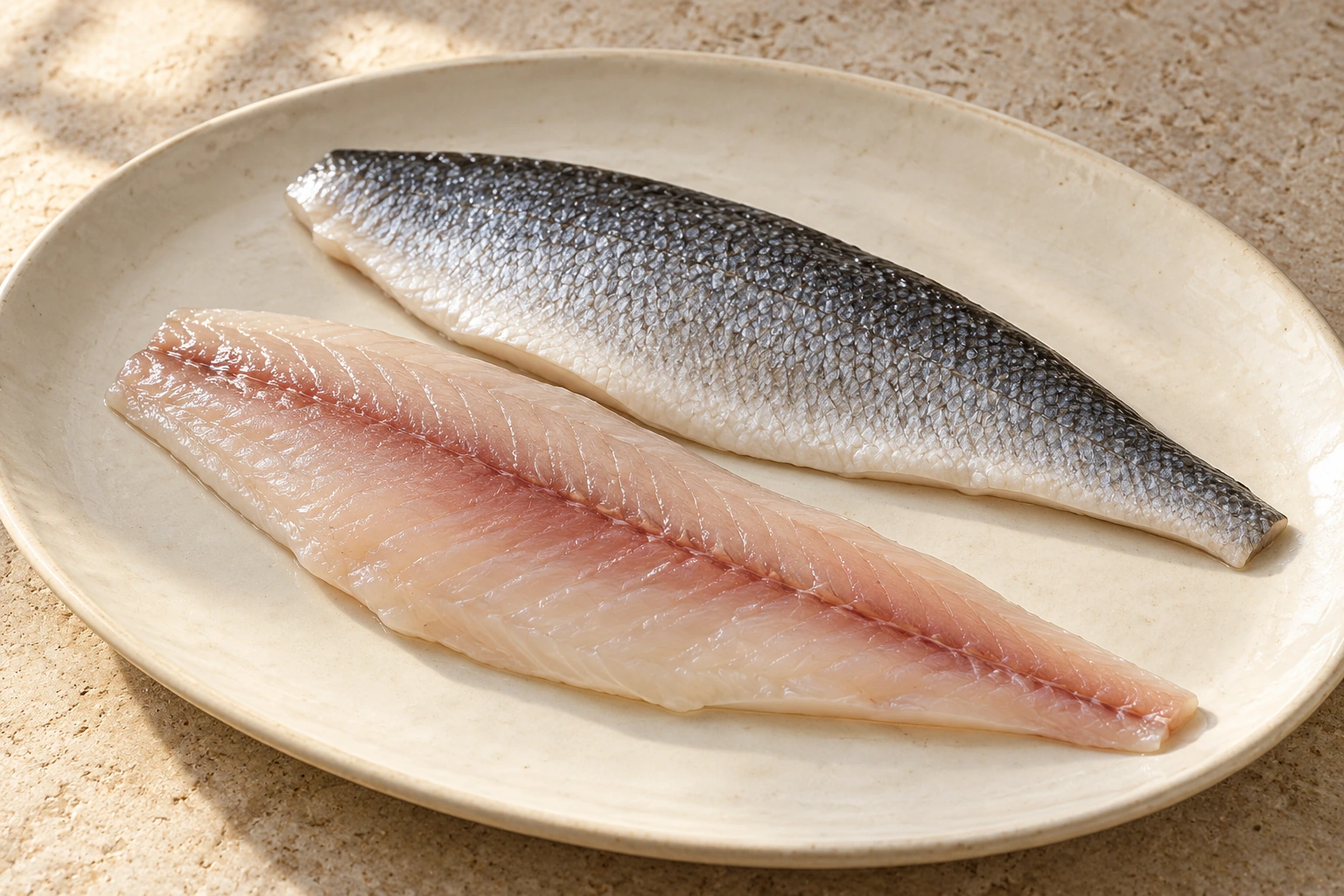
European sea-bass fillets
Raw European sea-bass fillets provide the white fish for this cappon magro. Buy fillets of spigola or branzino, check for remaining bones, and use the raw fillet weight in the recipe.
- Identity
- European sea bass, Dicentrarchus labrax.
- Form
- Raw fillets; skin may be present and is removed for assembly.
- Purchase
- Farmed or wild origin must come from the actual label, not the name branzino.
Poach, then check again
Run clean fingertips along the fillets and remove any pin bones left by filleting. Cook them gently as the recipe directs, then lift them out without breaking them unnecessarily. Remove the skin if present and check the cooked flakes for remaining bones before layering them into cappon magro.
Spigola and branzino
Spigola and branzino name the European sea bass in Italian fish cooking. This ingredient is the raw fillet, not a whole fish of the same weight. European sea bass is also farmed, so neither its Italian name nor a fillet photograph establishes where or how a particular fish was produced.
Cook with it
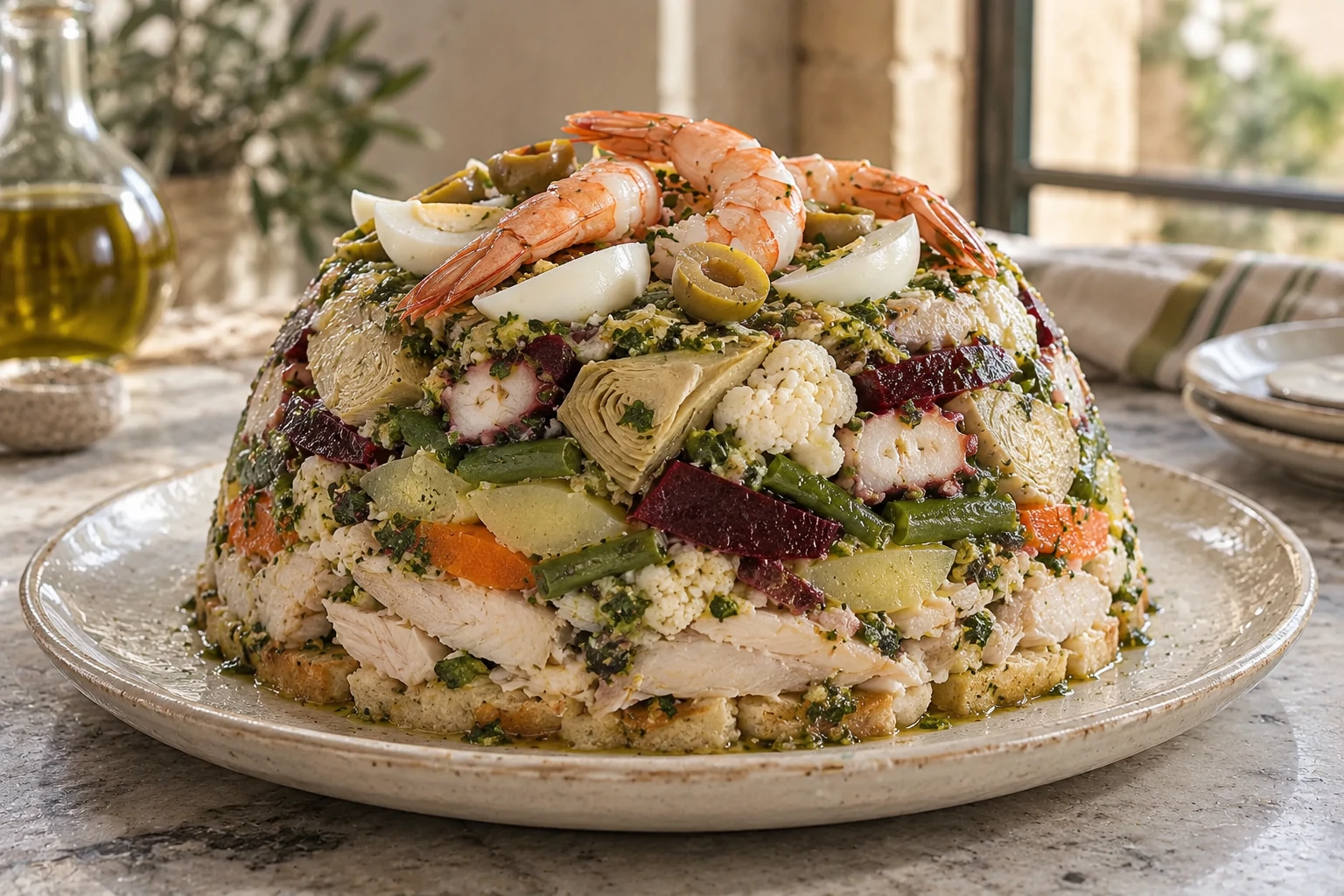
Ask for the fillet weight
Specify Dicentrarchus labrax and the required raw fillet weight. Confirm whether the fillets retain skin and whether bones have been removed. Products called sea bass can represent other fish in other markets; a generic English market name is not enough to identify European sea bass.
Keep the raw form cold
Refrigerate promptly in a covered container, separated from ready-to-eat food. Follow the seller’s storage directions and use-by date. Thaw frozen seafood in the refrigerator, not on the worktop, and keep it cold until cooking.
