Skip to content
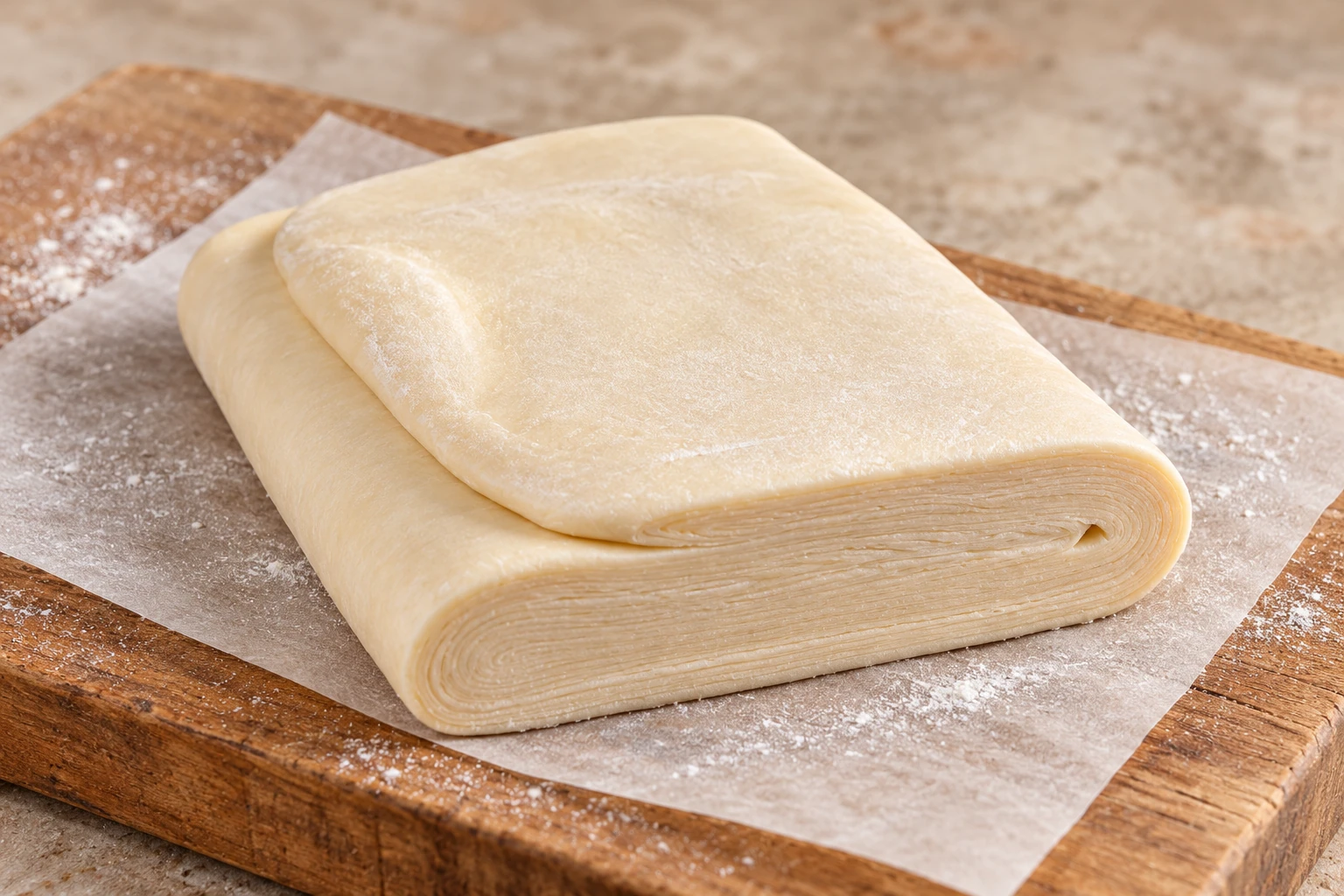
Raw folded puff-pastry block with fine layers visible along the edge.

Raw puff pastry

Raw puff pastry carries two very different fillings: the fruit and nuts of Trieste’s Presnitz and the béchamel, tomato and mozzarella of a rustico leccese. Choose the block or ready-rolled form the recipe needs.

Selected form
Purchased raw laminated pastry, in a block or ready-rolled sheet.
For Presnitz
A chilled all-butter block, rolled before filling.
For rustici
Raw ready-rolled pastry, 2–3 mm thick.
Allergens
Wheat; butter pastry also contains milk. Check the complete label.

One pastry, two shapes

Puff pastry is built from alternating layers of dough and fat. In the oven, steam lifts the layers into a crisp shell. The raw pastry is pale and flexible; the baked flakes belong to the finished dish.

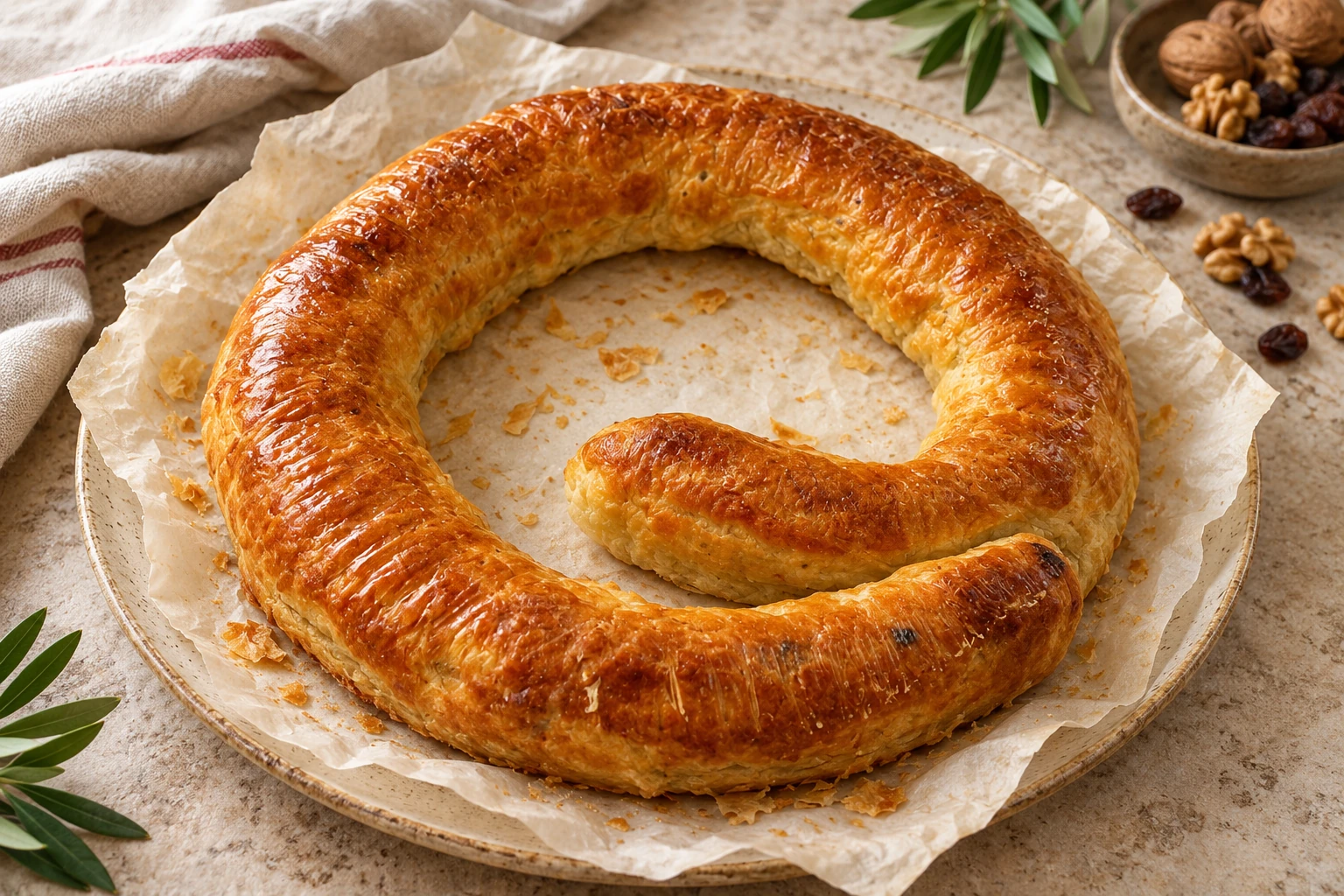
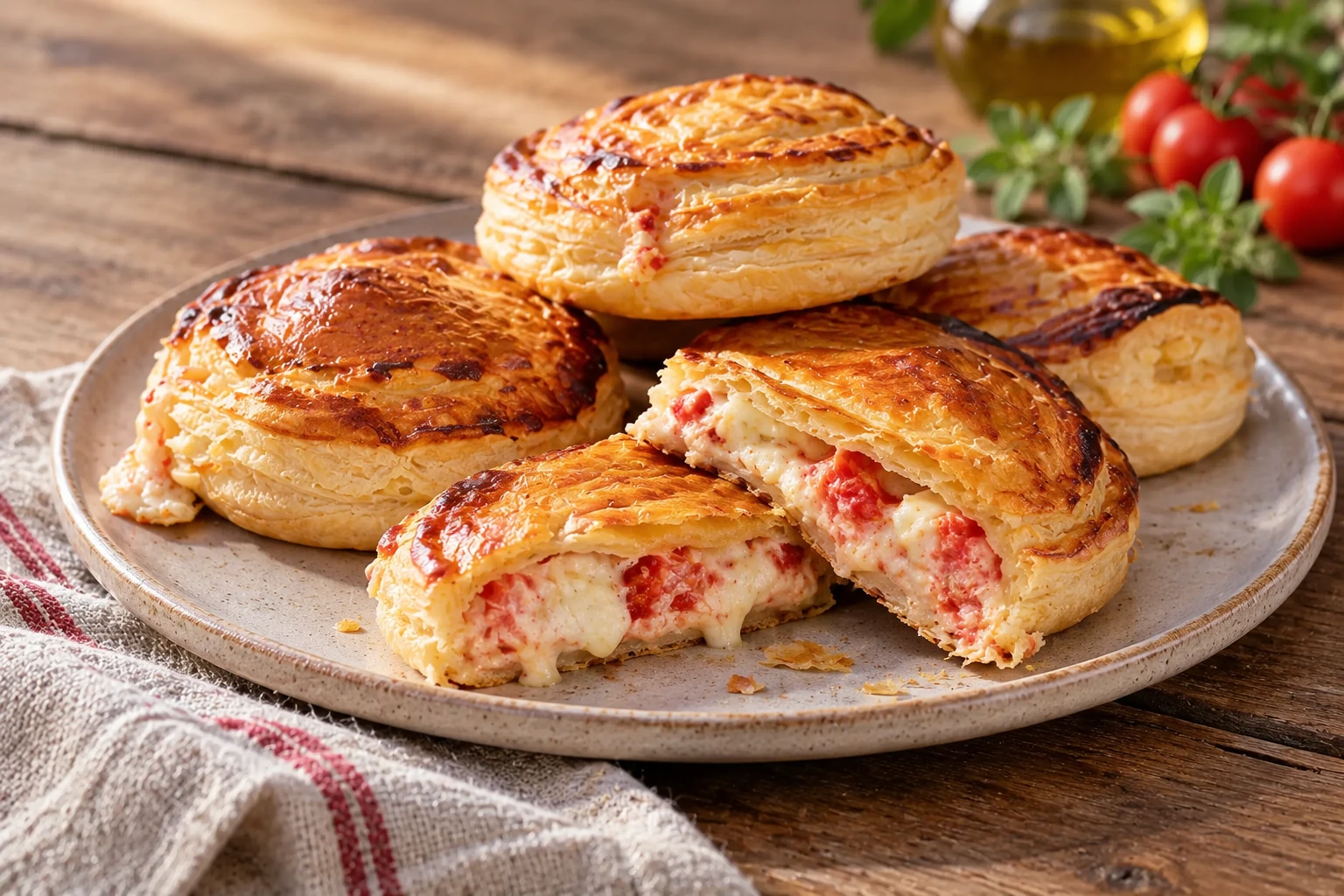
In Presnitz, the pastry wraps a long roll of nuts, raisins, chocolate and candied peel. In a rustico leccese, cut disks enclose a small savory filling. Both begin with raw pastry, but a block and a ready-rolled sheet need different handling.
Keep the layers distinct

Keep the pastry cold while measuring, rolling and cutting. If it softens and becomes difficult to handle, return it to the refrigerator before continuing. Use the recipe’s cooled filling.

For our Presnitz, the 400 g chilled all-butter block includes rolling allowance: roll to 65 × 22 cm, about 2.5–3 mm thick, then trim and reserve excess after wrapping. For our rustici, use the specified 920 g of raw ready-rolled pastry, including cutting offcuts, at 2–3 mm. Follow each recipe’s cutting plan rather than counting commercial rolls.

From Trieste to Salento

Presnitz and rustico leccese give this kitchen staple two Italian settings. The first is a filled pastry coil; the second is an individual puff-pastry parcel with béchamel, tomato and mozzarella.

A shell that holds its filling

Measure the pastry before filling and leave the specified sealing margin. Keep thick seams and excess dough out of the filling path. Bake the assembled dish using the recipe and the pastry pack’s compatible cooking directions; the shell should be cooked through, including its base.

Check the fat and the format

Read the ingredients when buying all-butter pastry: the word sfoglia alone does not establish the fat used. For Presnitz, choose an all-butter block. For rustici, choose raw ready-rolled puff pastry of the required thickness. Check the usable sheet dimensions as well as the net weight; a pastry already baked into shells is a different product.

Cold until the oven

Keep purchased pastry under the storage conditions and use-by date on its pack. Follow its directions after opening and, if frozen, its thawing instructions. Keep unused pastry covered while working. Cook it fully; do not taste the raw dough. Apply the finished recipe’s storage instructions once the filling has been added.

Questions worth asking

Is all puff pastry made with butter?

No. Check the ingredient list. Our Presnitz specifically uses all-butter pastry; the rustico recipe specifies a ready-rolled raw form.

Can a ready-rolled sheet replace the Presnitz block by roll count?

Match the required dough form, weight, dimensions and thickness. Commercial roll counts do not define those measurements.

Is raw puff pastry the same as phyllo?

Use puff pastry for these recipes. Its laminated dough is the shell specified here; do not replace it with separate phyllo sheets.

Can I eat the raw offcuts?

Cook raw pastry before eating it. Keep reserved offcuts under the pack’s handling and storage directions.

A letter from Italy, once a month.

The places, tables and makers we found worth your time. One email, no noise.

One letter a month. Unsubscribe at any time. We never share your address.

Help us get it right

What is it about?
