

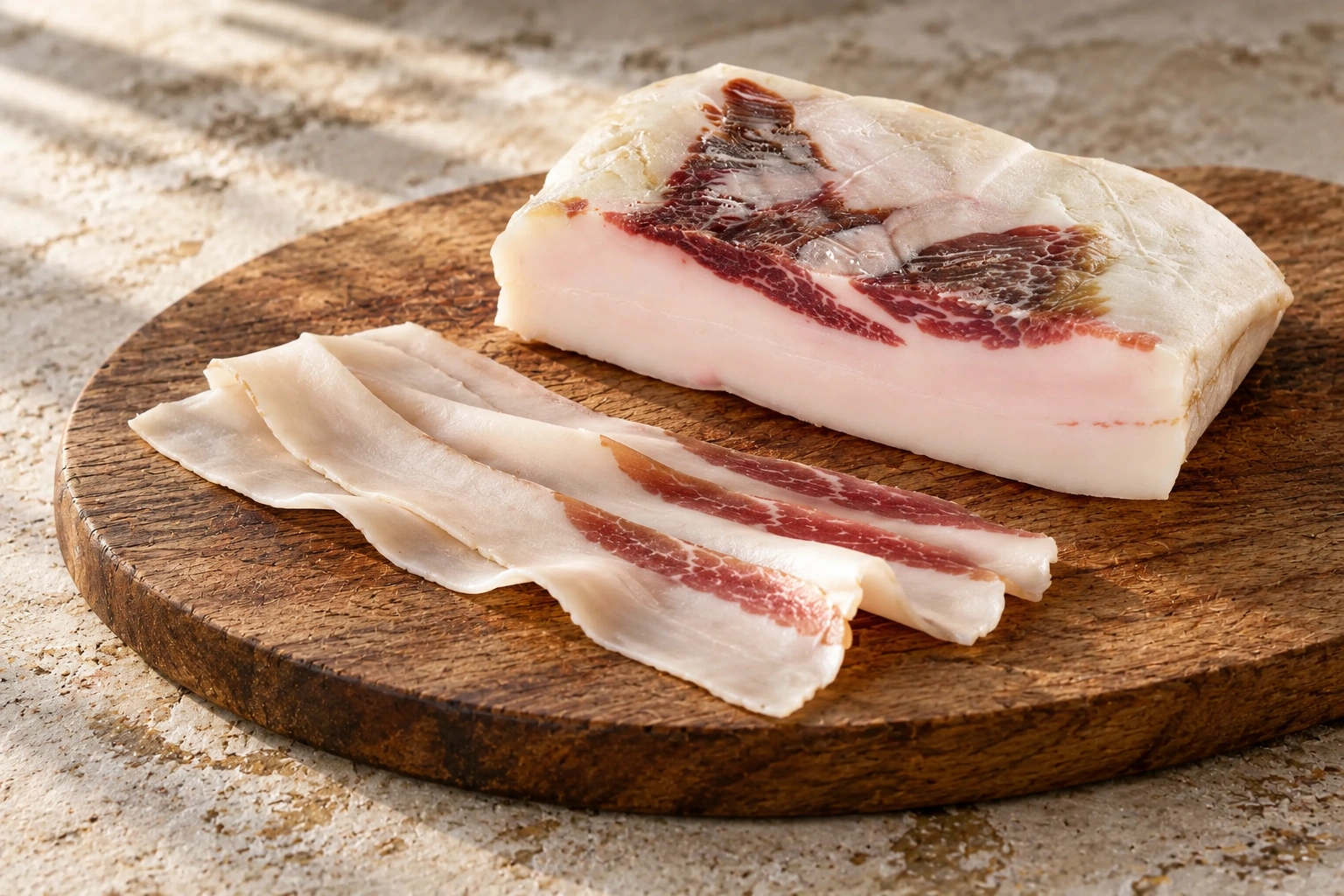
Lardo
Lardo is cured pork back fat, sold in a solid piece that can be sliced or finely chopped. In panissa vercellese it enriches the broth and the rice base in two separate measured portions.
- Form
- Salt-cured pork back fat.
- Choose
- A solid cured salume, rather than rendered lard.
- Italian use
- The broth and rice base of panissa vercellese.
Prepare the two portions first
Weigh the broth portion and the rice-base portion separately. Trim off any rind from the piece you need to chop, then cut it finely on a stable board. Follow the panissa method for adding each portion.
Cured fat at the start of panissa
Lardo is made by salting and curing pork back fat. It is a salume with a pale, compact cut surface. In panissa, one portion goes into the broth and another is chopped for the base in which the rice cooks.
Bring the rice base together
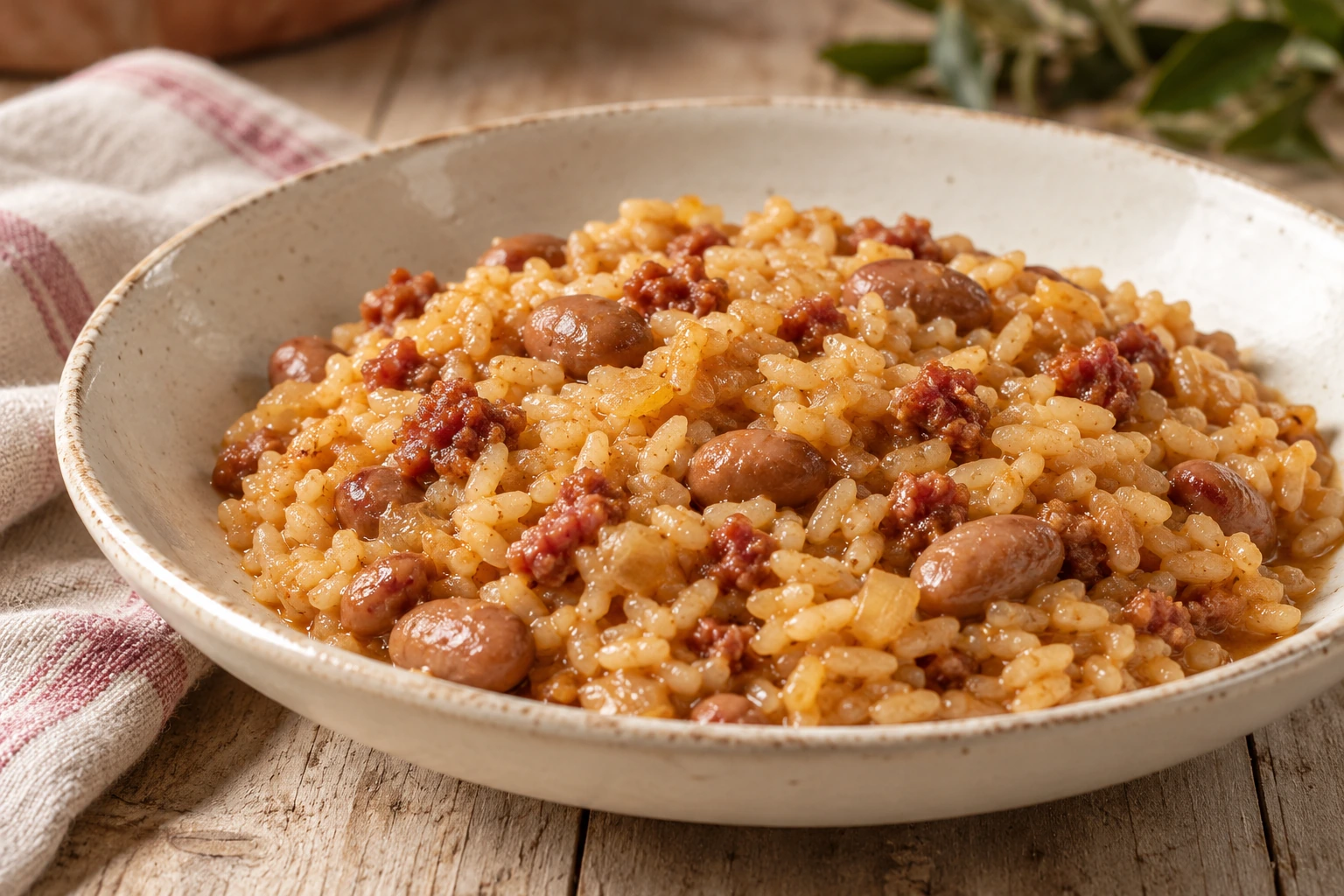
The chopped lardo joins the mature salam d’la duja and onion in the rice base. Prepare these ingredients before starting so each addition is ready. Keep the broth portion with the broth ingredients rather than adding the entire weight to the rice pan.
Cook with it
Buy the cured material
Ask for lardo, a cured solid pork-fat salume. Strutto is rendered lard and has a different form. This panissa calls for generic cured lardo; choose the material and preparation stated in the recipe. For this recipe, choose a plain cured piece rather than a smoked variant.
Retain the pack directions
Follow the producer’s refrigeration and after-opening instructions. Protect the cut surface, use a clean knife and keep the remaining piece wrapped as directed.
