

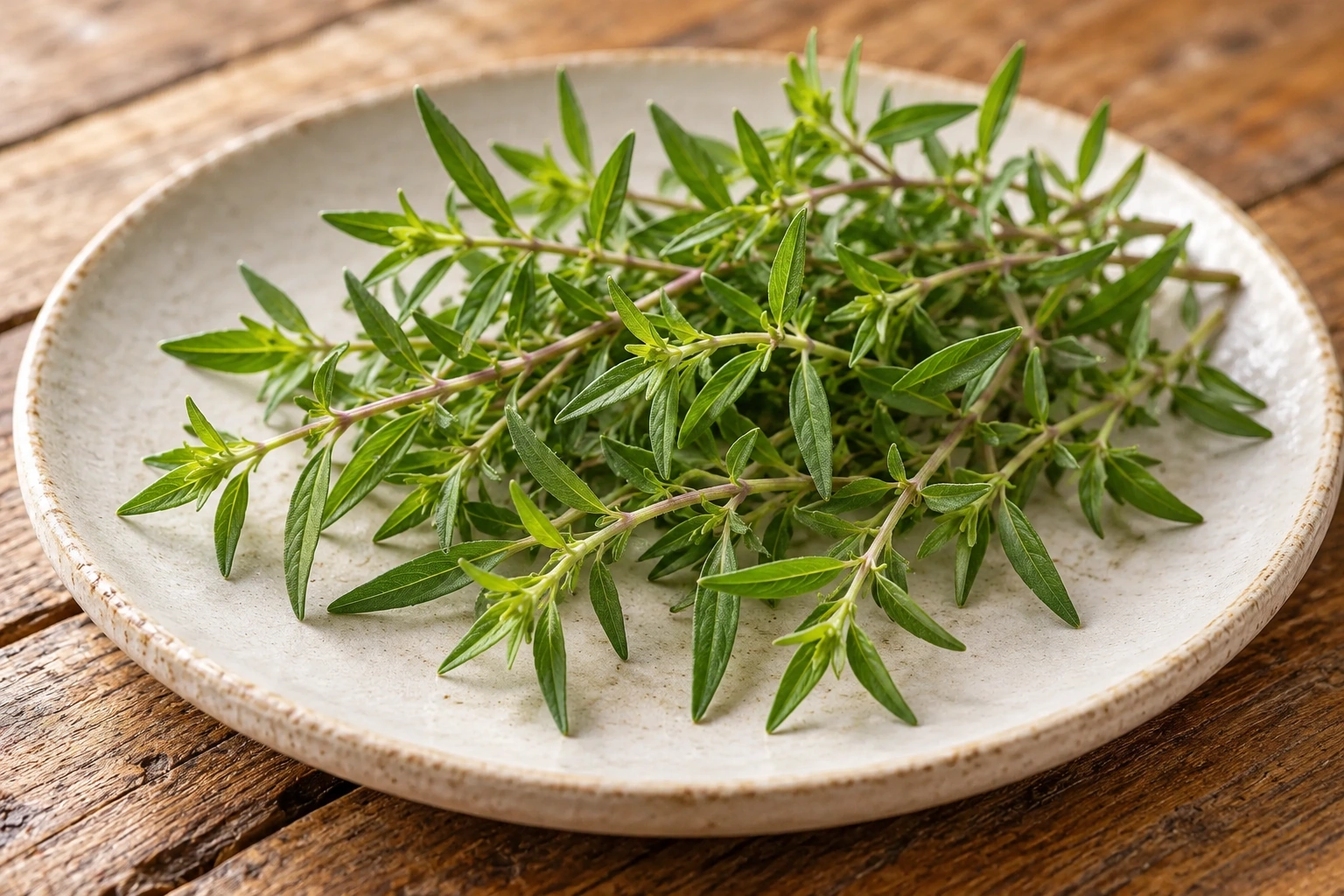
Fresh summer savory
Summer savory, Satureja hortensis, is an annual culinary herb with narrow aromatic leaves. Use the fresh leaves for the small herb addition in favò, keeping them distinct from dried savory and from winter savory.
- Botanical name
- Satureja hortensis.
- Form
- Fresh leaves and tender tips.
- Distinct plant
- Summer savory is annual; winter savory is Satureja montana.
Strip and chop the leaves
Select fresh sprigs, rinse them under running water and dry them before weighing. Strip the leaves and tender tips from any tougher stems, then chop. Add the measured leaves at the stage given in the recipe. Do not apply the same fresh weight to a dried herb or to a different savory species.
A herb beside beans and pasta
Savory’s narrow leaves have a peppery character and suit beans, lentils, stuffings and sausages. Summer savory is one member of the genus, rather than a name for every savory plant. Its leaves are generally milder than those of winter savory. In favò, chopped savory joins basil near the end of the pasta cooking. The herb is a small measured addition beside broad beans, rye bread and Fontina.
Keep the addition measured
For favò, stir the chopped savory into the pasta with the basil during the final minutes of cooking, before folding in the butter-toasted bread and Fontina.
Cook with it

Confirm summer savory
Look for summer savory or Satureja hortensis on the culinary-herb label. Santoreggia on its own may be insufficient to distinguish the plant from winter savory. Buy food-grade fresh sprigs or a correctly labeled culinary plant, not an ornamental herb identified only by a photograph.
Pick close to cooking
Harvest the amount needed close to preparation, or follow the seller’s instructions for cut herbs. Keep the leaves clean and protected while preparing the other ingredients. If drying or freezing herbs for later use, label the different form clearly; the recipe’s fresh-leaf weight will need separate adjustment.
