Skip to content
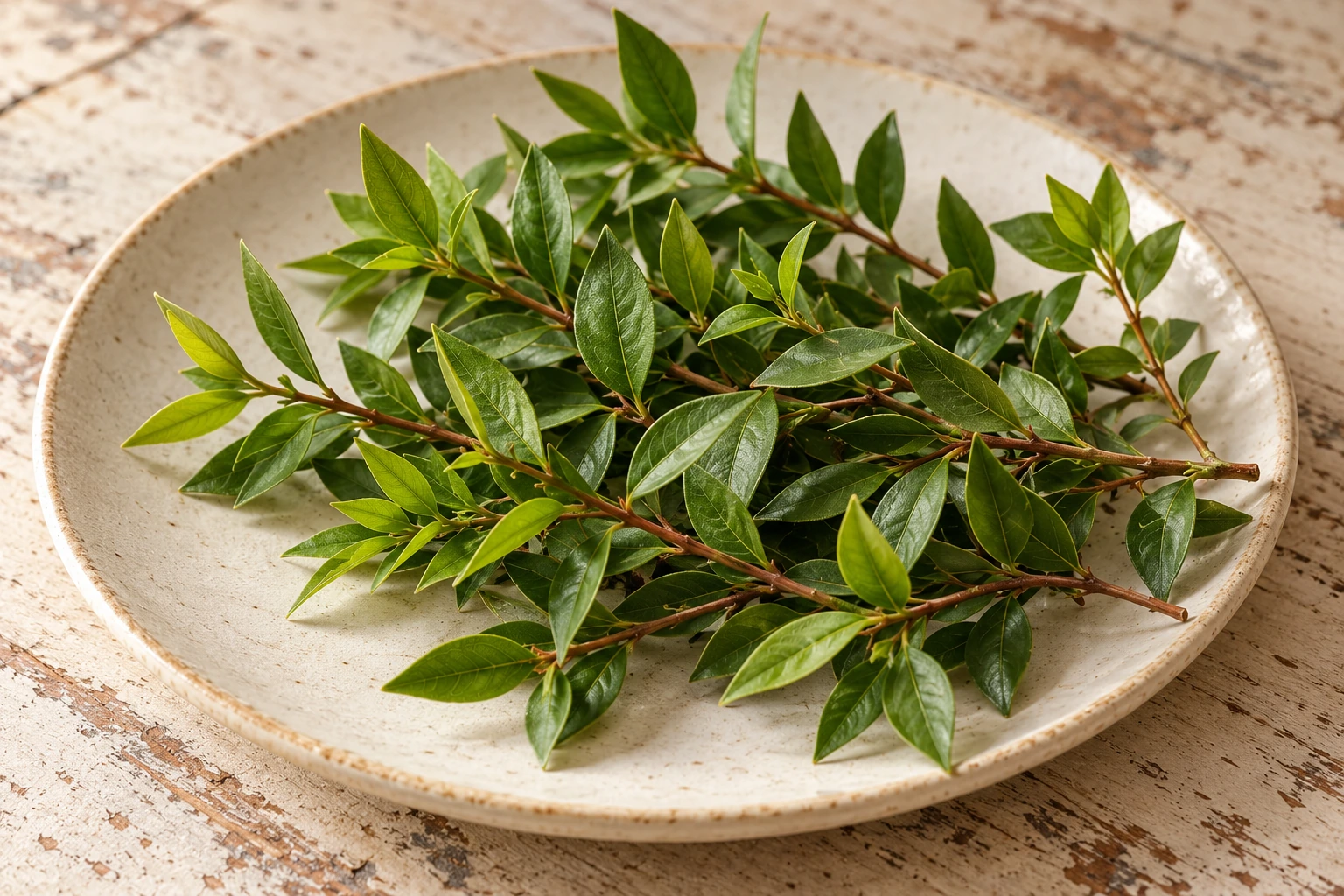
Fresh leafy myrtle sprigs on a ceramic plate

Fresh myrtle

Fresh culinary myrtle sprigs bring their leaf aroma to the resting platter of our Sardinian porceddu.

Botanical identity
Myrtus communis L.
Selected form
Fresh leaves on small sprigs, sold for culinary use.
In our porceddu
10 g, washed and dried, for the resting platter.

Leaves and small sprigs

Fresh culinary myrtle sprigs bring their leaf aroma to the resting platter of our Sardinian porceddu.

Myrtle is an evergreen shrub with opposite, oval, leathery leaves. Its leaves and small sprigs are used to scent roasted or boiled suckling pig in Sardinian cooking. This guide concerns those fresh culinary plant parts.

Prepare the sprigs

Weigh 10 g fresh culinary myrtle. Wash and dry the sprigs and arrange them on the resting platter as directed by the porceddu recipe. Keep this quantity separate from the seasonings rubbed onto the raw pork.

With Sardinian pork

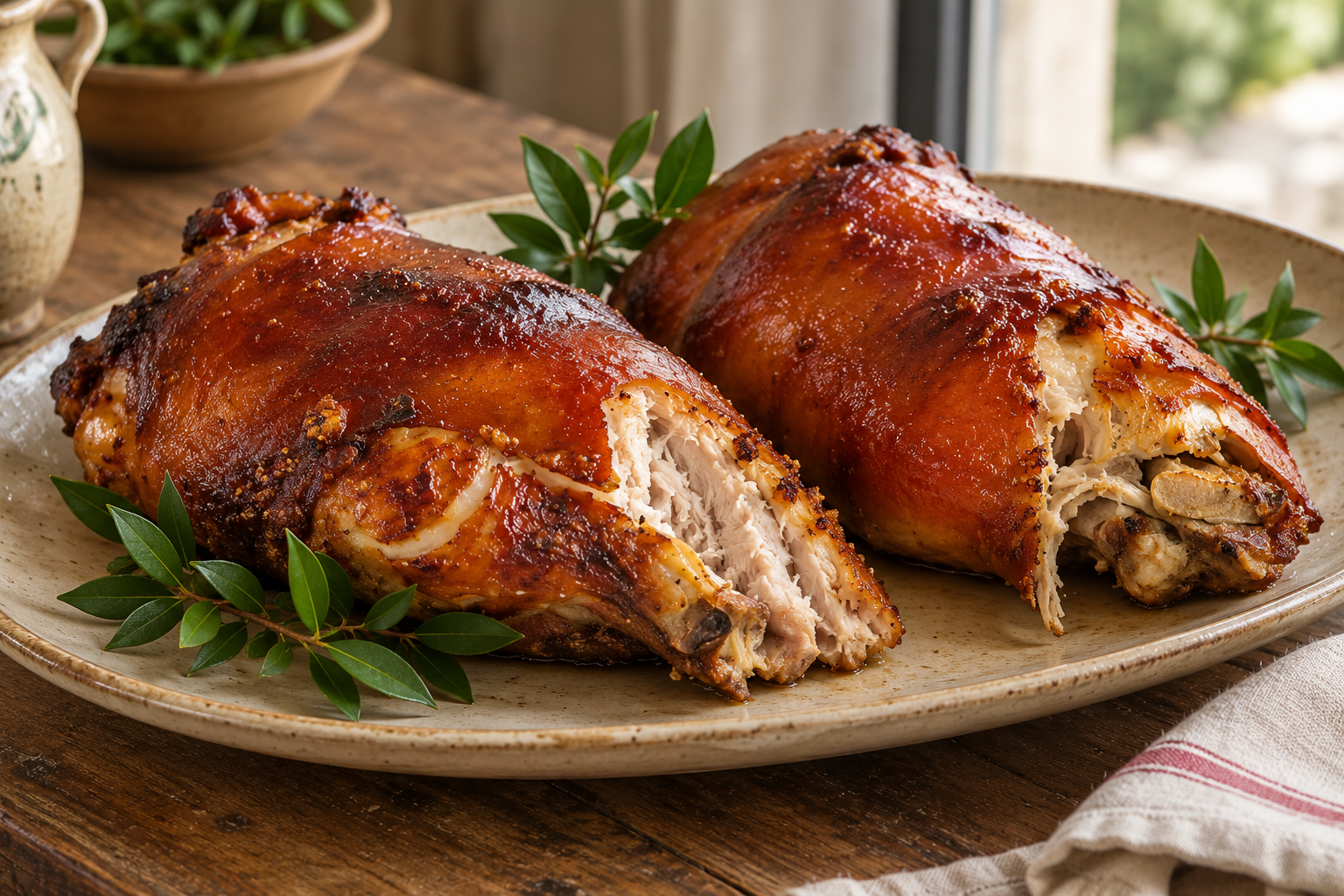
Myrtle accompanies suckling pig in Sardinian preparations. In our porceddu, fresh sprigs go on the platter during the meat’s rest after roasting.

An aromatic resting platter

Use the 10 g sprigs with the cooked pork during its 20-minute rest. The fresh leaves and small branches supply the aromatic setting; follow the recipe’s serving instructions.

Ask for culinary myrtle

Buy fresh myrtle identified as Myrtus communis and supplied for food use. Ask for leaves on small sprigs. A liqueur bottle, berries or an ornamental plant of uncertain treatment does not supply the ingredient specified for this platter.

Keep the sprigs clean

Follow the supplier’s storage instructions and keep the sprigs separate from raw-meat preparation. Wash and dry them before preparing the resting platter.

Questions worth asking

Can I pour mirto liqueur over the platter instead?

This recipe specifies fresh culinary leaves and sprigs. Liqueur is a different preparation and does not replace them here.

Is this a guide to picking wild myrtle?

Buy correctly identified culinary myrtle from a supplier. These cooking notes do not provide wild-plant identification or harvesting instructions.

A letter from Italy, once a month.

The places, tables and makers we found worth your time. One email, no noise.

One letter a month. Unsubscribe at any time. We never share your address.

Help us get it right

What is it about?