

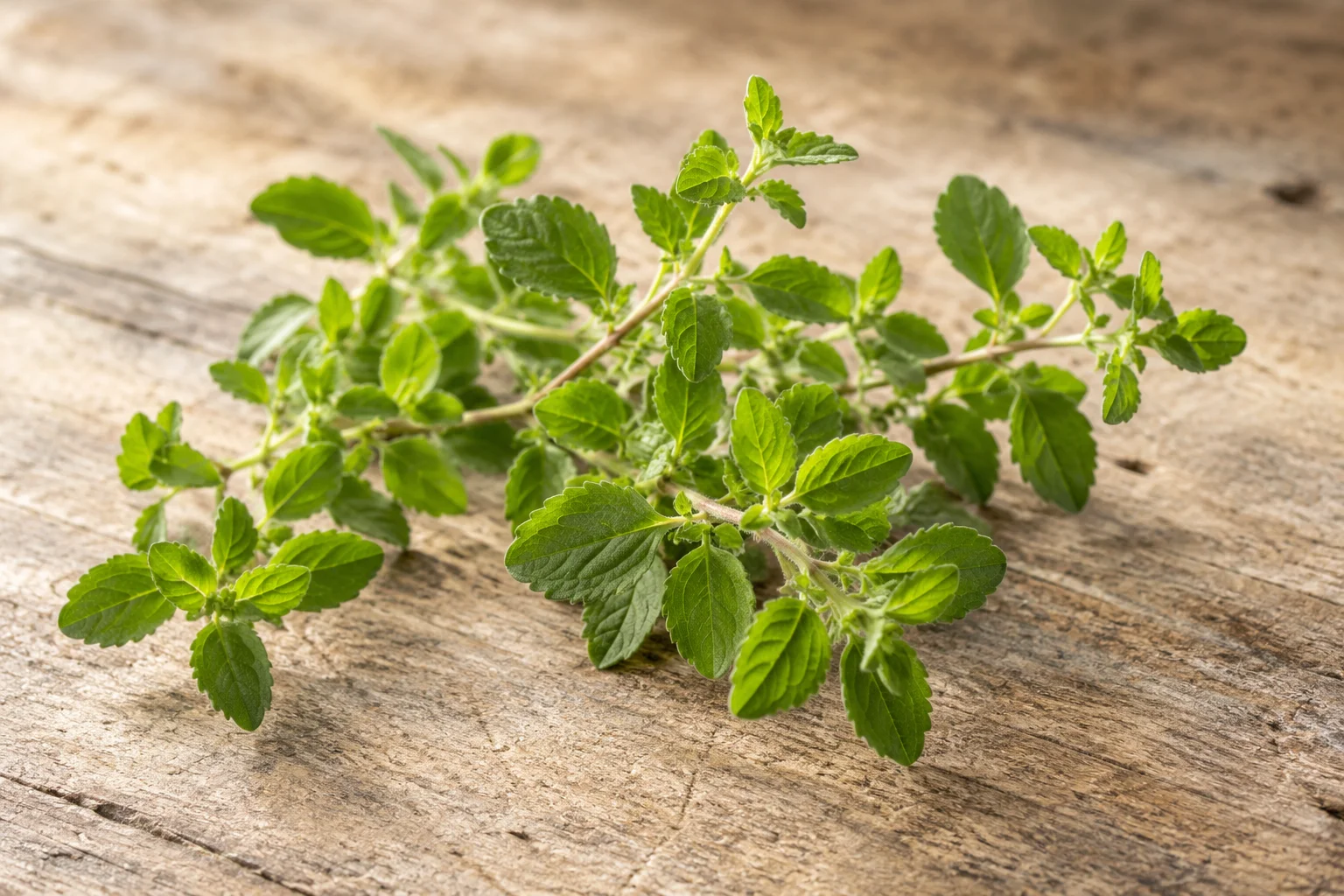
Fresh mentuccia
Fresh mentuccia is a culinary herb used with Roman artichokes. The lesser calamint form, Clinopodium nepeta, has small oval leaves and a mint-like aroma; it is a distinct choice from ordinary fresh mint.
- Identity
- Lesser calamint, Clinopodium nepeta; also called Calamintha nepeta.
- Culinary form
- Fresh leaves and tender leafy tips sold for cooking.
Prepare the leaves for the filling
Rinse the culinary leaves, drain them well and remove coarse stems. Chop the leaves with the garlic and other aromatics in the recipe. Distribute the seasoning into the opened artichokes rather than leaving one large clump of herbs in the pan.
Use the measured amount in the recipe and keep any extra leaves separate. The purpose is to season the artichokes; the leaf shape and aroma do not justify changing the herb identity without acknowledging a different preparation.
A small leaf in Roman cooking
Mentuccia brings an aromatic leaf to carciofi alla romana. The herb is finely chopped with the other seasonings and tucked into the trimmed artichokes before their gentle covered cooking. Its small leaves are useful in a seasoning mixture rather than as a large decorative garnish. The name can be applied loosely to different herbs. Choose culinary lesser calamint identified as Clinopodium nepeta or Calamintha nepeta, keeping it distinct from Mentha pulegium and from a generic bunch of mint.
Serve with the artichokes
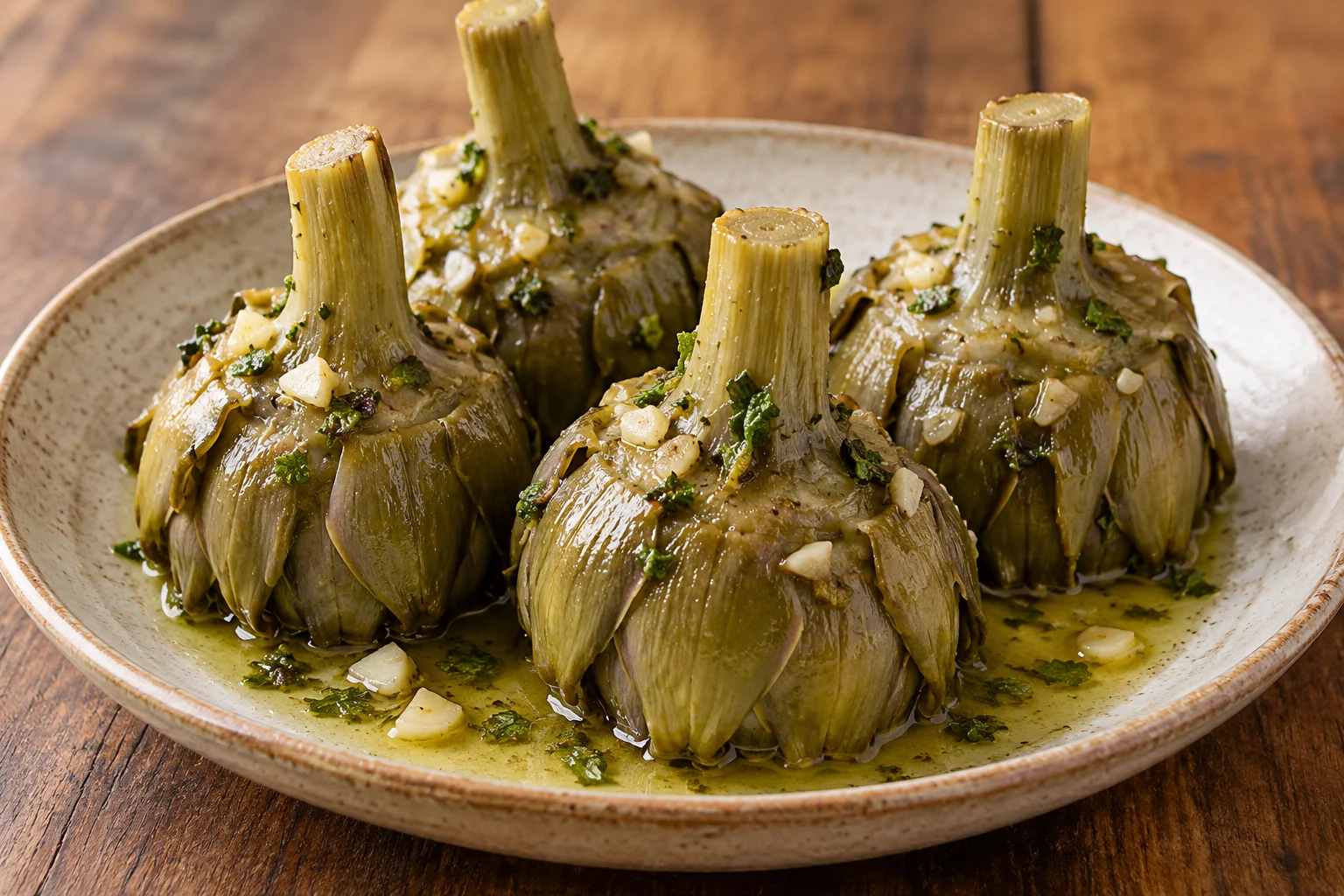
Bring the cooked artichokes to the table with their aromatic filling and a little of the cooking liquid. The herb should be part of the seasoning, with no need for extra leaves scattered over the finished dish.
Cook with it
Buy a culinary herb with a clear identity
Choose fresh mentuccia sold for food use and check the name on the label. Look for clean, unwilted leaves rather than relying on the word mint alone. Dried herbs and ornamental plants are different purchases from the fresh culinary leaves used here.
Keep the leaves fresh until use
Follow the supplier’s storage guidance. Keep fresh leaves refrigerated and protected from drying out, separating them from raw meat and other foods that could soil them. Wash and drain the portion needed for cooking; discard leaves that have deteriorated rather than assigning the bunch a fixed shelf life.
