
Skip to content
Italia Magnifica

Castelmagno

Castelmagno

Piedmont's rare blue-veined mountain cheese, DOP protected.

Photograph · Castelmagno

The story

What you're tasting

Castelmagno DOP is one of Piedmont's rarest and most distinctive cheeses, produced exclusively in the Grana Valley in the province of Cuneo. This semi-hard to hard cheese is made from cow's milk (sometimes with small amounts of sheep's or goat's milk) and aged for extended periods (2-5 months or longer), during which natural blue-green veining (erborinatura) develops, creating complex, tangy flavors. The cheese's limited production area and traditional methods make it one of Italy's most sought-after and expensive cheeses.

Castelmagno represents centuries of Alpine cheesemaking tradition in Piedmont, with production methods documented since the Middle Ages. The cheese's name derives from the town of Castelmagno in the Grana Valley, where the tradition of producing this blue-veined mountain cheese developed. Historical records from the 12th century document the production of cheeses in the Castelmagno area, where the high-altitude pastures and cool, humid climate created ideal conditions for both cheesemaking and the natural development of blue molds. The tradition of producing Castelmagno in mountain dairies during summer months, when cattle graze on alpine meadows, became central to the cheese's character, with the high-altitude production and traditional aging methods creating conditions that encourage natural mold development. The cheese gained particular importance during the Renaissance, when it became a prized commodity in Piedmontese courts and was exported to other Italian regions. The 19th and early 20th centuries saw the formalization of production methods, with local cheesemakers establishing consistent techniques for creating the blue-veined cheese that would become Castelmagno. The tradition nearly disappeared in the mid-20th century due to economic pressures and rural depopulation, but was revived in the 1980s and 1990s by dedicated producers who recognized the cheese's unique character and cultural importance. The establishment of the Castelmagno Consortium in 1982 marked a significant step toward protecting the cheese's name and methods, while the DOP designation, granted in 1996, codified the production regulations, geographic boundaries (restricted to the Grana Valley in the province of Cuneo), and quality standards that ensure Castelmagno maintains its traditional character. Today, Castelmagno stands as a symbol of Alpine Italian cheesemaking excellence and artisanal revival, with production limited to a small number of dairies in the Grana Valley while maintaining the traditional methods and distinctive blue-veined character that have defined it for centuries.
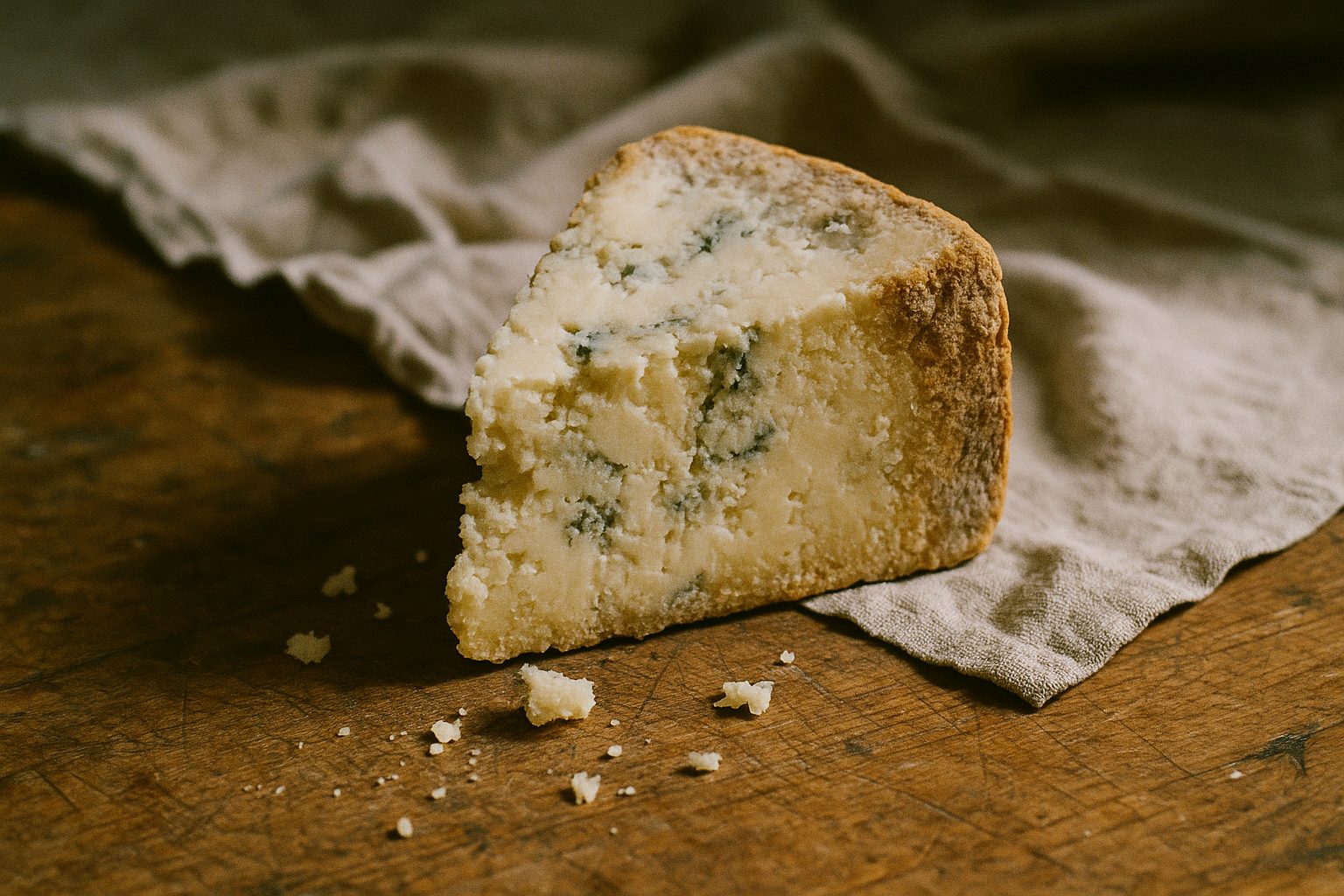
A crumbly wedge of Castelmagno with its thick rugged rind

Know it

Before you buy

Say it
kah-stehl-MAHN-yoh
Tasting
Rich, complex, and tangy with distinctive blue-green veining. Nutty, savory base with sharp, piquant notes from blue mold development. Semi-hard to hard texture with granular areas. Becomes increasingly complex with extended aging.
Milk
Cow (sometimes with Sheep or Goat)
Texture
semi-hard to hard
Aging
2-5+ months
How to buy
Look for DOP Castelmagno labels and proper veining. Check for distinctive blue-green mold development. Buy from reputable sources that can verify Grana Valley origin. This is a rare, expensive cheese—expect to pay premium prices.
Spot the fakes
Verify DOP seals and production methods. Check for proper veining—should be blue-green, not gray or black. Beware of cheeses labeled as "Castelmagno" without DOP designation or proper origin verification. Authentic Castelmagno should have natural blue veining and mountain character.
Keep it
Unopened: 2-5+ months. After opening: 2-3 weeks if properly stored.

The making

How it's made

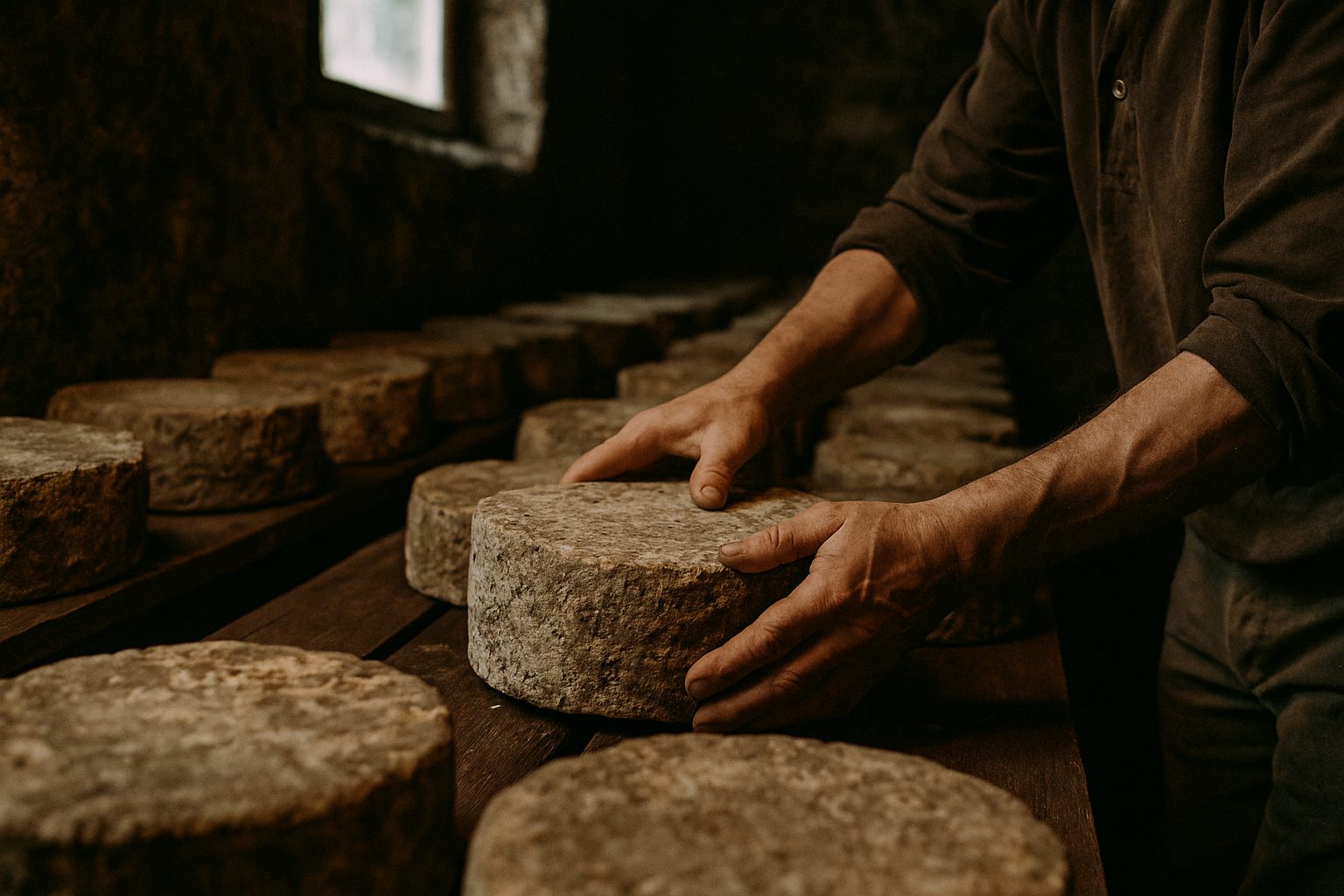
Castelmagno production follows traditional mountain cheesemaking methods combined with natural blue mold development, beginning with fresh, whole cow's milk (sometimes with small amounts of sheep's or goat's milk added) from the designated production zone. The milk is collected daily at mountain dairies during summer months, when cattle graze on alpine meadows that impart distinctive flavors to the milk. The milk is heated in traditional copper cauldrons and coagulated using natural calf rennet, creating a curd that is cut into pieces and drained to achieve the desired moisture content for a semi-hard to hard cheese. The curd is then placed in molds and pressed, creating wheels that typically weigh 2-7 kilograms. The wheels are brined in salt solution for several days, then transferred to aging rooms (often natural caves or purpose-built cellars) where they mature for a minimum of 2 months, though most are aged 3-5 months, with premium examples aged longer for increased complexity. During aging, the cheeses are regularly turned and monitored, with the rind developing a hard, pale yellow to brown exterior while the interior gradually loses moisture and develops complex flavors. The critical aspect of Castelmagno production is the natural development of blue-green veining (erborinatura), which occurs when Penicillium molds (typically Penicillium roqueforti or Penicillium glaucum) develop naturally in the aging environment. The cool, humid conditions of the mountain aging rooms, combined with the cheese's texture and composition, create ideal conditions for mold development. Some producers may pierce the cheeses with needles to encourage mold growth, though traditional methods rely primarily on natural development. The molds break down proteins and fats, creating the distinctive tangy, sharp flavors and the characteristic blue-green veining that defines Castelmagno. The extended aging allows for the development of complex flavors through enzymatic breakdown, with the cheeses developing nutty, savory, and tangy notes that reflect both the alpine terroir and the natural blue mold development. Each wheel is tested by expert graders who evaluate quality through visual inspection, aroma, and texture. Wheels that pass inspection receive the DOP markings, while those that don't meet standards are sold without the protected designation. The finest examples showcase the unique character of blue-veined mountain cheesemaking, with balanced mold development creating complex, tangy flavors that make Castelmagno ideal for both table use and use in traditional Piedmontese dishes.

Castelmagno is essential to Piedmontese cuisine, particularly in the Grana Valley. It represents the Alpine cheesemaking tradition and the successful revival of a nearly lost artisanal cheese.

Turning Castelmagno wheels in a stone aging cellar in Piedmont

Where it's from

The land behind it

  1. RegionPiedmont