

When to visit Tuscany
Typical climate in Florence, the regional capital.
Month by month
- Jan
- cold and damp
- Feb
- cool with rain
- Mar
- mild spring
- Apr
- pleasant spring
- May
- warm and lovely
- Jun
- hot summer
- Jul
- very hot
- Aug
- hot with thunderstorms
- Sep
- warm autumn
- Oct
- mild autumn
- Nov
- cool and wet
- Dec
- cold winter
The short version
If you want one answer: go in May, June, or September. These are the shoulder weeks when Tuscany is at its most photogenic and its most comfortable — warm days, cool evenings, countryside that's either freshly green (spring) or turning gold (early autumn), and prices and queues well below the July–August peak.
April and early October are the next-best windows: a little cooler and with a higher chance of rain, but noticeably quieter, cheaper, and still lovely. July and August are hot, busy, and expensive, but they're also when the region's biggest events happen. Winter is the contrarian's choice — cold, often misty, many rural places closed, but Florence's museums are blissfully uncrowded.
Spring (March to May)
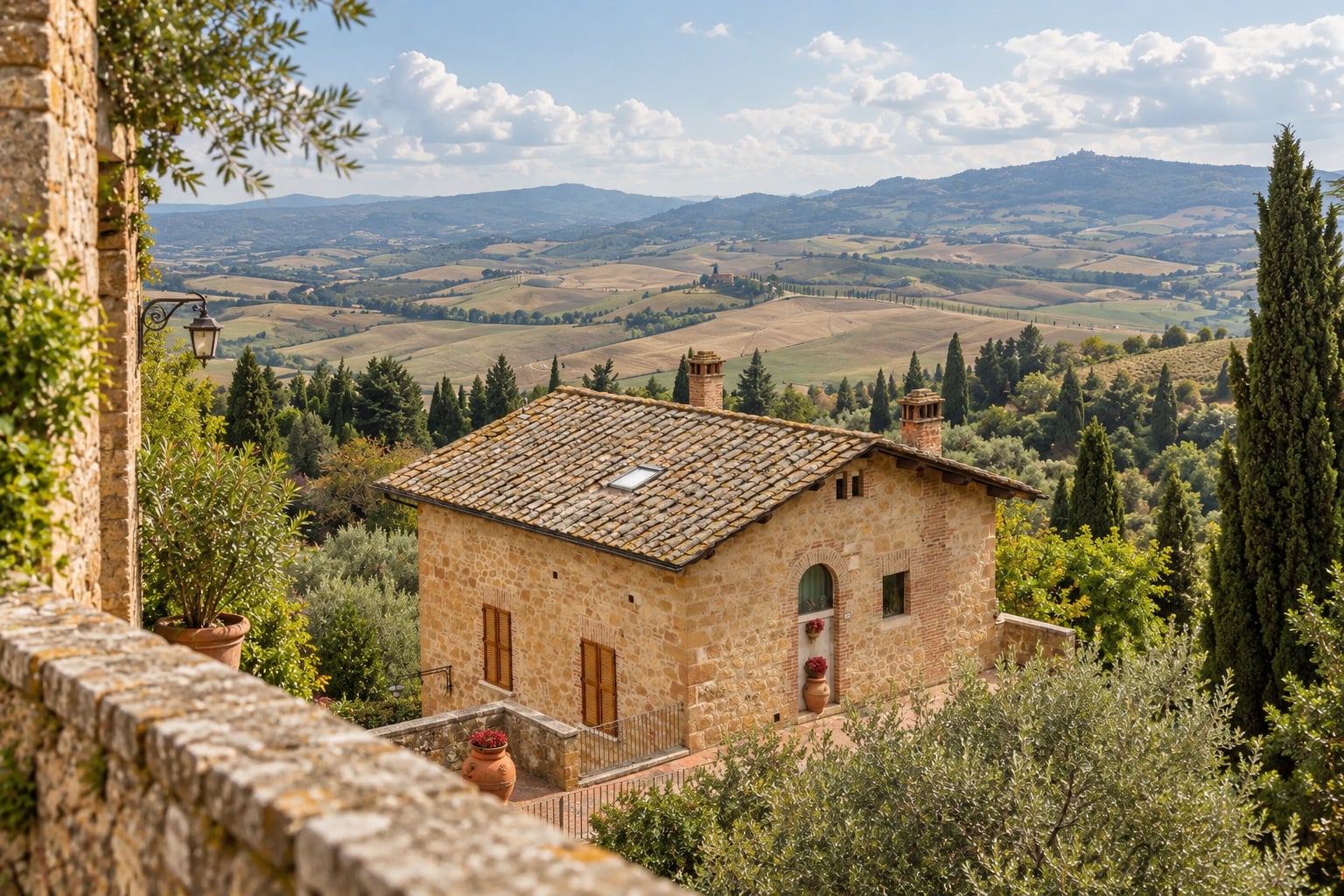
Spring is when the Tuscan countryside earns its postcards. By April the vineyards and olive groves have leafed out, wildflowers run along the field edges, and the famous cypress-lined roads of the Val d'Orcia are at their greenest. Days are mild (high teens to low twenties Celsius by May) and the low spring light is kind to photographers.
The trade-off is changeability: March and April see real rain, and a cold snap can still bite, so pack layers and a waterproof. Easter is the one spring crowd spike — Florence and Siena fill up and prices jump for the long weekend. Outside it, late April and May are arguably the sweet spot of the whole year: green hills, long days, comfortable temperatures, and gardens (like the Boboli and the villas around Lucca) in full flush.
Summer (June to August)
June is summer at its best — warm and reliably sunny but not yet scorching, with the longest days of the year and the countryside still holding some green before it bakes to gold. It's the last comfortable month before the peak.
July and August are hot. Inland cities like Florence sit in a river basin and regularly push past 33–35°C, with little relief at night; the hill towns are a few degrees cooler and the coast and the mountains cooler still. This is high season: the Uffizi and the Accademia book out days ahead, Florence's streets are shoulder-to-shoulder, and accommodation is at its priciest. It's also when many Tuscans leave for the coast, so in mid-August some family-run trattorie and shops in the countryside simply close (the 'chiuso per ferie' sign). If you come in summer, base yourself near the sea or in the hills, see cities early in the morning, and surrender the afternoons to a long lunch and a pool.
Autumn (September to November)
For many people September is the best month in Tuscany, full stop. The heat eases, the crowds thin as the Italian holidays end, the sea is still warm, and the countryside turns to harvest — the 'vendemmia' (grape harvest) runs from roughly September into October, and the whole region smells of fermenting wine and freshly pressed olives.
October keeps much of September's charm with cooler, shorter days and the first autumn colour in the vineyards and chestnut woods — and it's when the new olive oil ('olio nuovo') starts to appear, peppery and green. November is the quiet, atmospheric tail of the season: frequent rain and mist, many rural agriturismi winding down, but truffle season in full swing around San Miniato and bargain rates everywhere. If you love food and wine and don't mind a grey day, autumn is hard to beat.
Winter (December to February)
Winter is Tuscany's secret season. It's cold (daytime highs around 8–12°C, colder and often foggy in the hills) and the countryside is bare, with most agriturismi and many smaller-town restaurants closed. But the cities are a revelation: you can stand almost alone in front of Botticelli's Birth of Venus, walk into the Duomo without a queue, and have Florence's piazzas to yourself in the low golden light.
December brings Christmas markets and lights to Florence, Siena, and Arezzo (whose big Christmas market is one of the region's best). January and February are the cheapest, quietest weeks of the year — ideal for a museum-and-food city break if you wrap up warm. Note that Carnival ('Carnevale') in Viareggio, on the coast, is a major February event with enormous satirical floats, and the one time that town is busy in winter.
Weather, by the part of Tuscany
Tuscany isn't one climate. Inland — Florence, Siena, the Chianti and Val d'Orcia hills — summers are hot and fairly dry and winters are cold and damp, with morning fog common in the valleys. The Tuscan coast (Versilia, the Maremma, the Etruscan Coast) is milder and breezier, with a longer swimming season that stretches comfortably from June into September.
The mountains change the maths entirely: the Apennines and the Garfagnana to the north, and Monte Amiata to the south, are cooler year-round, green and walkable in summer when the cities swelter, and snowy enough for modest skiing in winter. The practical upshot: in July and August, head uphill or to the sea; in the depths of winter, the coast and the cities are your friend.
Insider timing
A few rules of thumb locals and repeat visitors live by. Aim for the shoulder weeks either side of the peak — the second half of May and the second half of September consistently deliver the best mix of weather, light, and breathing room. Avoid the week of Ferragosto (around 15 August), when much of Italy is on holiday at once: the coast is jammed and many country businesses are shut.
If a specific experience is the point, time the trip to it: the vendemmia for the harvest buzz (mid-September to early October), November for white truffles and new oil, late spring for gardens and green hills, or deep winter for empty galleries. And whenever you come, treat the heat and the queues as solvable problems — see the big-ticket museums first thing with a pre-booked ticket, keep afternoons slow, and you'll enjoy Tuscany in almost any month.