

When to visit Trentino-Alto Adige
Typical climate in Trento, the regional capital.
The short version
For hiking, alpine lakes, and long days in the Dolomites, come June through September. The trails and lifts are open, the wildflowers are out, and the valleys are warm without being oppressive. For skiing, the window is roughly December through March, when the Dolomiti Superski circuit (the largest linked ski area in the world, 1,200 km of runs on one pass) is in full swing and the snow is reliable at altitude. Those are the two seasons most people are actually choosing between, and the region is genuinely set up for both.
Spring (April to May) and late autumn (mid-October to mid-November) are the honest in-between. You will pay less and share the place with far fewer people, but you give something up: many high mountain huts, cable cars, and ski lifts are closed during these shoulder weeks, so the highest terrain can be off-limits. They suit travelers who want vineyards, valley towns, apple orchards, and good food more than summit hikes or guaranteed snow.
Spring (March to May)
Spring arrives slowly here, and it arrives twice. Down in the valleys around Bolzano, Merano, and Trento, late March and April bring apple and cherry blossom, mild afternoons, and some of the most pleasant walking weather of the year. By May the vineyards are green and the valley towns feel alive again. But look up and winter is still hanging on: the high Dolomites stay snow-covered well into May, and the season's first real hiking up top usually does not begin until June.
This is the trickiest season to plan because the mountains are between modes. Ski lifts wind down through April, while summer cable cars and most high-altitude rifugi (mountain huts) do not open until June. If you come in spring, build your trip around the valleys, the wine roads, the spa town of Merano, and lower trails rather than expecting summit access. The payoff is real: lower prices, easy restaurant reservations, and towns that feel like they belong to the people who live there.
Summer (June to September)
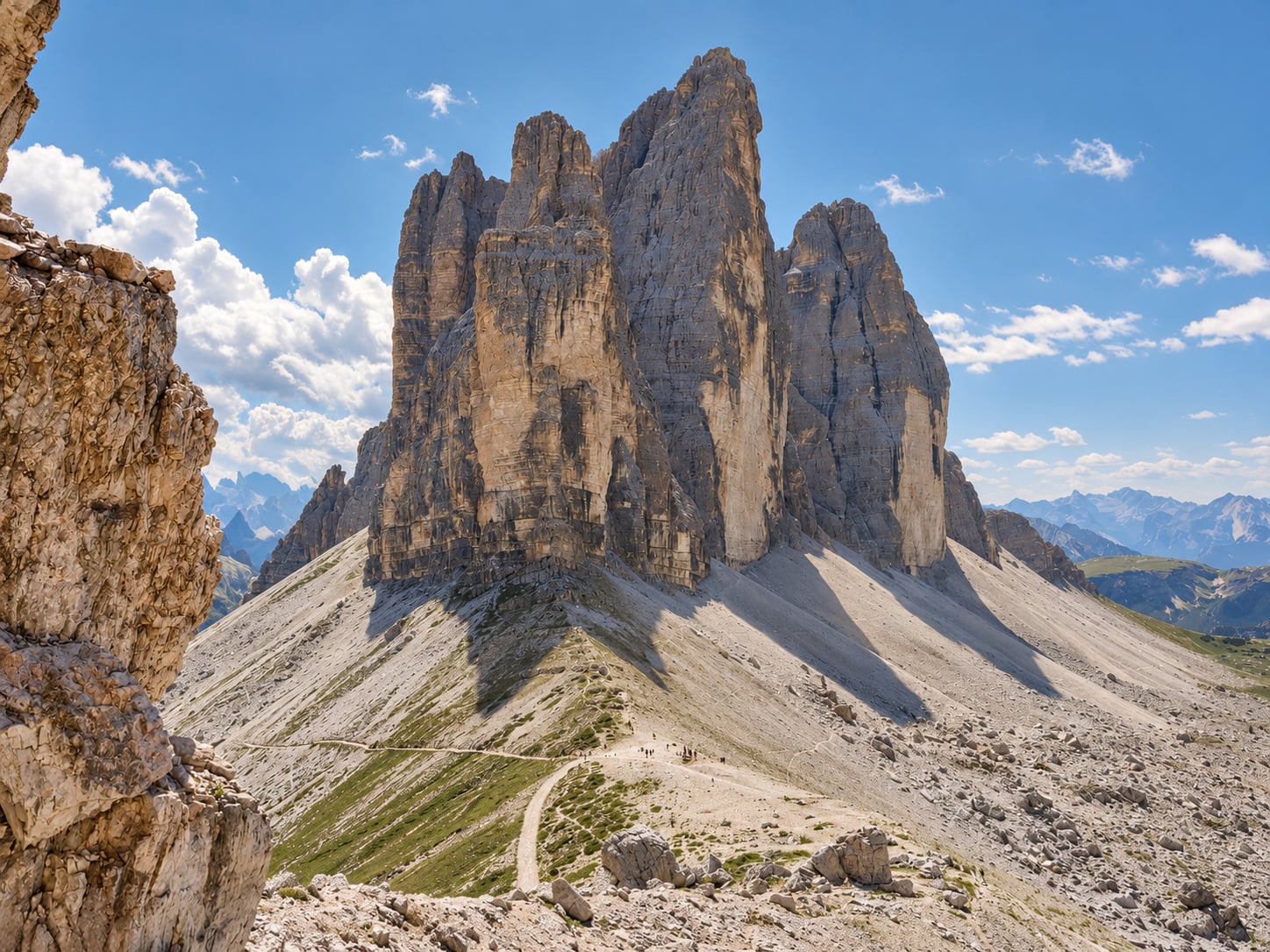
Summer is the region at its best and busiest. From mid-June the high trails clear of snow, the rifugi open, and the cable cars run, which means the classic Dolomites experiences (the Seceda ridgeline, Tre Cime di Lavaredo, the Alpe di Siusi meadows) are all on the table. Valley temperatures in Bolzano climb into the high 20s Celsius (low 80s Fahrenheit) and can feel genuinely hot in July and August, when highs sometimes top 30 Celsius, but you are rarely more than a cable car ride from cool mountain air. Up high, days are comfortable and evenings are crisp, so pack layers even in August.
The honest catch is afternoon thunderstorms. Summer is the rainiest season in these valleys, and storms tend to build over the peaks after midday, so smart hikers start early and aim to be off exposed ridges by early afternoon. July and August also bring the biggest crowds and the highest prices, especially around the famous trailheads and Lake Carezza. June and the first half of September are the sweet spot: the high country is open, the weather is still good, and the crush has eased.
Autumn (Mid-September to November)
Autumn is the quiet favorite, and for food-and-wine travelers it may be the best season of all. September still has warm, settled days and open lifts, while October brings the larch forests turning gold against the pink rock, which is one of the genuinely great sights in the Alps. This is harvest season, and the calendar fills with it: the Speckfest celebrates South Tyrol's smoked ham in late September (the Val di Funes weekend usually lands the last weekend of the month), the long Toerggelen tradition (new wine, roasted chestnuts, and farmhouse feasts) runs through autumn, and Merano's Grape Festival lands on the third weekend of October.
The tradeoff is timing. Through about mid-October you can still hike the high trails and ride the summer cable cars; after that, the rifugi close, the lifts shut down for the changeover, and the highest terrain goes quiet until ski season. November is the deadest month, with closed huts, fading color, and weather that can swing from crisp to gray and wet, until the Christmas markets and first lifts reopen at the very end of the month. Come in late September or early-to-mid October for the best blend of weather, color, and open mountains.
Winter (December to March)
Winter is built around two things: snow and Christmas. The Dolomiti Superski area, the largest linked ski circuit in the world, generally opens at the end of November and runs to the start of April, with the most reliable conditions and best-groomed runs from December through March. Even if you do not ski, the scenery is spectacular, the valley spa towns are cozy, and South Tyrol's Christmas markets in Bolzano, Merano, Bressanone, and Brunico run from late November to early January and are some of the best in Italy.
Plan around the two crunch periods. The stretch from Christmas through New Year and the Italian Epiphany (January 6) is the busiest and priciest of the entire ski season, and the February school holidays bring another spike. Valleys are cold, often hovering around freezing with sub-zero nights, while the slopes up high stay sunny and dry (winter is the driest season here). For the best value and elbow room, target the second half of January or early March, when the snow is still excellent but the holiday crowds are gone.
Weather, by the part of Trentino-Alto Adige
This region is really two climates stacked on top of each other, and the difference between them is the whole story. The valley floors (Bolzano, Trento, Merano, and the wine and apple country between them) are surprisingly warm and sheltered. Bolzano is often one of the hottest spots in northern Italy in summer, with July highs that can top 30 Celsius (mid-80s Fahrenheit), and winters that are cold but bright and fairly dry. This is where the vineyards, orchards, and most of the towns live.
Climb a few thousand feet into the Dolomites and the rules change completely. Up in the high valleys and on the peaks, summer days are cool and evenings cold, snow lingers into June and returns by November, and the weather shifts fast, with those reliable summer afternoon thunderstorms. The practical takeaway: a single day can swing from t-shirt warmth in Bolzano to needing a fleece on a 2,000-meter ridge, so altitude matters more than the calendar. Always check the mountain forecast separately from the valley one, and always pack a layer.
Insider timing
The shoulder weeks worth chasing are mid-to-late June (high trails just opening, prices not yet peaked), the first half of September (warm, open, and far calmer than August), and late January through early March (full ski conditions without the holiday surge). These windows give you the best of a season without the cost or the crowds.
Avoid the predictable crushes. Ferragosto (the week around August 15) is peak Italian holiday season, when valley towns and trailheads are at their fullest and many family-run businesses outside the resorts take their own break, so book everything well ahead. The Christmas-to-Epiphany stretch and the February ski holidays are the most expensive of winter. And remember the changeover gaps: roughly late April to early June, and mid-October to late November, the high lifts and mountain huts are closed for the season switch, so if your trip depends on summit access or skiing, check specific lift and rifugio opening dates before you book rather than assuming the mountains are open.