

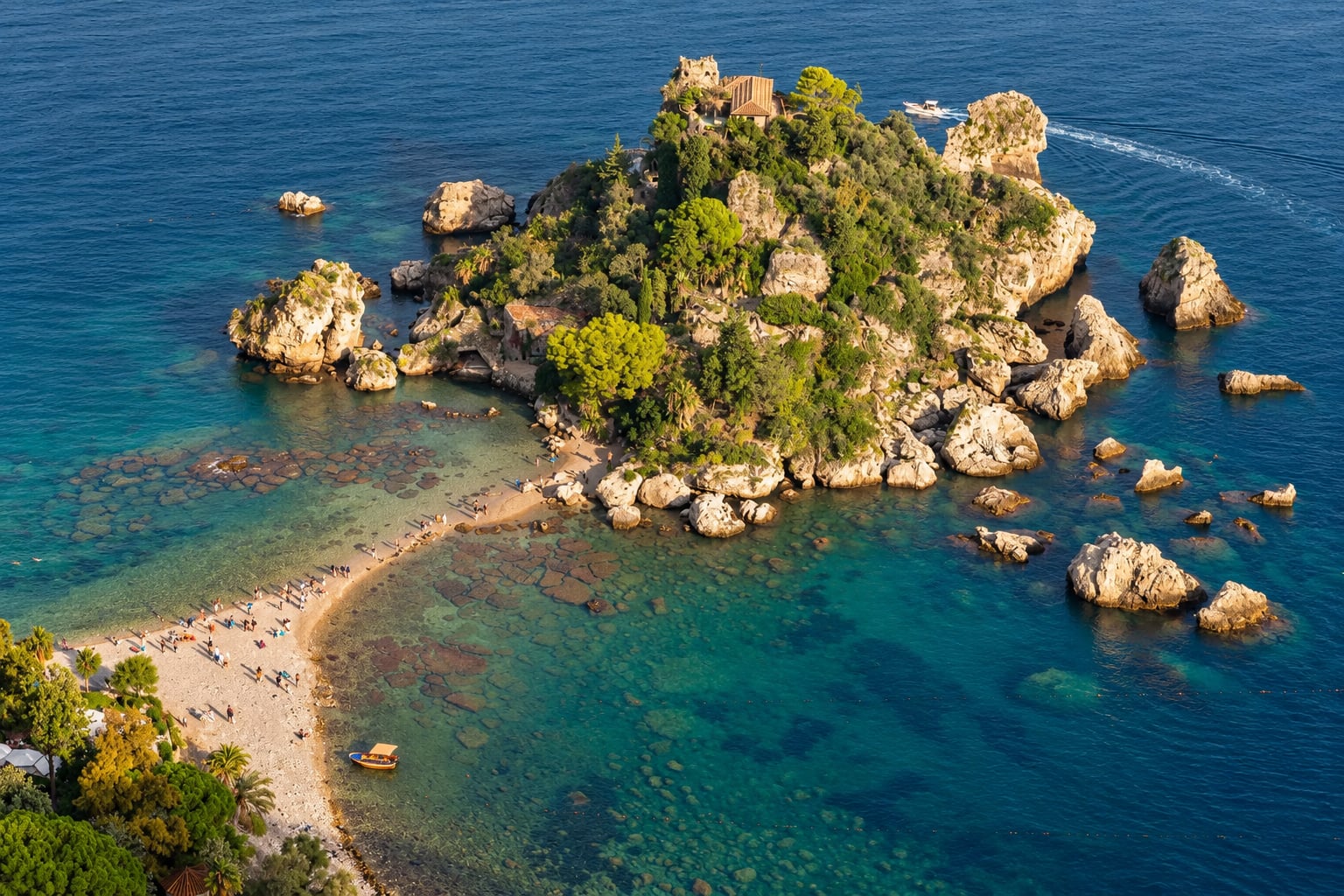
When to visit Sicily
Typical climate in Palermo, the regional capital.
Month by month
- Jan
- Mild coastal winter. Sea breezes keep temperatures moderate.
- Feb
- Cool but pleasant by the sea. Fewer crowds to enjoy.
- Mar
- Spring awakens the coast. Mild temperatures and blooming gardens.
- Apr
- Beautiful coastal spring. Ideal for hiking and exploring.
- May
- Warm days perfect for beach visits. Water warming up.
- Jun
- Summer season begins. Beach weather with warm seas.
- Jul
- Peak beach season. Hot days, warm Mediterranean waters.
- Aug
- Height of summer. Hot and sunny, perfect for swimming.
- Sep
- Late summer warmth continues. Great time for coastal visits.
- Oct
- Pleasant autumn by the sea. Warm enough for beach days.
- Nov
- Autumn arrives. Fewer tourists, still mild temperatures.
- Dec
- Quiet winter coast. Mild compared to inland areas.
The short version
For most people, the best time to visit Sicily is April through June or September through October. You get warm, sunny days, sea that's swimmable on the shoulders of summer, the island's best food (artichokes and citrus in spring, grapes and tuna in fall), and crowds that stay manageable. These windows sit in the sweet spot between the cool-water spring and the punishing high-summer heat.
Go in July or August only if you're tied to school holidays and you genuinely love heat. The sea is at its warmest and the beach scene is electric, but inland temperatures regularly top 35C (95F), and the famous Greek temples offer almost no shade. Winter is quiet and cheap, good for cities and culture if you don't mind some rain and short days, and it's the one season you can actually ski on Mount Etna in the morning and reach the coast by afternoon.
Spring (March to May)
Spring is Sicily at its greenest and most forgiving. March still feels like late winter, with cool nights and the odd rainy stretch, but by April the hills around Palermo and the southeast go bright with wildflowers and the air warms into the low 20s C (low 70s F). May is close to perfect: long sunny days, daytime highs around 23 to 25C (73 to 77F), and the archaeological sites at Agrigento, Selinunte, and Segesta are comfortable to walk before the heat lands. The catch is the sea. It stays cool through May (often in the low 60s F), so this is a sightseeing and hiking season more than a swimming one.
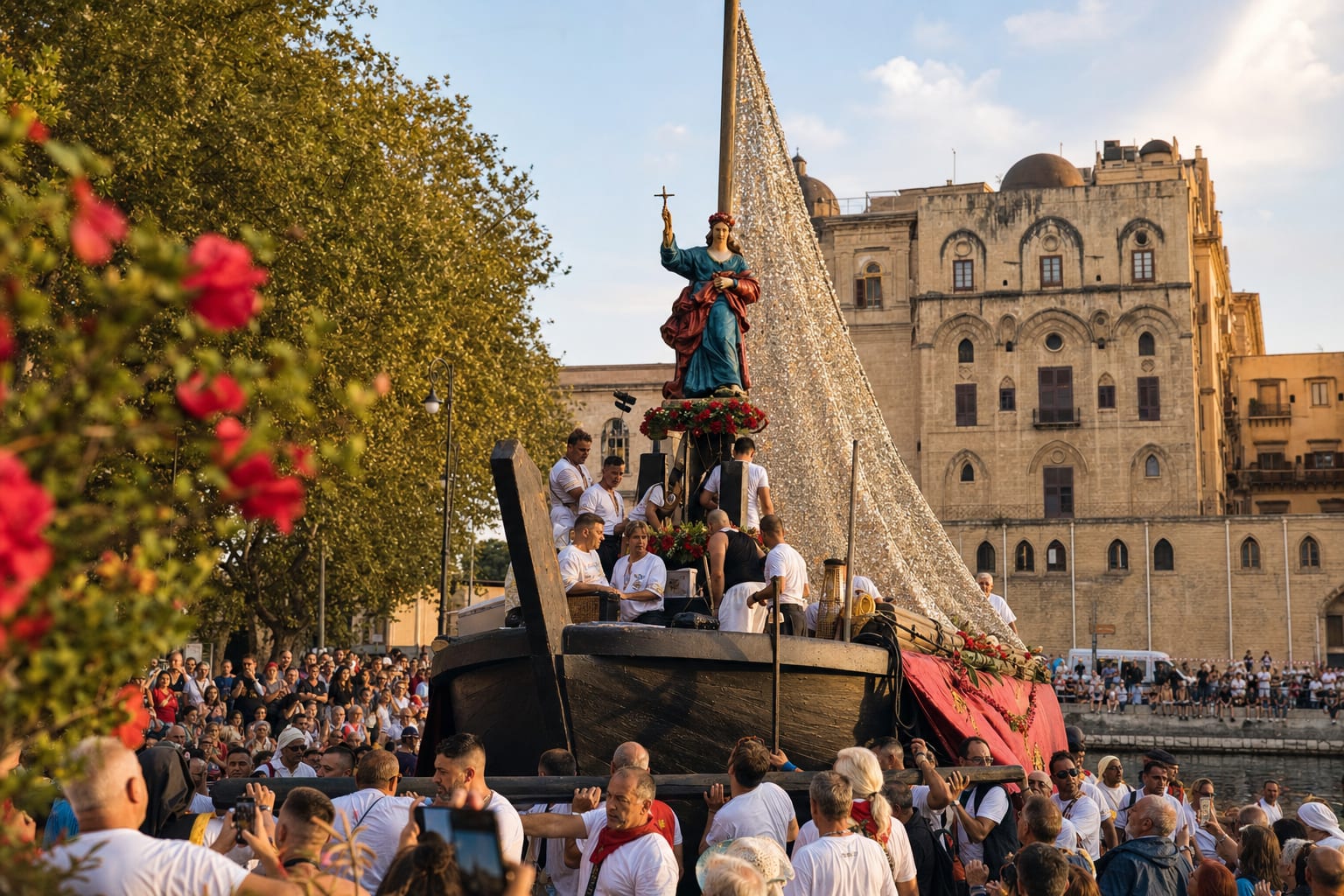
Spring is also Sicily's richest stretch for tradition. Holy Week (Settimana Santa, late March or April depending on the year) brings dramatic processions across the island, with Trapani's Misteri and Enna's hooded confraternities among the most striking in Italy. On the third weekend of May, the town of Noto carpets Via Nicolaci, a whole baroque street, in flower petals for the Infiorata. Food is excellent right now: artichokes, fava beans, wild greens, and the tail end of blood-orange season. Book ahead around Easter, when Sicilians travel too and the coastal towns fill up fast.
Summer (June to August)
June is the unsung hero of Sicilian summer. The sea has finally warmed enough to swim (low 70s F and climbing), the days are long and reliably sunny, highs sit around a manageable 28 to 29C (82 to 84F), and the worst crowds haven't landed yet. If you want beach time without the full crush, target June. Things change fast in July and August. This is peak heat and peak crowds. Coastal cities like Palermo and Catania run 30 to 33C (86 to 91F), and the interior is hotter, with heatwaves of African origin sometimes pushing past 40C (104F). In August 2021, a reading of 48.8C (119.8F) near Syracuse set the highest temperature ever recorded in Europe.
High summer suits one kind of trip: sea, sun, and slow days. The water is gorgeous (warming into the high 70s F), the islands off Sicily (the Aeolians, Egadi, and Pantelleria) come alive, and beach towns buzz late into the night. But save the temples and hilltop towns for early morning or evening, because midday at Agrigento with no shade is genuinely rough. The hard date to know is Ferragosto, August 15, when Italians take their own holiday. Beaches are mobbed, prices spike, and some family-run restaurants and shops close for a week or two around it. Book everything well in advance, ferries to the smaller islands included.
Autumn (September to October)
Autumn is many regulars' favorite season here, and it's easy to see why. September keeps summer's warmth without the worst of its heat: highs around 28 to 29C (82 to 84F) early on, easing through the month, and a sea that's actually at its warmest of the year (around 26C / 79F after a full summer of sun). You can still swim comfortably well into October, when the water holds around 22 to 23C (72 to 73F) and drifts down toward 21C by month's end. Crowds thin out noticeably once the European holidays end, so popular spots like Taormina and Cefalu feel livable again.
This is also grape harvest, and the wine country on Etna's slopes and around Marsala is at its best, with crush-season energy and long lunches. Food shifts toward grapes, figs, mushrooms, prickly pears, and the start of olive season. October can bring the first real rain of the year, sometimes heavy and sudden, so pack a light layer and a rain jacket. But the tradeoff is worth it: warm sea, ripe food, good light, and far fewer people than just a month or two earlier.
Winter (November to February)
Winter in Sicily is mild by northern standards but genuinely the off-season. Coastal cities like Palermo and Catania sit around 15 to 16C (59 to 61F) by day and rarely freeze, though November and December are the wettest months and rain can settle in for days. Days are short, some coastal hotels and beach restaurants close, and ferries to the smaller islands run on reduced schedules. The upside is real: cities are quiet, museums and churches are yours, prices drop, and you experience daily Sicilian life without the tourist overlay.
Two winter draws stand out. From February 3 to 5, Catania throws itself into the Feast of Sant'Agata, one of the largest religious festivals in the world, with towering decorated candelore, fireworks, and enormous crowds following the saint's silver bust through the city for days (the wider cycle runs late January into mid-February). And up on Mount Etna (3,357m / 11,000ft, Europe's highest active volcano), snow falls reliably from December into April, with January and February the most dependable. You can ski two small areas, Etna Nord and Nicolosi on the south side, in the morning and reach the coast the same afternoon. It's a strange, wonderful contrast you won't find anywhere else in Italy.
Weather, by the part of Sicily
Sicily is big enough to feel like several places at once. The coasts (Palermo, Catania, Trapani, Siracusa) are classic Mediterranean: mild, breezy, and the most comfortable choice in the shoulder seasons. The south and southeast coast, around Agrigento and the baroque towns, gets the most sun and the most heat in summer, with the African scirocco wind occasionally pushing temperatures and humidity to uncomfortable levels and hazing the sky for a day or two at a time.
Head inland and uphill and everything changes. The interior hill towns (Enna at nearly 1,000m, Caltanissetta, the area around Piazza Armerina) are hotter than the coast in summer but markedly colder in winter, with real frost and the occasional dusting of snow. Then there's Mount Etna, its own climate zone entirely: the summit holds snow for months, the air is cool even in summer, and conditions can flip quickly with altitude. If you're climbing Etna, bring layers no matter the season, because the warm coast you left an hour ago has nothing to do with the weather at 2,000 meters and a biting wind up top.
Insider timing
The shoulder weeks to target are the second half of May, the first half of June, and all of September into early October. These give you warm weather, mostly open everything, and the thinnest crowds outside of deep winter. June before the schools break and September after they go back are the two windows where Sicily feels almost private while still being fully alive.
The dates to plan hard around are mid-August (Ferragosto, August 15) and Easter week. Around Ferragosto, beaches are mobbed, prices peak, and some family businesses simply shut for their own holiday, so book accommodation, restaurants, and island ferries weeks ahead. A few practical tips that pay off year-round: see the temples and outdoor archaeological sites at opening time, both for cooler air and softer light; rent a car if you want to move beyond the main cities, because rural Sicily rewards it and public transport is thin; and always check festival dates before you lock in a town, since a sleepy place can fill overnight for a saint's day.