

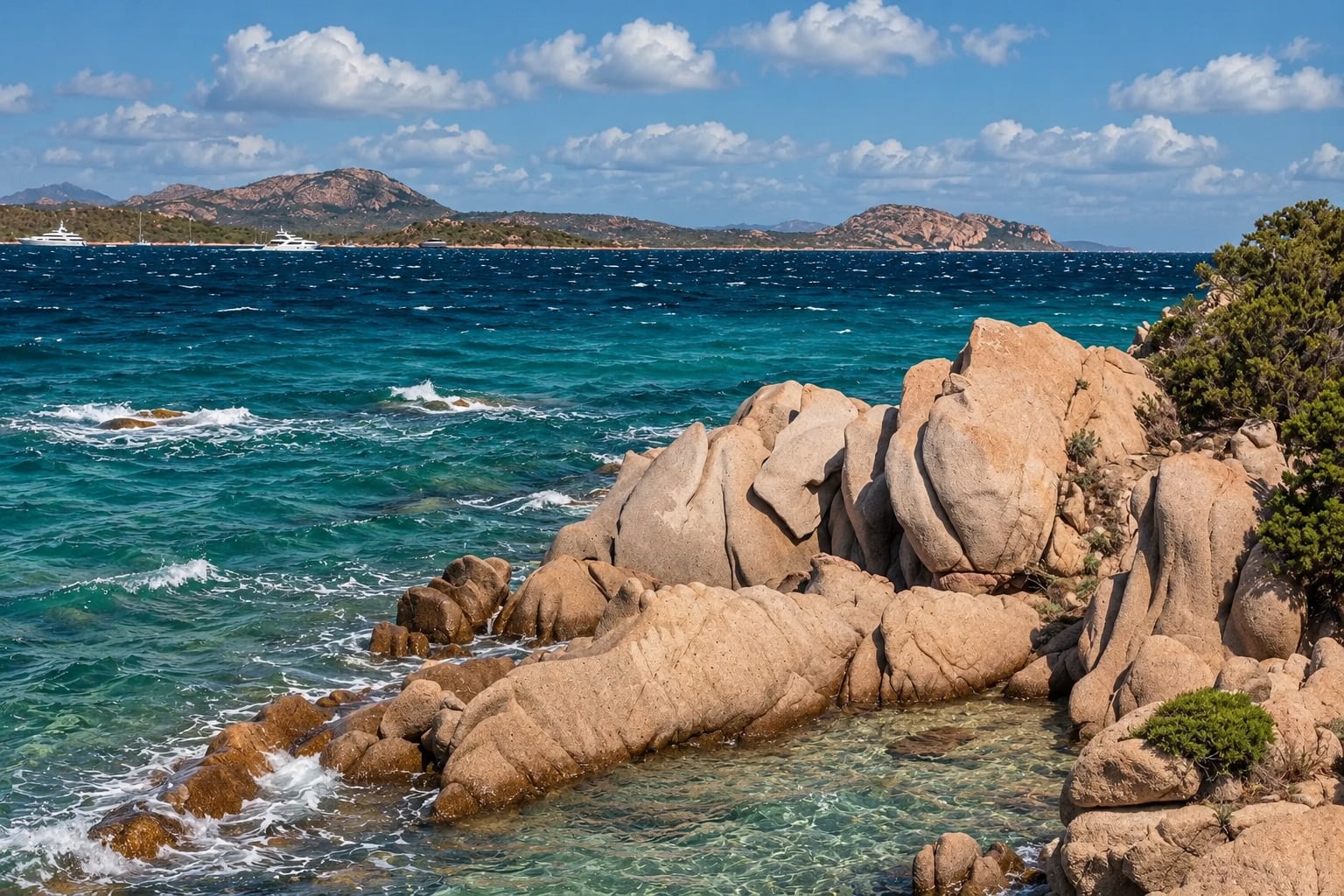
When to visit Sardinia
Typical climate in Cagliari, the regional capital.
Month by month
- Jan
- Mild coastal winter. Sea breezes keep temperatures moderate.
- Feb
- Cool but pleasant by the sea. Fewer crowds to enjoy.
- Mar
- Spring awakens the coast. Mild temperatures and blooming gardens.
- Apr
- Beautiful coastal spring. Ideal for hiking and exploring.
- May
- Warm days perfect for beach visits. Water warming up.
- Jun
- Summer season begins. Beach weather with warm seas.
- Jul
- Peak beach season. Hot days, warm Mediterranean waters.
- Aug
- Height of summer. Hot and sunny, perfect for swimming.
- Sep
- Late summer warmth continues. Great time for coastal visits.
- Oct
- Pleasant autumn by the sea. Warm enough for beach days.
- Nov
- Autumn arrives. Fewer tourists, still mild temperatures.
- Dec
- Quiet winter coast. Mild compared to inland areas.
The short version
The honest answer is late May through June and the month of September. In those weeks the sea is warm enough to swim, the days are long and reliably sunny, prices drop from the July and August ceiling, and you can find a parking spot near a beach without circling for forty minutes. This is the island at its best, and it's the window most Sardinians themselves would pick.
July and August are gorgeous but intense. The beaches are stunning and the energy is high, but you'll pay peak prices, share the famous coves with everyone else, and deal with real heat. Spring (especially April) suits hikers, archaeology fans, and anyone who cares more about wildflowers and empty trails than swimming. Winter is for travelers who want Cagliari, food, and quiet over a beach holiday. Pick your season by what you actually want, not by the postcard.
Spring (March to May)
Spring is when Sardinia's interior shows off. The hills go green, the macchia (the scrubland that smells of myrtle and rosemary) blooms, and the Bronze Age stone towers called nuraghi sit in countryside that looks nothing like the dry gold of August. March is still cool and can be wet, with daytime highs around 16 to 18C (low 60s F) in Cagliari, but by late April and May you're into shirtsleeve weather, with highs climbing through the low 20s C (low 70s F) and long, bright days. Trails are at their best, the archaeological sites are uncrowded, and orchids and asphodel are everywhere.
The catch is the sea. Even in May the water sits around 17 to 18C (mid 60s F), bracing rather than inviting, so spring is a poor bet if your trip is mostly about swimming. The payoff is the calendar. Sant'Efisio, the island's biggest festival, runs May 1 to 4 in Cagliari, with thousands of people in traditional costume, decorated ox carts, and launeddas (the Sardinian triple reed pipe) escorting the saint on a four-day journey to Nora and back. It's worth planning a trip around, so book ahead for those dates, because the city fills up. The rest of spring stays calm and affordable.
Summer (June to September)
Summer is the Sardinia of the brochures, and it earns it. The water turns that unreal cut-glass turquoise, hitting a swimmable 22 to 24C (low to mid 70s F) from July into September, and the sun is dependable. June is the sweet spot: warm sea, long days, and crowds that haven't yet peaked. By July and August, Cagliari highs sit around 31 to 32C (high 80s to 90F) and the interior bakes hotter, so plan beach mornings and shady, slow afternoons rather than midday hikes.
August is the honest warning. The whole of Italy vacations then, Sardinia included, and the island's best beaches (the Costa Smeralda, the Maddalena islands, Chia, Cala Gonone) get genuinely crowded, with peak prices on everything from ferries to gelato. Around Ferragosto (August 15) the crush is at its worst, and many family-run inland restaurants and shops close while their owners take their own holiday. If you can only travel in summer, aim for the second half of June or the first half of September and you'll get the same warm water with a fraction of the squeeze.
Autumn (September to November)
September is one of the two best months to come, full stop. The sea is still warm from a full summer of heating (around 23 to 24C, mid 70s F, often warmer than June), the crowds thin out fast once Italian schools go back in mid-month, and Cagliari highs settle into a comfortable upper 20s C (low 80s F). You get summer swimming with shoulder-season calm and lower prices. Early October often holds the warmth too, with pleasant days and a sea that's still happy to swim in.
The trade-off arrives later in autumn. By mid to late October the weather turns less predictable, with shorter days and the season's first real rain and wind, and November is properly wet, especially in the north and west. Beach businesses, seasonal hotels, and resort-town restaurants start shuttering for the winter from late October. So aim early. September and the first week or two of October are the prize, while late autumn is for travelers who want green hills, mushrooms and chestnuts, and the island mostly to themselves.
Winter (December to February)
Winter on the coast is mild and surprisingly livable, not the deep freeze northern visitors expect. Cagliari daytime highs hover around 14 to 16C (high 50s to low 60s F), and on a clear, still day you can sit outside in the sun comfortably. This is the season for the city itself: museums, the old Castello quarter, long lunches of fregola and porceddu (the slow-roast suckling pig), and the kind of quiet that lets a place breathe. It rains, especially December and January, but rarely for days on end, and the light between fronts is beautiful.
Two honest caveats. First, this is not a beach trip. The sea drops to around 13 to 14C (mid 50s F) and the coastal resorts are largely closed and asleep. Second, the interior is a different world. The Gennargentu mountains get real snow above 1,500 meters that can linger toward early summer, and the Mistral wind (the maestrale) can come howling out of the northwest and make exposed days genuinely cold. Winter rewards travelers who want food, culture, Carnival, and solitude over sunbathing, and February brings Sa Sartiglia, Oristano's spectacular masked horseback joust, where costumed riders gallop at full tilt to spear a small silver star with a sword. It's held on Carnival Sunday and Shrove Tuesday.
Weather, by the part of Sardinia
Sardinia is big (the Mediterranean's second-largest island) and it does not have one climate. The south and the Cagliari coast are the warmest and driest, with the longest swimming season and the mildest winters. The west and north coasts (Alghero, the Costa Smeralda, the Bonifacio Strait) catch the Mistral wind far more often, so a sparkling day in Cagliari can mean whitecaps and a sharp breeze around Alghero, 200 km away. If wind ruins your beach day, you can often just drive to a more sheltered stretch (the south coast or the Sinis peninsula near Oristano) and find calm.
Inland and up high, the rules change completely. The interior runs a few degrees cooler than the coast in summer (a relief on the hottest days) and significantly colder in winter, and the Gennargentu and Supramonte mountains hold snow for months, with the highest summits keeping it toward June. The mountain villages of the Barbagia feel like a separate country from the resort coast, both in weather and in life. Plan around this. A single forecast for 'Sardinia' is close to meaningless, so check the specific town you're heading to.
Insider timing
Target the shoulder weeks the locals love: the last two weeks of June and the first two weeks of September. You get warm sea, full services, long days, and noticeably lower prices and crowds than July and August deliver. September edges out June if swimming is your priority, because the sea has had all summer to warm up; June edges out September if you want spring greenery still hanging on. Both beat August on every count except sheer party energy.
Avoid mid-August if you possibly can, and Ferragosto (August 15) above all, when prices peak, the best beaches are shoulder to shoulder, ferries from the mainland sell out weeks ahead, and many inland businesses close. Two more practical tips. If you're flying or taking the ferry in peak season, book transport before accommodation, because that's the real bottleneck. And work the festival calendar to your advantage. Come for Sant'Efisio in early May or Sa Sartiglia at Carnival and you'll see a side of Sardinia, fierce, costumed, and proud of its difference, that the summer beach crowd never gets near. Just reserve your room early for festival weekends.