

Every city in Campania
From the capital to the smallest borghi.
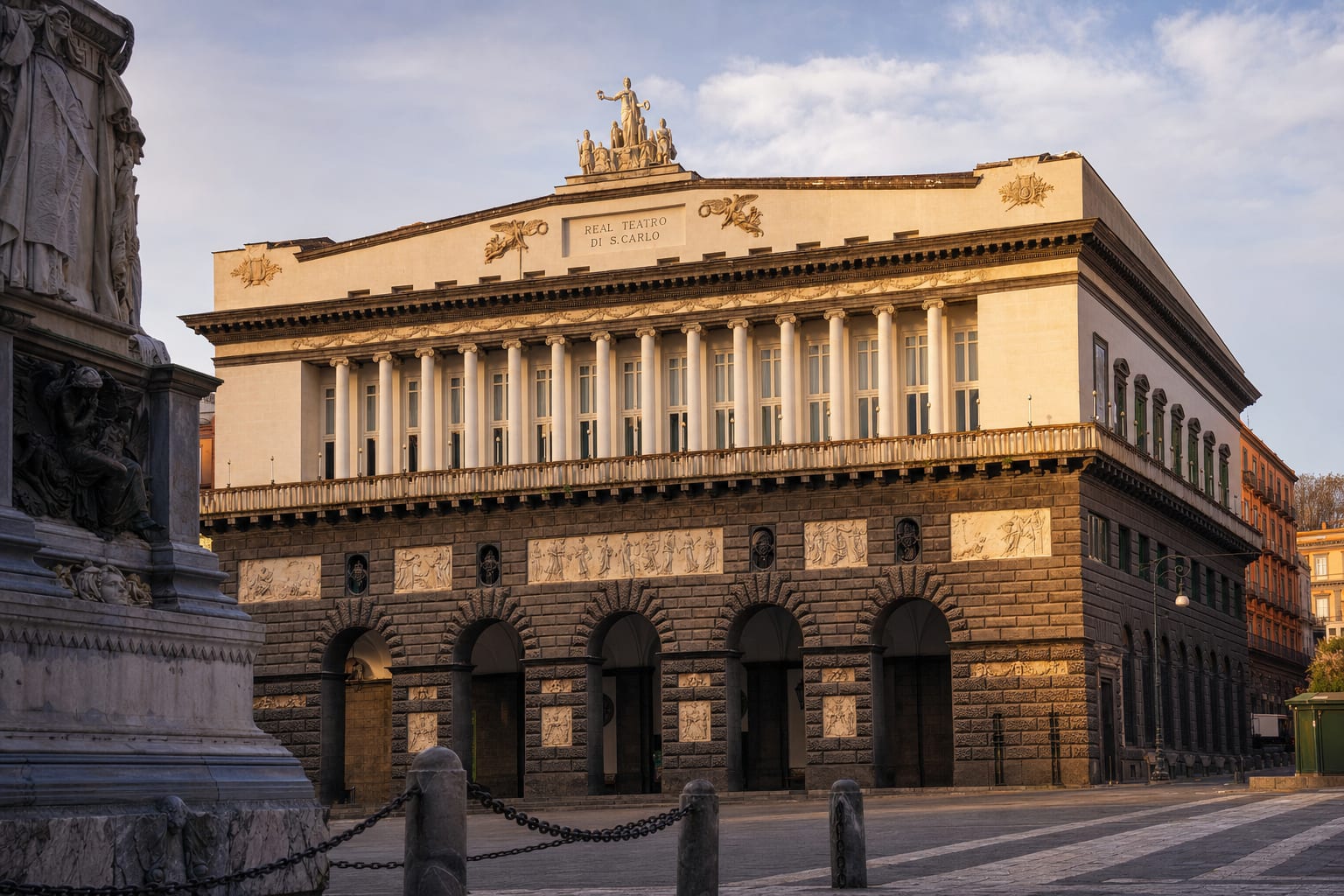 NaplesThe capitalThe unruly, magnificent capital of the south, where Spaccanapoli cuts dead-straight through a Greek street grid and Caravaggio shares the city with the Veiled Christ in the Sansevero Chapel. The Archaeological Museum guards Pompeii's treasures, and the world's first pizza was born in these alleys.
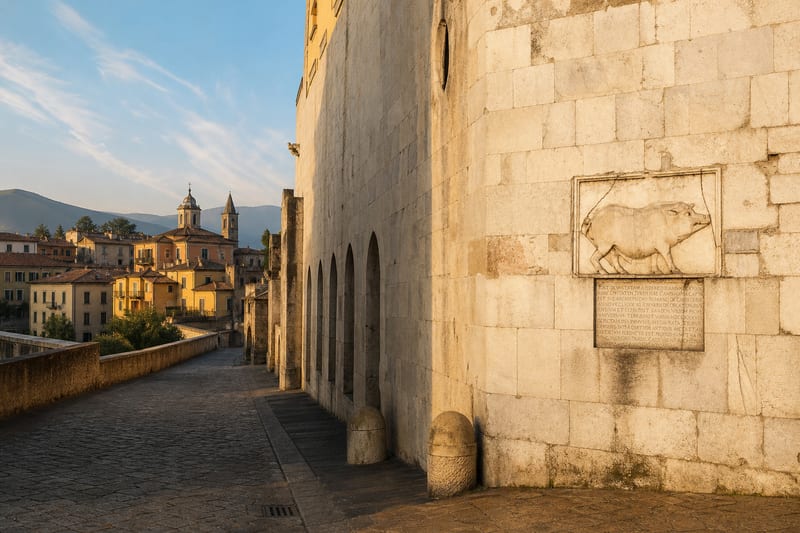
- Capaccio Paestum
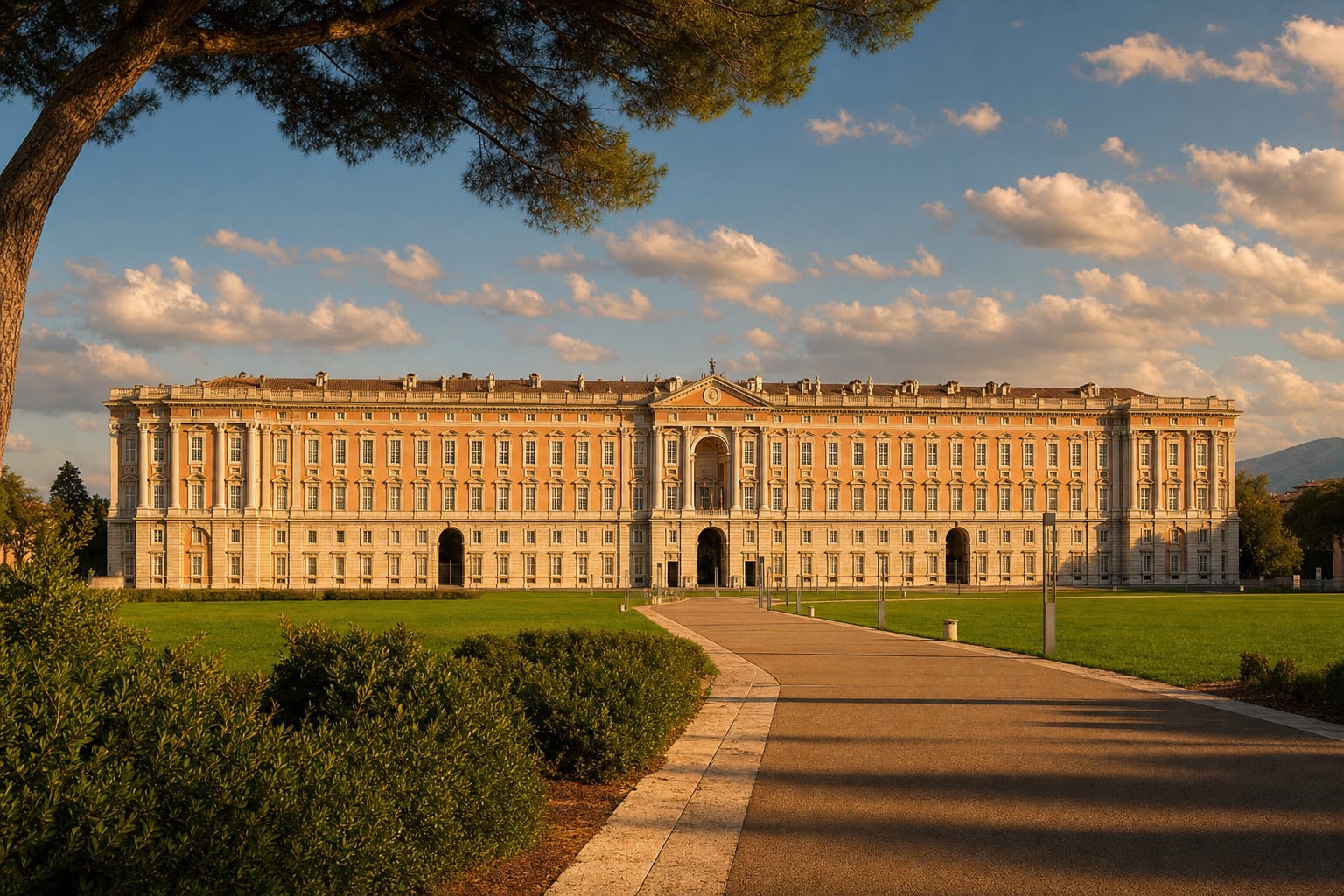 CasertaHome to the colossal Royal Palace of Caserta, the Bourbon answer to Versailles, with twelve hundred rooms, a grand staircase and a three-kilometer water axis tumbling through formal gardens to a cascade.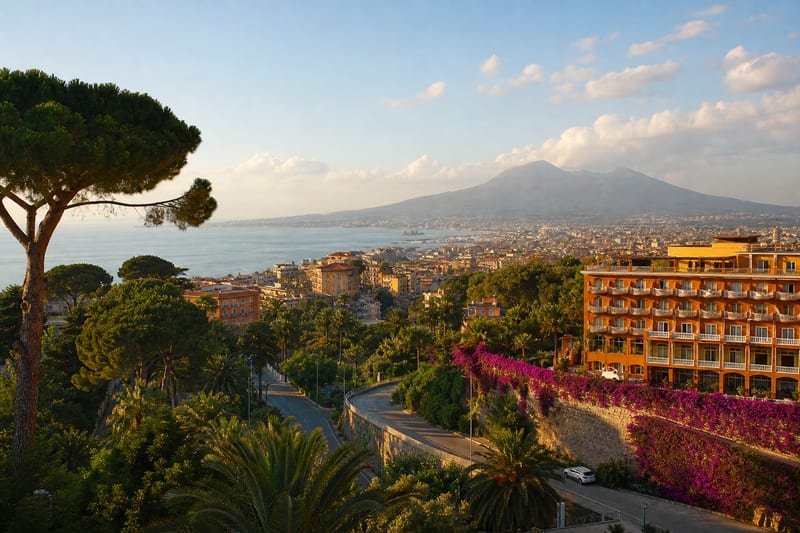
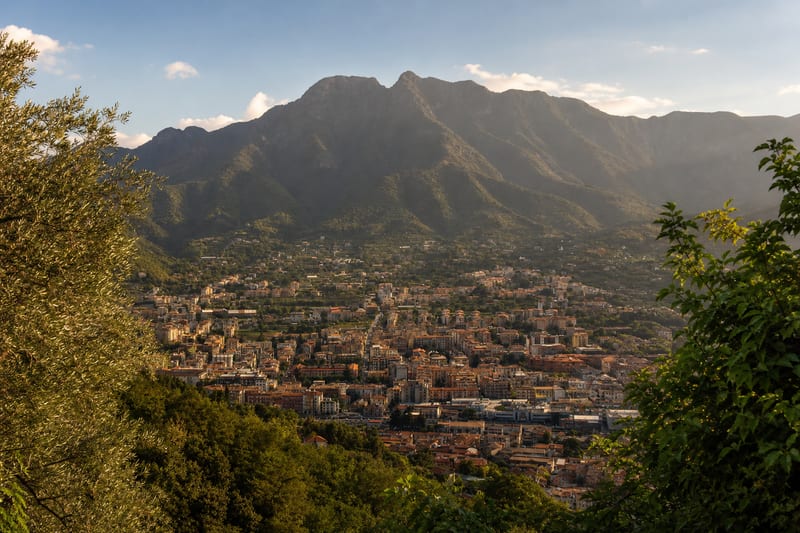
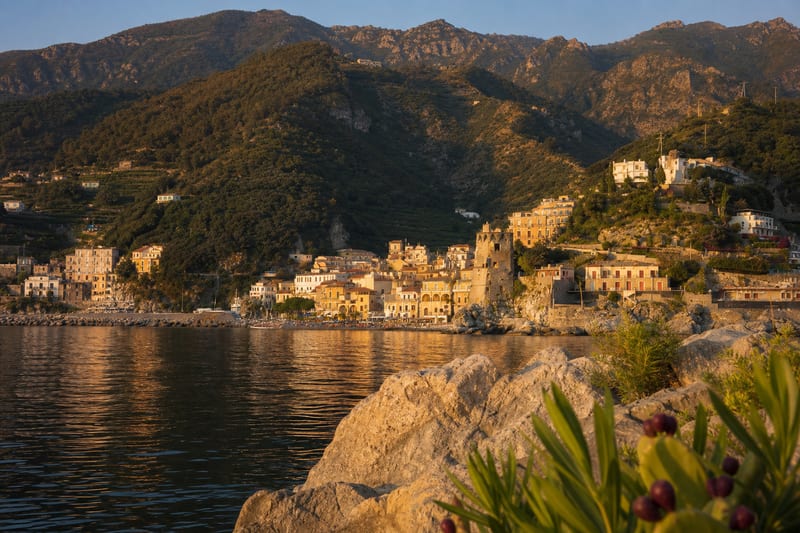
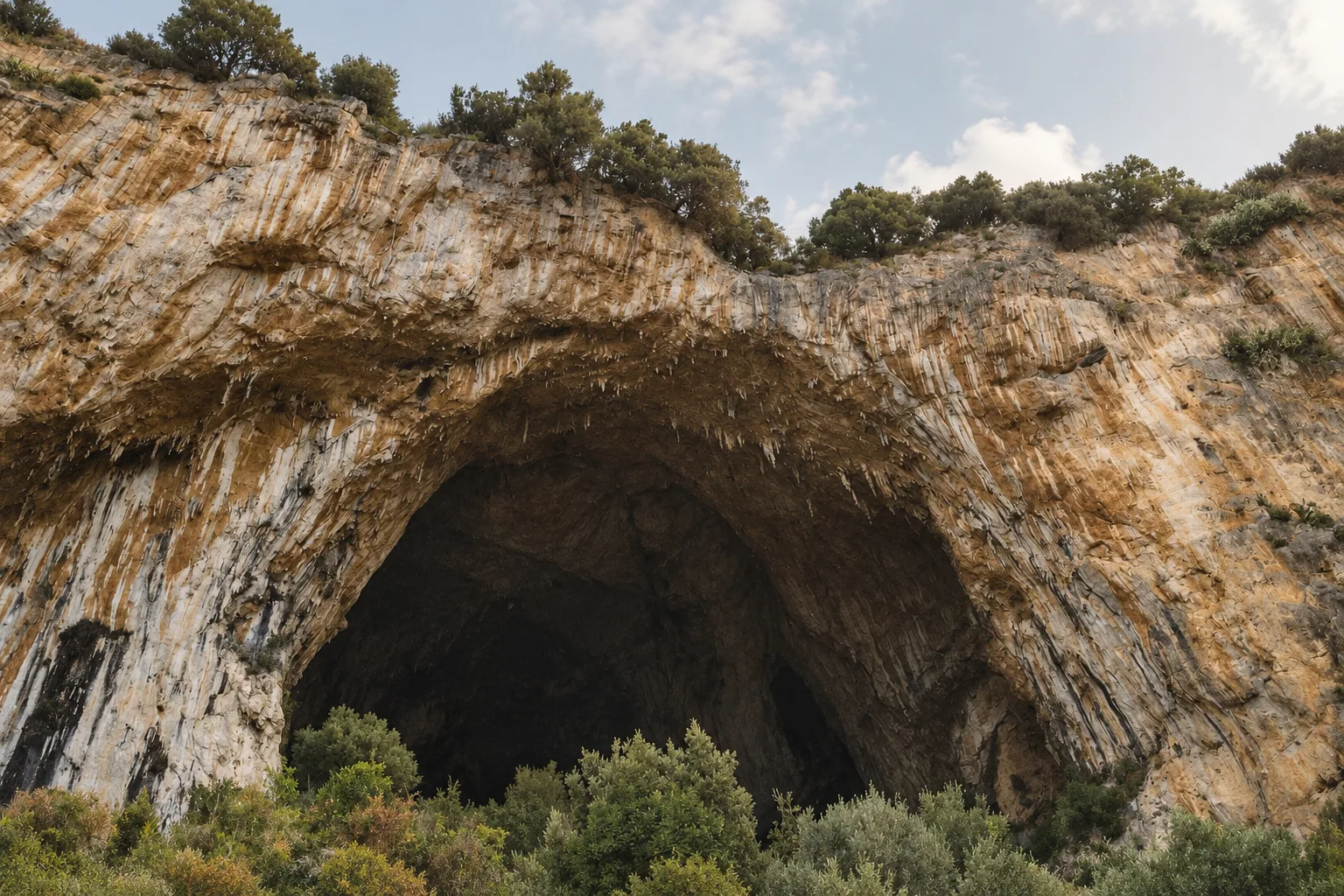 Conca dei MariniA tiny Amalfi Coast village of whitewashed houses tumbling toward a sheltered cove, best known for the Grotta dello Smeraldo, a sea cave lit an unearthly emerald by light filtering up from below.
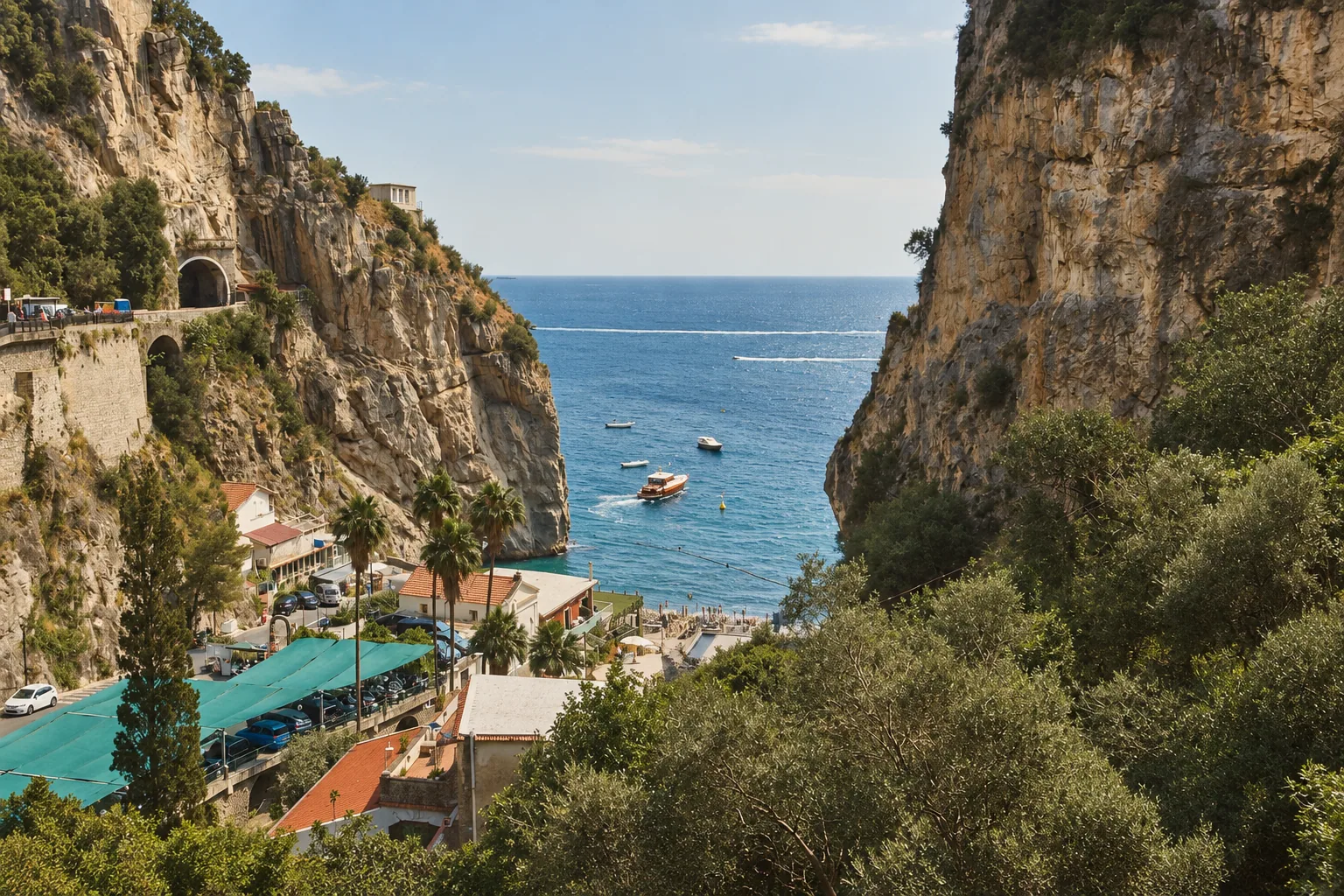 FuroreA village strung along the heights of the Amalfi Coast, famous for the Fjord of Furore, a narrow cleft in the cliffs where a fishermen's hamlet huddles beneath a high arched bridge.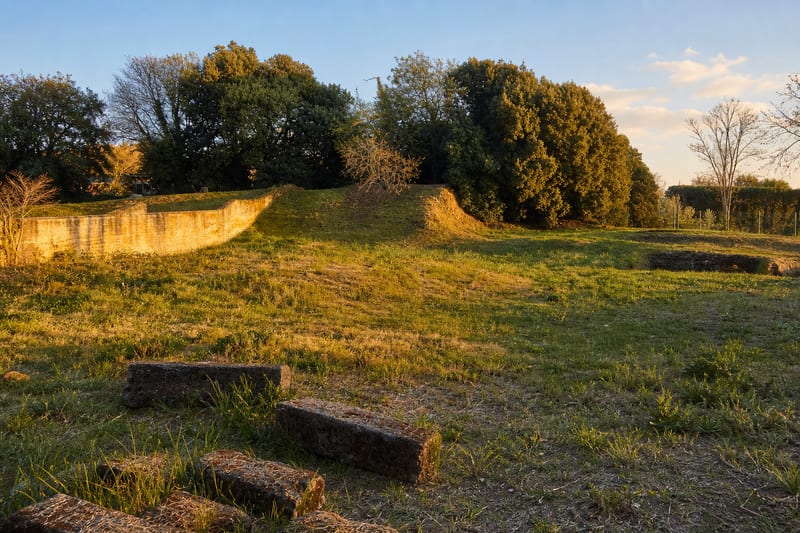
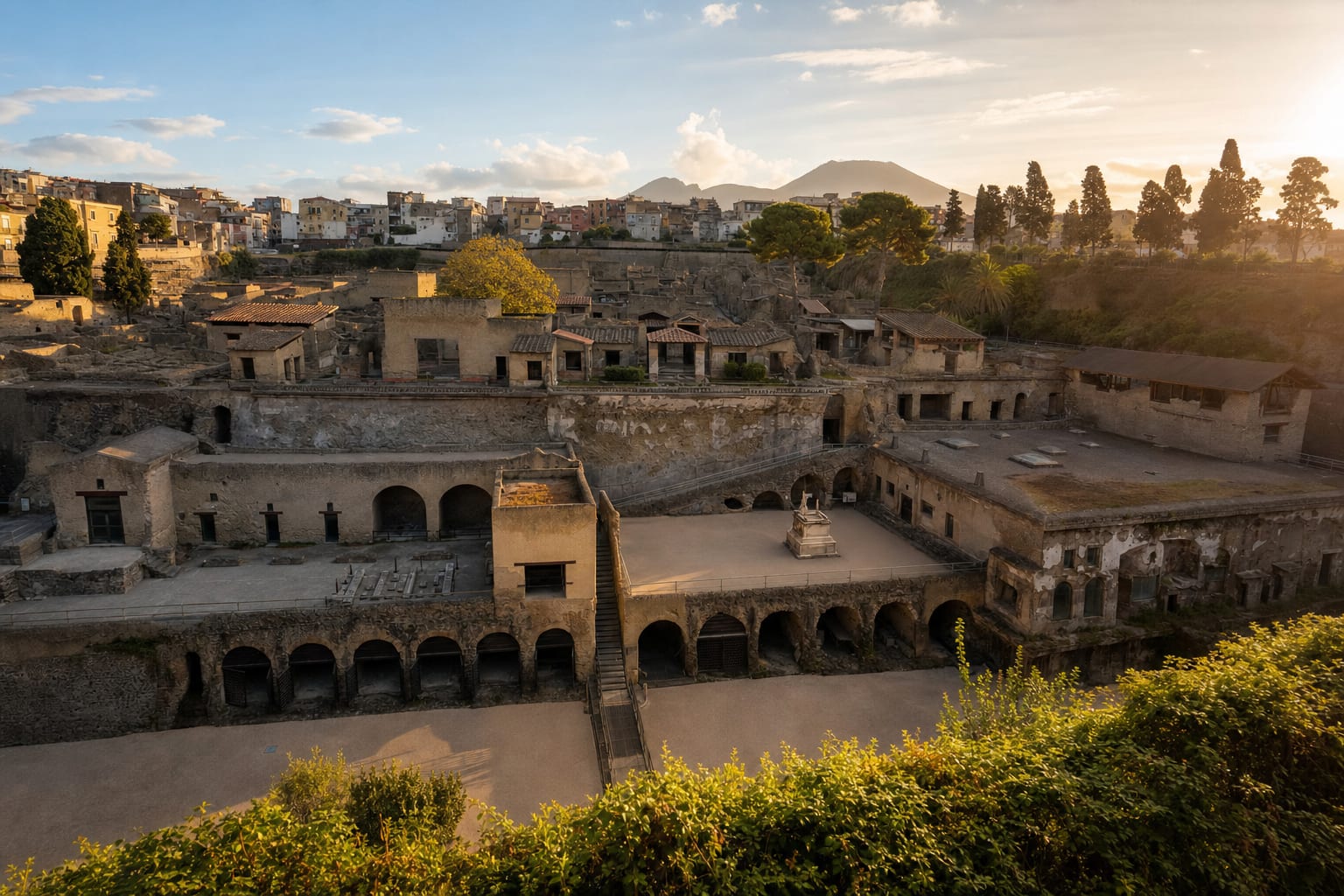 HerculaneumA smaller, wealthier neighbor of Pompeii, buried by the same eruption but sealed under deep volcanic mud that preserved it more completely. Carbonized wooden balconies, upper floors and even furniture survive in its excavated streets.
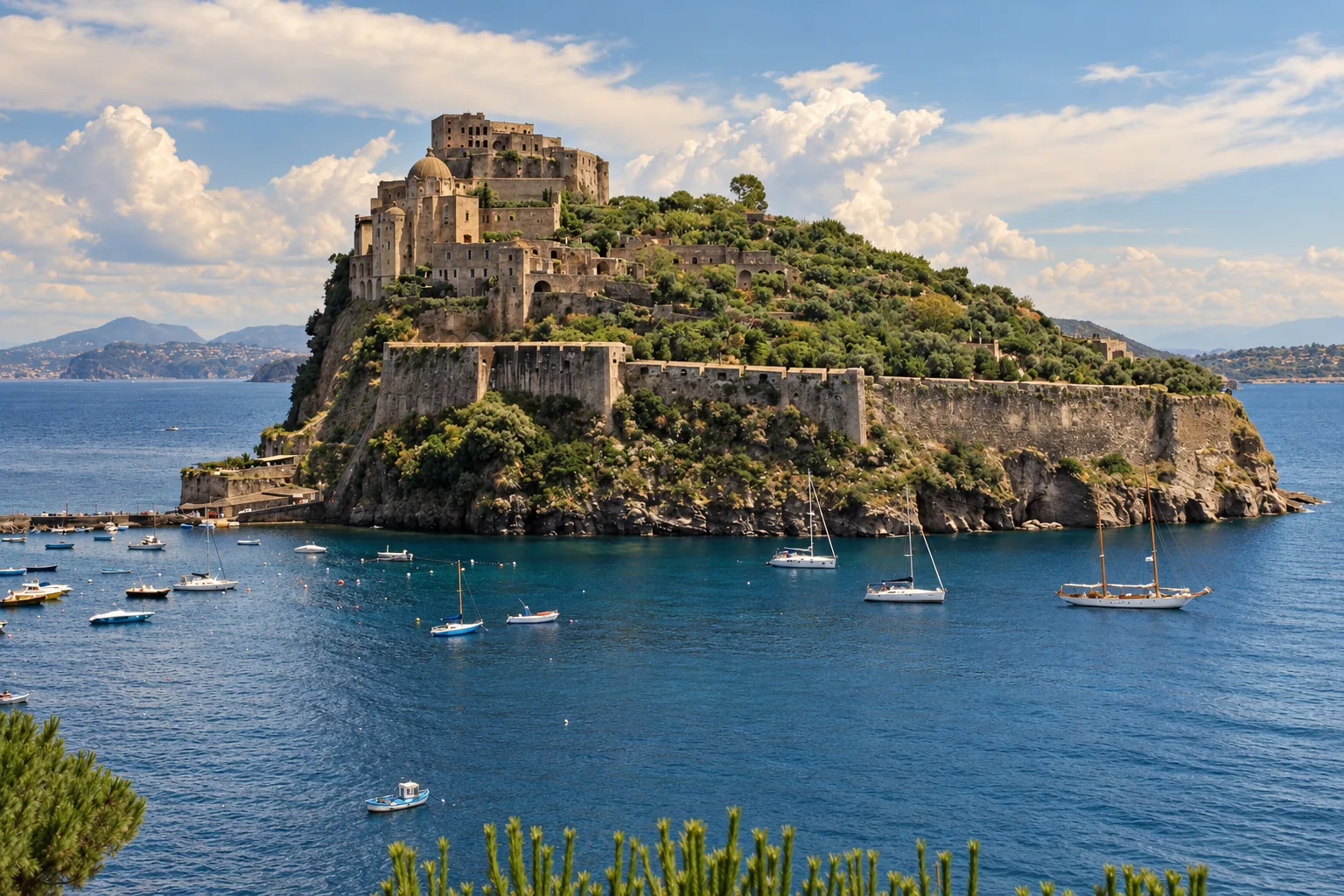 IschiaThe largest island in the Bay of Naples, a green volcanic dome famous for its thermal spas and hot springs. Its emblem is the Castello Aragonese, a fortress crowning a rocky islet linked to the town by a causeway.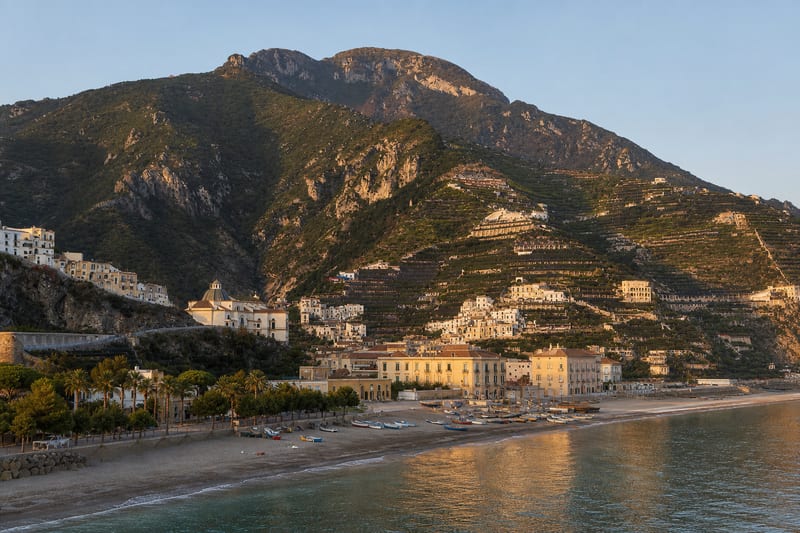
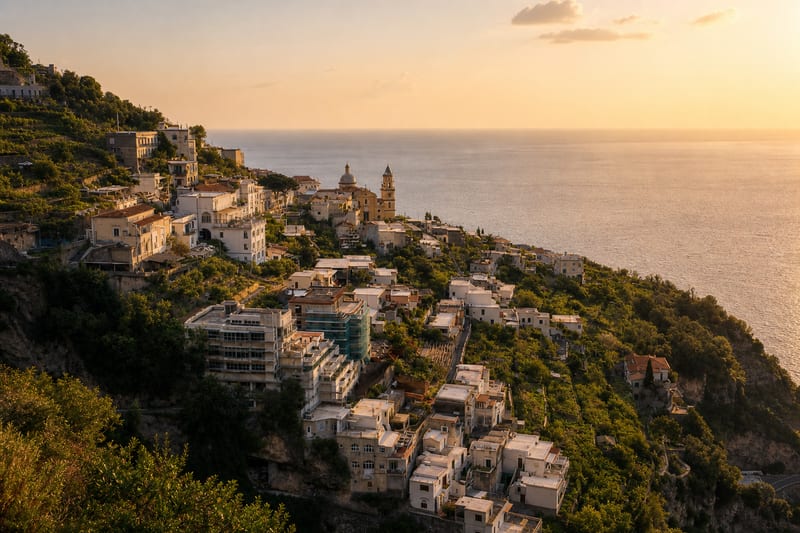
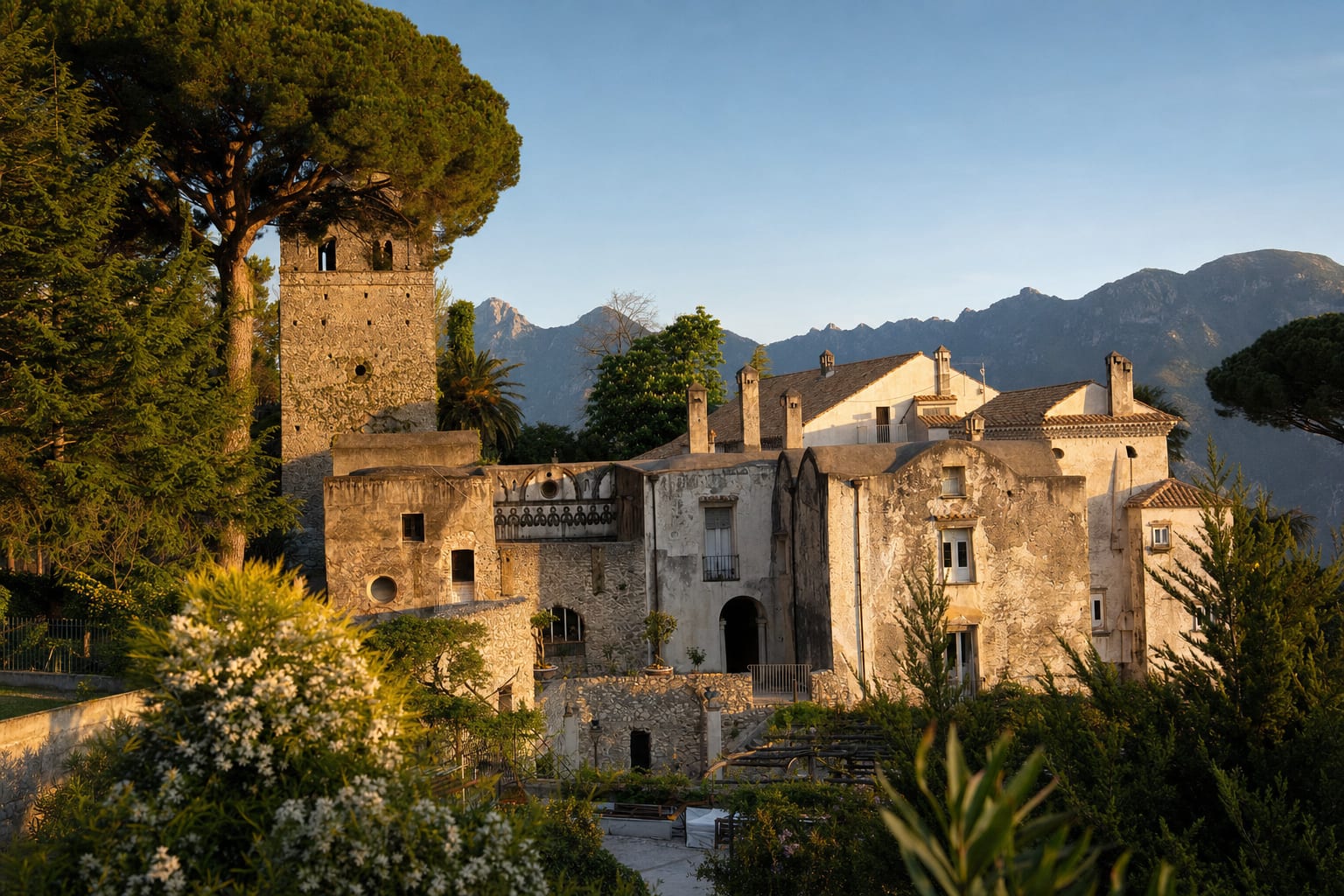 RavelloThe Amalfi Coast's serene aerie, set high above the sea on a ridge of gardens. Villa Rufolo's belvedere so moved Wagner that he set Parsifal's enchanted garden here, while Villa Cimbrone's Terrace of Infinity hangs marble busts over the void.
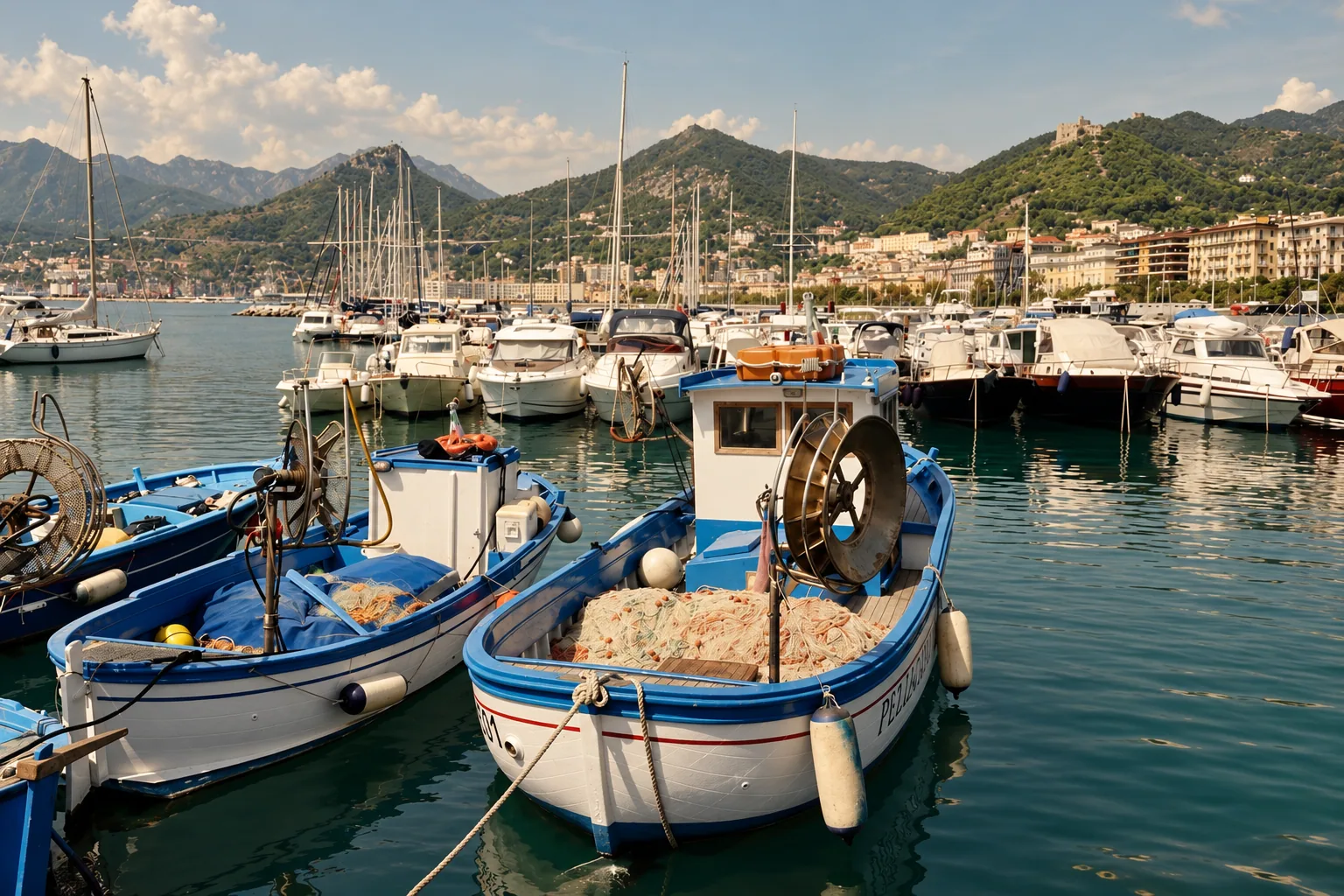 SalernoA lively port city and the gateway to the Amalfi Coast, with a long seafront promenade and a medieval quarter rising to a Norman cathedral. Salerno was home to the Schola Medica Salernitana, medieval Europe's first medical school.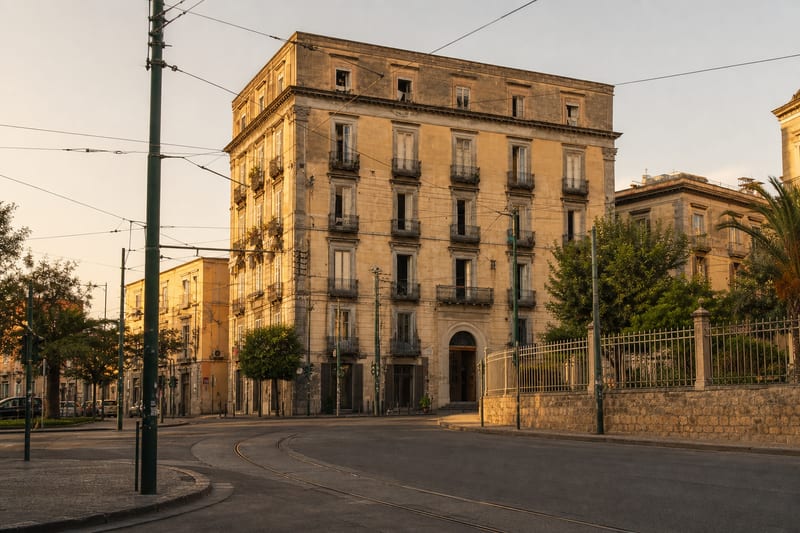
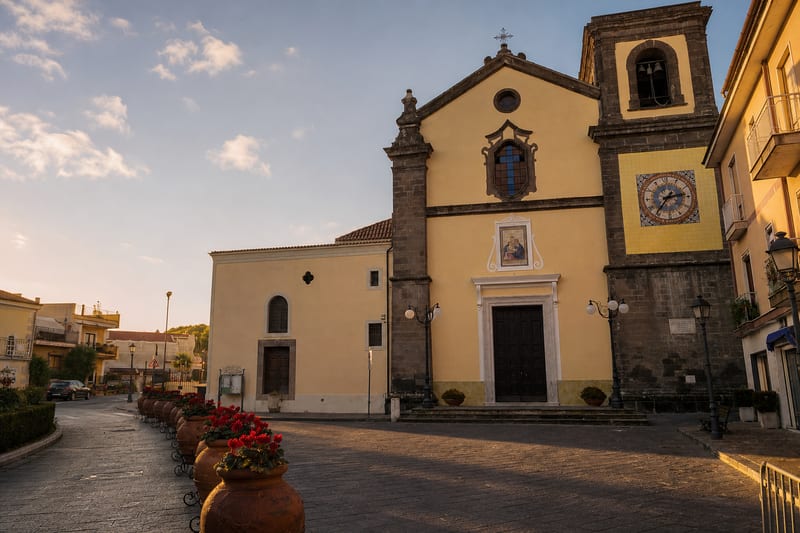
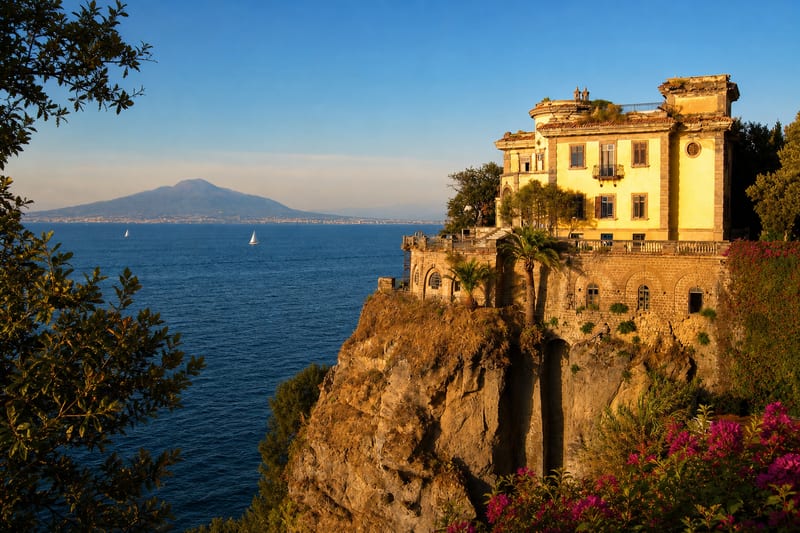
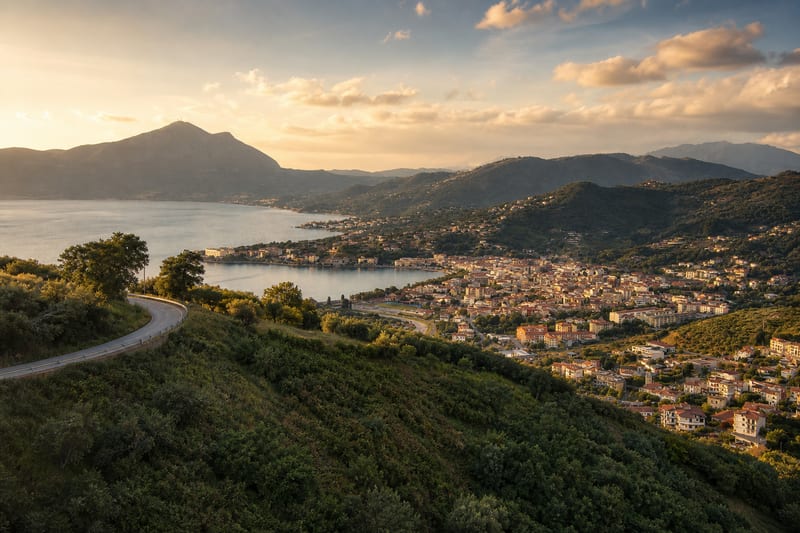
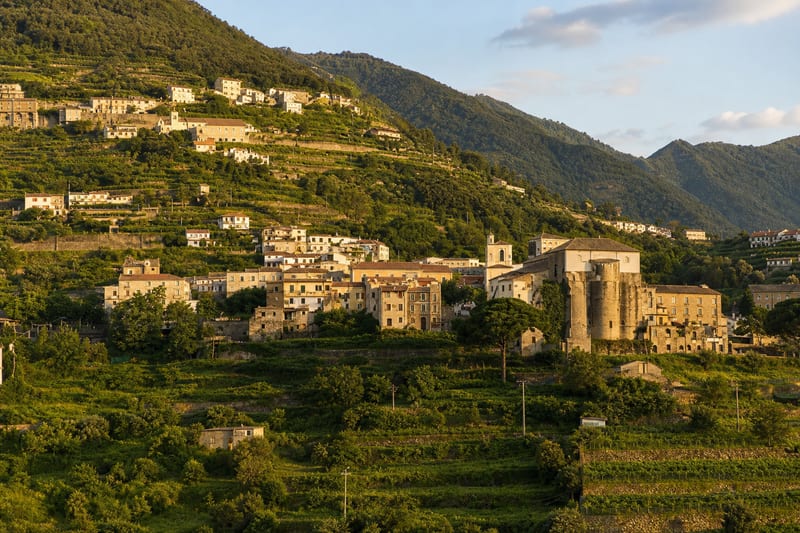
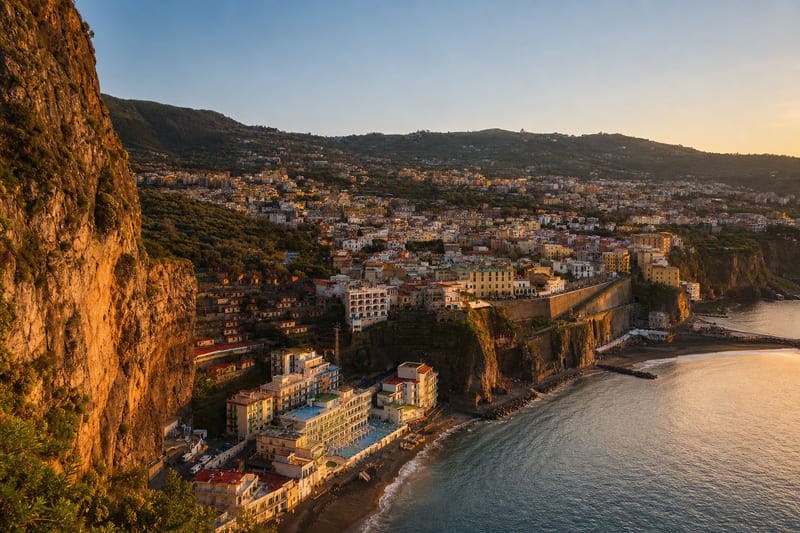
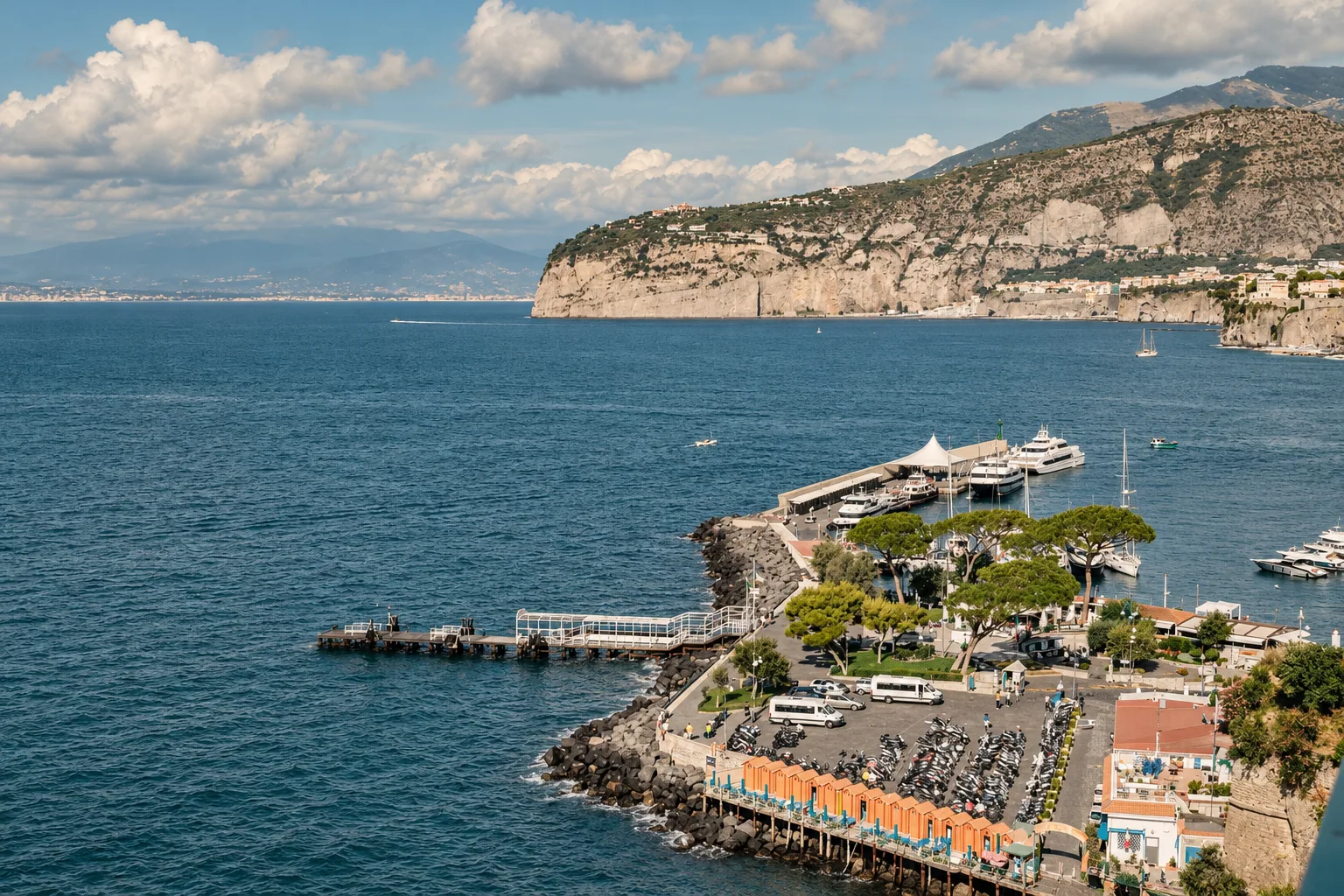 SorrentoThe grande dame of the Sorrentine Peninsula, set on tufa cliffs above the bay with grand hotels, orange and lemon groves, and views to Vesuvius. Its famous lemons perfume the limoncello poured all along this coast.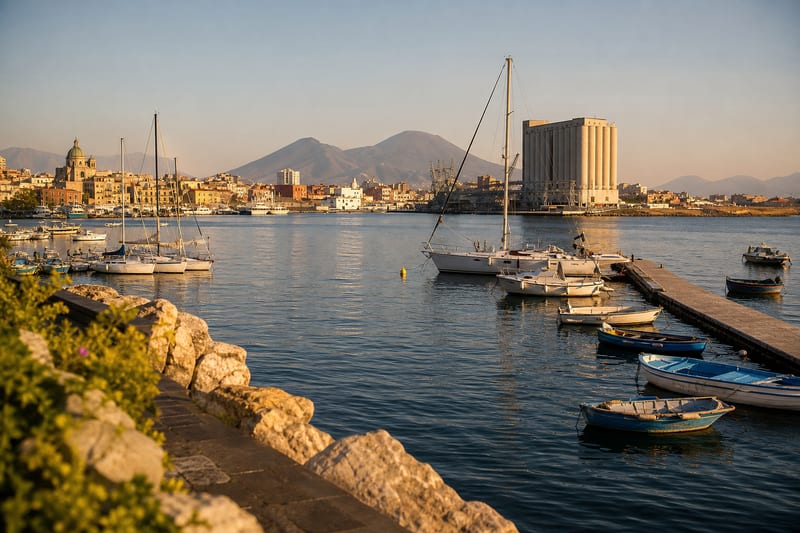
 Vietri sul MareThe first town on the Amalfi Coast coming from Salerno, celebrated for its centuries-old ceramic craft. Its hand-painted majolica, in bright blues, greens and yellows, tiles shopfronts, church domes and tables across Italy.
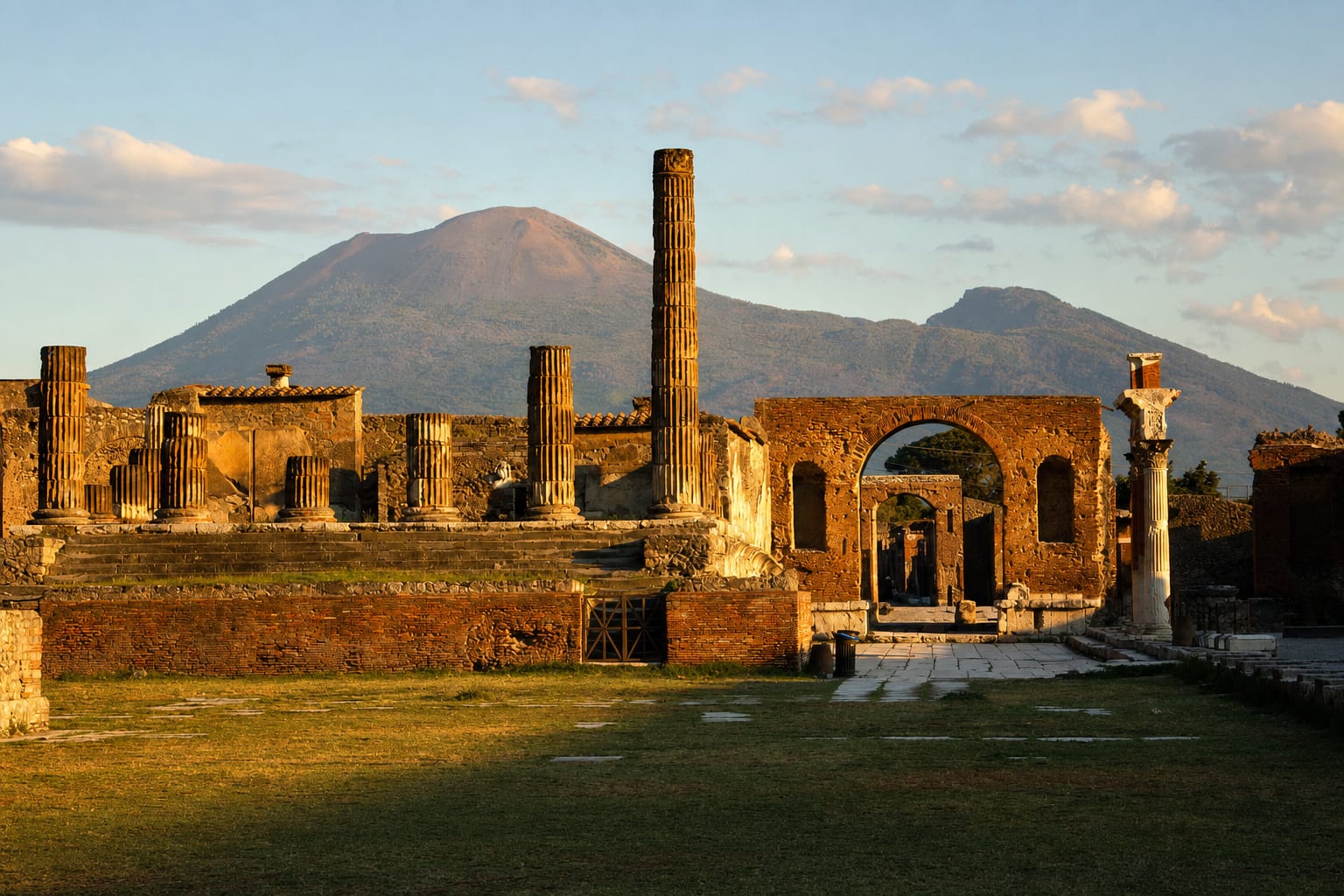 PompeiiThe Roman city frozen in time by the eruption of Vesuvius in 79 AD, its streets, frescoed villas, forum and amphitheater preserved beneath ash. The vast excavation is one of the most extraordinary windows onto daily life in the ancient world.
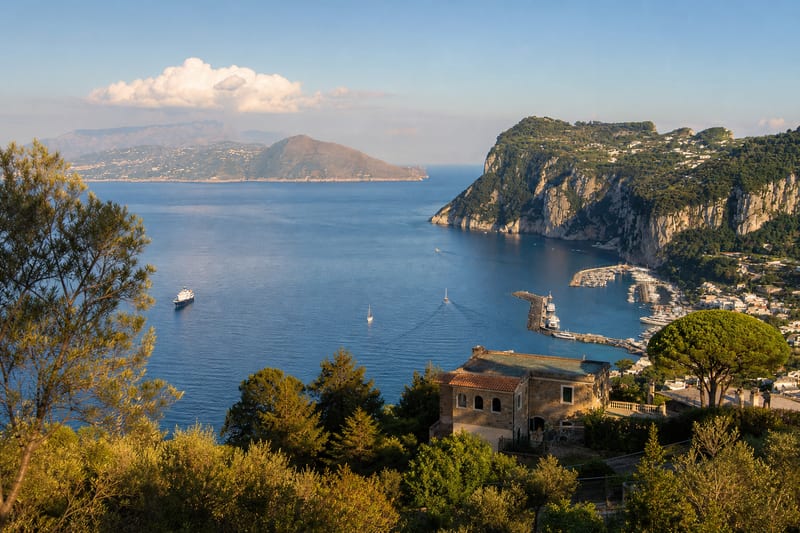
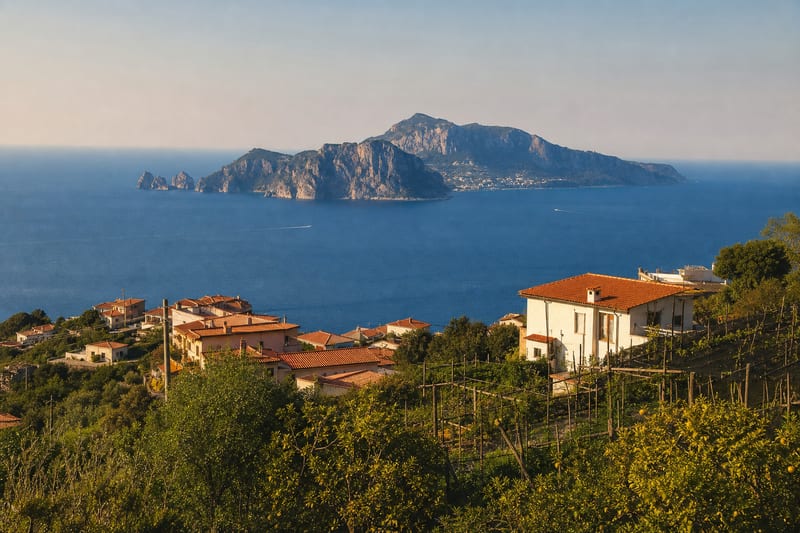
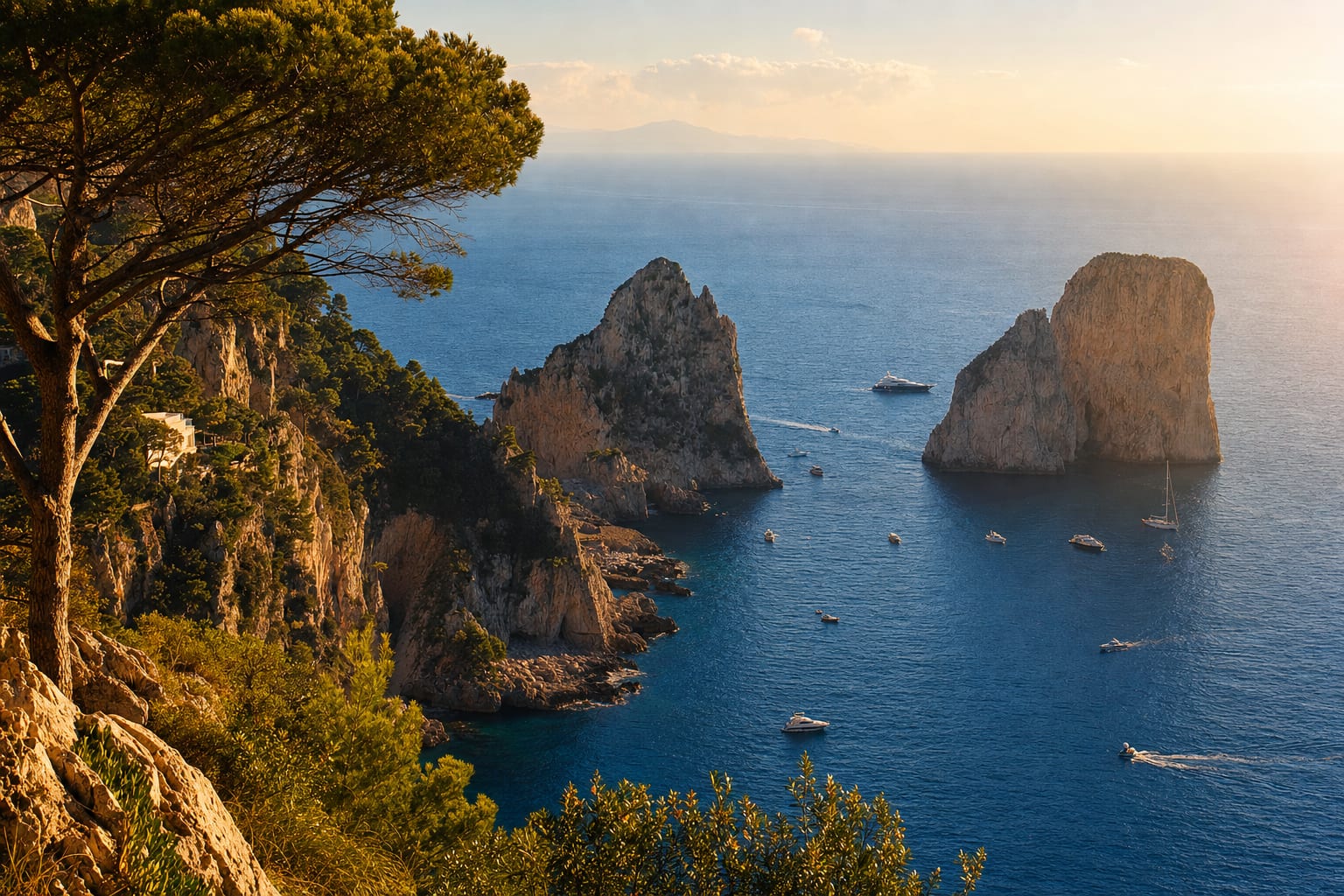 CapriThe glamorous limestone island off the Sorrentine Peninsula, a magnet for the jet set since Roman emperors built their villas here. Boats slip into the Blue Grotto's electric-blue cave, and the three Faraglioni sea stacks rise from the water off Punta Tragara.
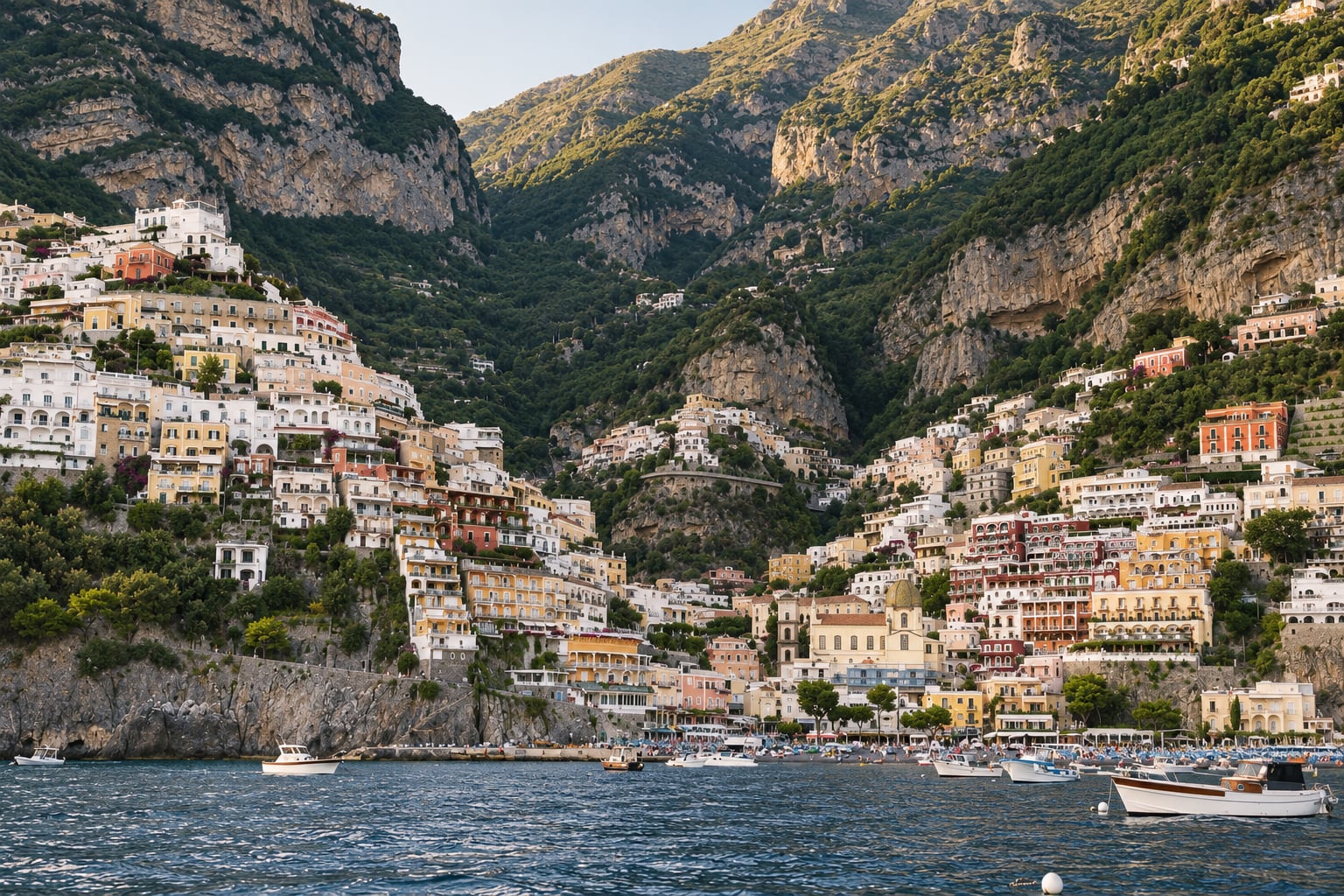
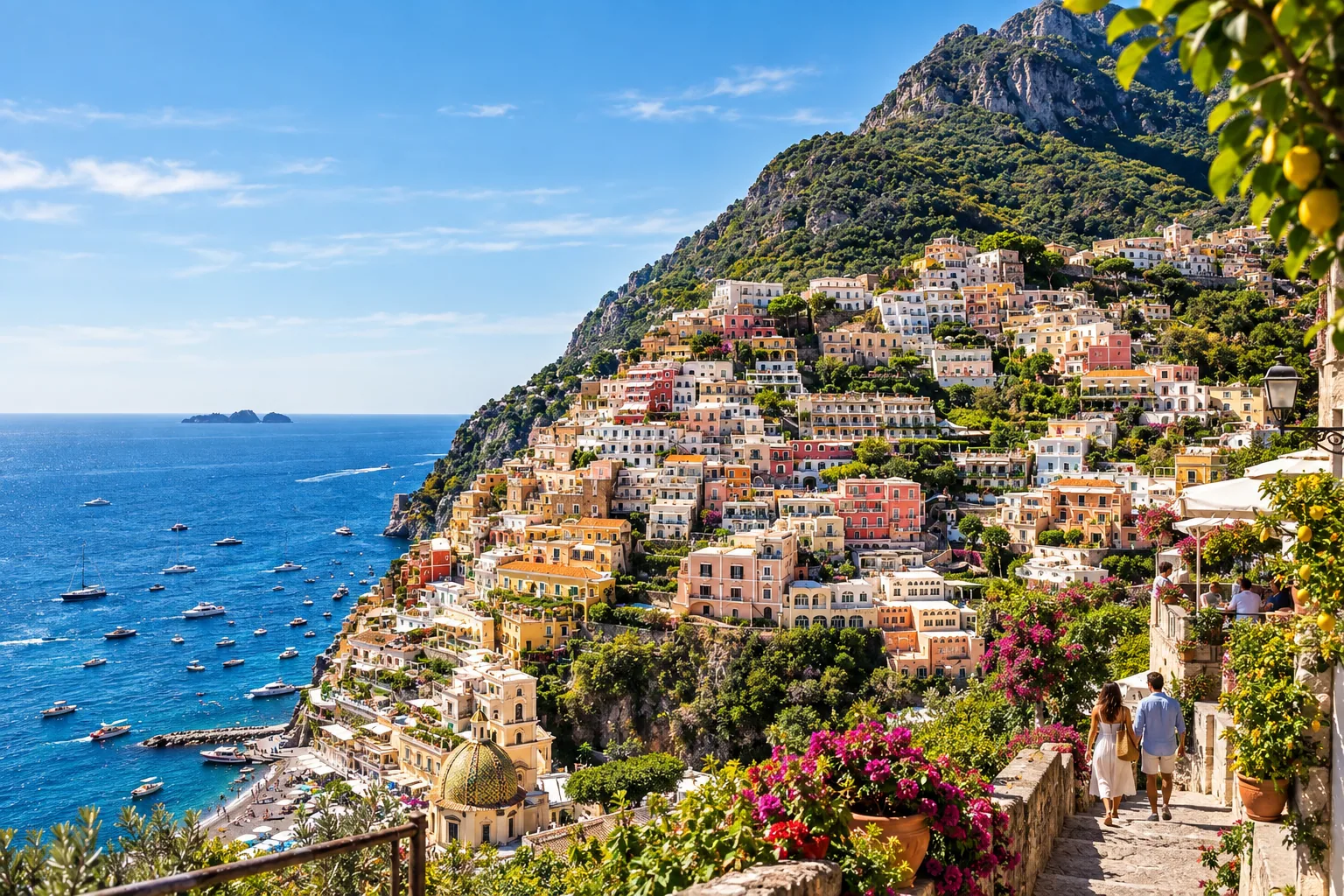 PositanoThe most photographed village on the Amalfi Coast, a vertical cascade of pastel houses pouring down the cliff to Spiaggia Grande, crowned by the majolica-tiled dome of Santa Maria Assunta. Its stairway lanes brim with linen boutiques and bougainvillea.
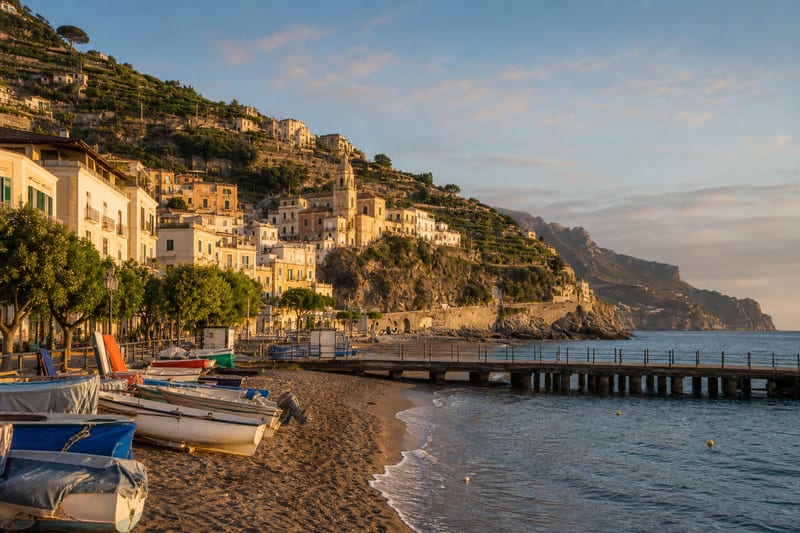
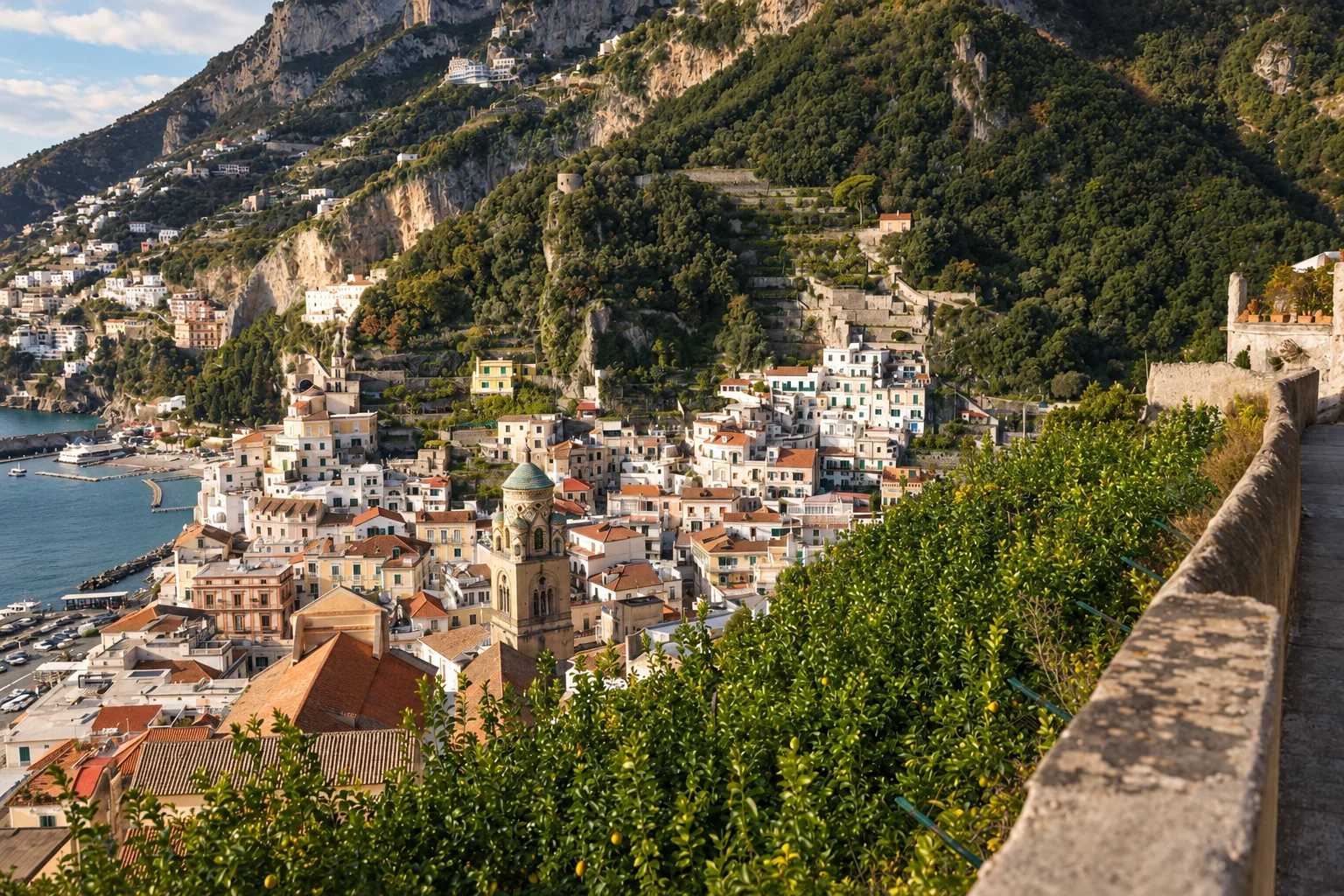 AmalfiThe coast's namesake town, once a powerful maritime republic that rivaled Venice and Genoa. Its cathedral crowns a sweep of sixty-two steps behind an Arab-Norman facade, and the town keeps a centuries-old tradition of handmade paper.


