

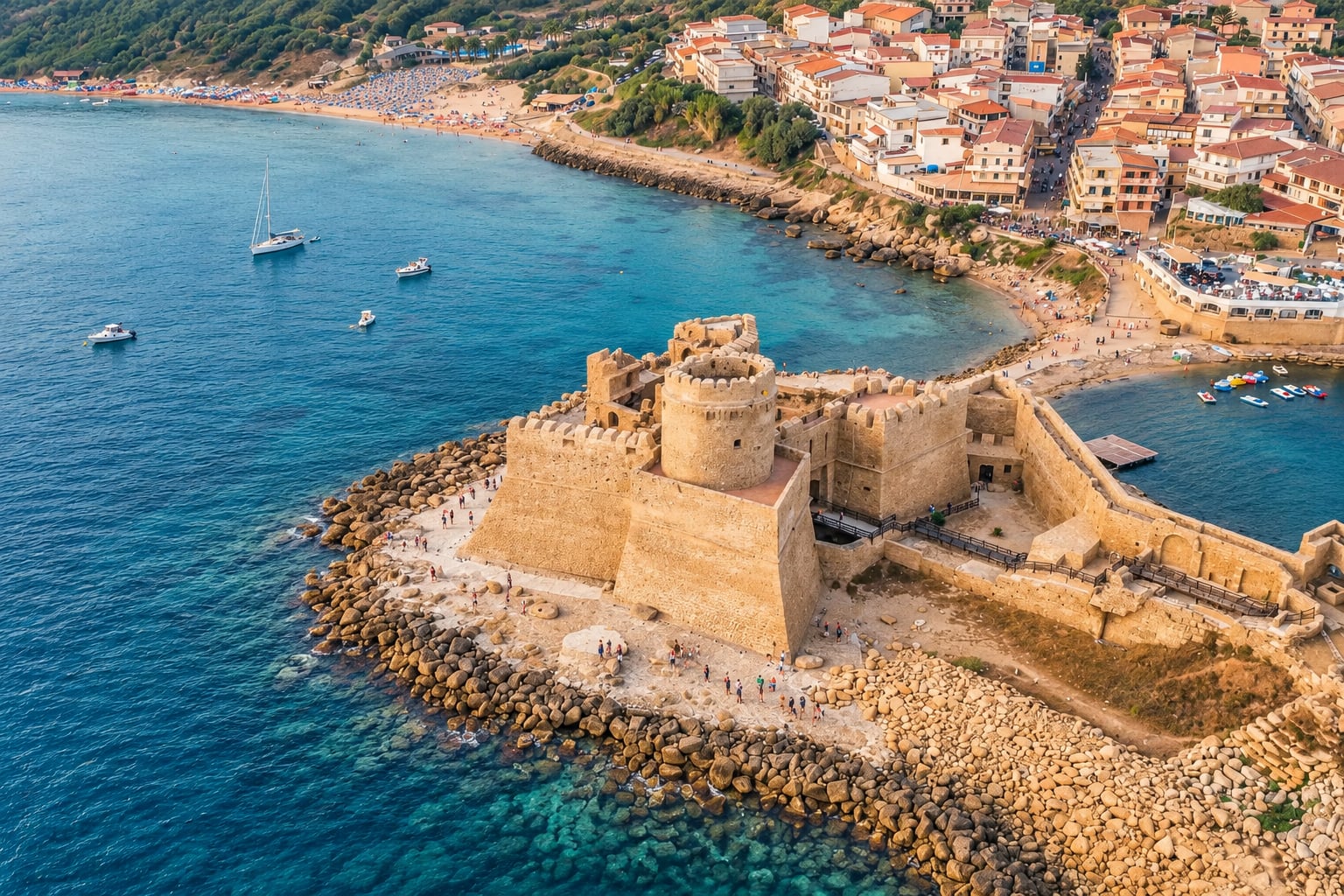
The short version
For most travelers, the best time to visit Calabria is May to June or September. You get warm, sunny days, a sea that is pleasant for swimming, beach towns like Tropea that feel lived-in rather than mobbed, and prices well below the August peak. Spring leans a touch cooler and the water is still warming up, so if a swimmable sea is the whole point of your trip, September is the safer bet of the two windows.
July and August are gorgeous but intense: hot, crowded, and expensive, with Italians filling every beach and the mid-August Ferragosto holiday turning the coast into a wall of people. They suit families locked into school holidays and anyone who wants full-tilt beach energy. Spring and autumn suit hikers, food travelers, and anyone touring the Riace bronzes, hill towns, and national parks. Winter is for skiing the Sila, quiet cities, and budget trips, not for the beach.
Spring (March to May)
Spring is when Calabria turns green and the light gets gentle. March can still be cool and damp, with daytime highs around 15 to 17C (59 to 63F) on the coast and rain that comes and goes. By April, and especially May, the weather settles into long sunny stretches, highs climb into the low-to-mid 20s C (low-to-mid 70s F), and the hills around the Sila and Aspromonte fill with wildflowers. This is prime time for hiking, exploring hill towns, and seeing the famous Riace bronzes in the museum at Reggio Calabria without a crowd.
The catch is the water. The sea warms slowly here, so even in May it is still on the cool side for a long swim, usually somewhere in the low 20s C (low 70s F) on a good day. You can wade in and sunbathe comfortably, but committed swimmers may want to wait. The upside is real: beach towns are calm, restaurants are not slammed, and you will pay shoulder-season rates for hotels that double their prices by August.
Summer (June to August)
Summer is Calabria at full volume. June is the smart month to thread the needle: the sea has warmed to a comfortable swim, days are long and reliably sunny, highs sit around 27 to 28C (low 80s F) on the coast, and the worst of the crowds have not arrived yet. The food calendar starts to fill out too, with town festivals and sagre celebrating local specialties. Onion season is underway, and the famous Spilinga 'nduja festival lands on August 8.
July and August are the trade-off. The coast is hot and humid, the sea is at its warmest (close to 26 to 27C or 79 to 81F by August), and the beaches are genuinely beautiful, but you are sharing them with the entire country. Tropea, Scilla, and the Costa degli Dei get packed, parking becomes a sport, and prices peak. If you come now, book months ahead and consider basing yourself in the cooler interior, where the Sila plateau stays noticeably fresher than the shore.
Autumn (September to November)
September is, for many people, the single best month in Calabria. The sea is still holding August's warmth, sitting around 26C (79F) into early-to-mid September before it slowly cools, the air is in the high 20s C (low 80s F), and the August crowds vanish almost overnight once Italian holidays end. You get warm-water swimming, easy restaurant tables, and quiet beaches, all at lower prices. If you can only pick one week, target the first half of September.
October stays mild and pleasant, with highs in the low 20s C (low 70s F) and a sea that is still swimmable early in the month before cooling off. It is a lovely time for the parks, the wine harvest, and chestnut and mushroom season in the Sila, where the forests turn gold. By November the rains return in earnest and many seasonal beach businesses close, so it becomes a trip for cities, food, and inland landscapes rather than the coast.
Winter (December to February)
Winter splits Calabria in two. On the coast it is the mildest corner of mainland Italy, with daytime highs often around 12 to 15C (54 to 59F), bright days mixed with rainy ones, and the bergamot harvest (roughly November through February) scenting the air around Reggio Calabria, the one place on earth where the prized citrus grows commercially. Cities and towns stay open and cheap, but this is firmly an off-season trip: many beach hotels and resort restaurants shut down, and the sea is far too cold for swimming.
Head inland and it is a different country. The Sila plateau, topping out at Botte Donato near 1,928 meters (6,325 feet), gets real snow, and small ski areas like Camigliatello Silano and Lorica run lifts and slopes through the winter. It is not the Alps, but it is a genuine surprise: you can see snow-covered pine forests in the morning and a mild coast in the afternoon. Winter suits skiers, budget travelers, and anyone who wants Calabria's landmarks and food without a single crowd.
Weather, by the part of Calabria
Calabria is a narrow region with two coasts and a spine of mountains, so where you stand matters as much as the date. The Tyrrhenian coast on the west (Tropea, Scilla, the Costa degli Dei) and the Ionian coast on the east are both classic Mediterranean: hot dry summers, mild wet winters, and a sea that is comfortably swimmable roughly July through September. The far south around Reggio Calabria runs a degree or two warmer year-round than the north of the region, which is why its winters are so famously gentle.
The interior is the twist. Climb into the Sila or the Aspromonte and you leave the beach climate behind: summers are noticeably cooler and fresher (a real relief during a July heatwave), and winters bring snow and skiing. In high summer you can be swimming in 26C water in the morning and reaching for a sweater in a mountain forest by evening, sometimes within an hour's drive. Plan around the elevation, not just the calendar.
Insider timing
The weeks worth targeting are the first half of June and the first three weeks of September. June gives you a warm-enough sea and the festival season starting without the August wall of people. September gives you a sea that is still close to its warmest after crowds have already gone home. Both deliver shoulder-season prices on hotels that get expensive fast in peak summer. May is excellent for everything except serious swimming, and early October still works on the coast in a warm year.
The one window to approach with care is mid-August, around the Ferragosto holiday (August 15). This is when all of Italy goes on vacation at once: the beaches are at their most crowded, accommodation is booked solid and priced at its peak, and some town businesses outside the tourist core actually close so their owners can take their own holiday. If your dates land here, reserve everything well in advance and do not expect quiet. For food lovers, build a trip around the 'nduja festival in Spilinga on August 8, the longest-running sagra in Calabria and your most reliable dated anchor, rather than the smaller onion festivals whose dates shift year to year.