

When to visit Abruzzo
Typical climate in L'Aquila, the regional capital.
The short version
For Abruzzo, target late April through June, then September into October. Spring brings wildflowers across the high plateaus, snowmelt feeding the rivers, and comfortable hiking weather in the national parks before the summer heat settles in. Early fall gives you warm-enough beach days on the Adriatic, the wine and olive harvest in full swing, and mountain trails at their clearest, all without the August crush of Italian families on holiday.
These shoulder months suit almost everyone: hikers and wildlife watchers (this is one of the few corners of Europe with wild wolves and Marsican brown bears), food travelers chasing harvest season, and anyone who wants Italy without the wait. Come in July or August if the beach is your priority and you don't mind heat and crowds. Come December through March if you ski, because Abruzzo's resorts are the best in the central Apennines.
Spring (March to May)
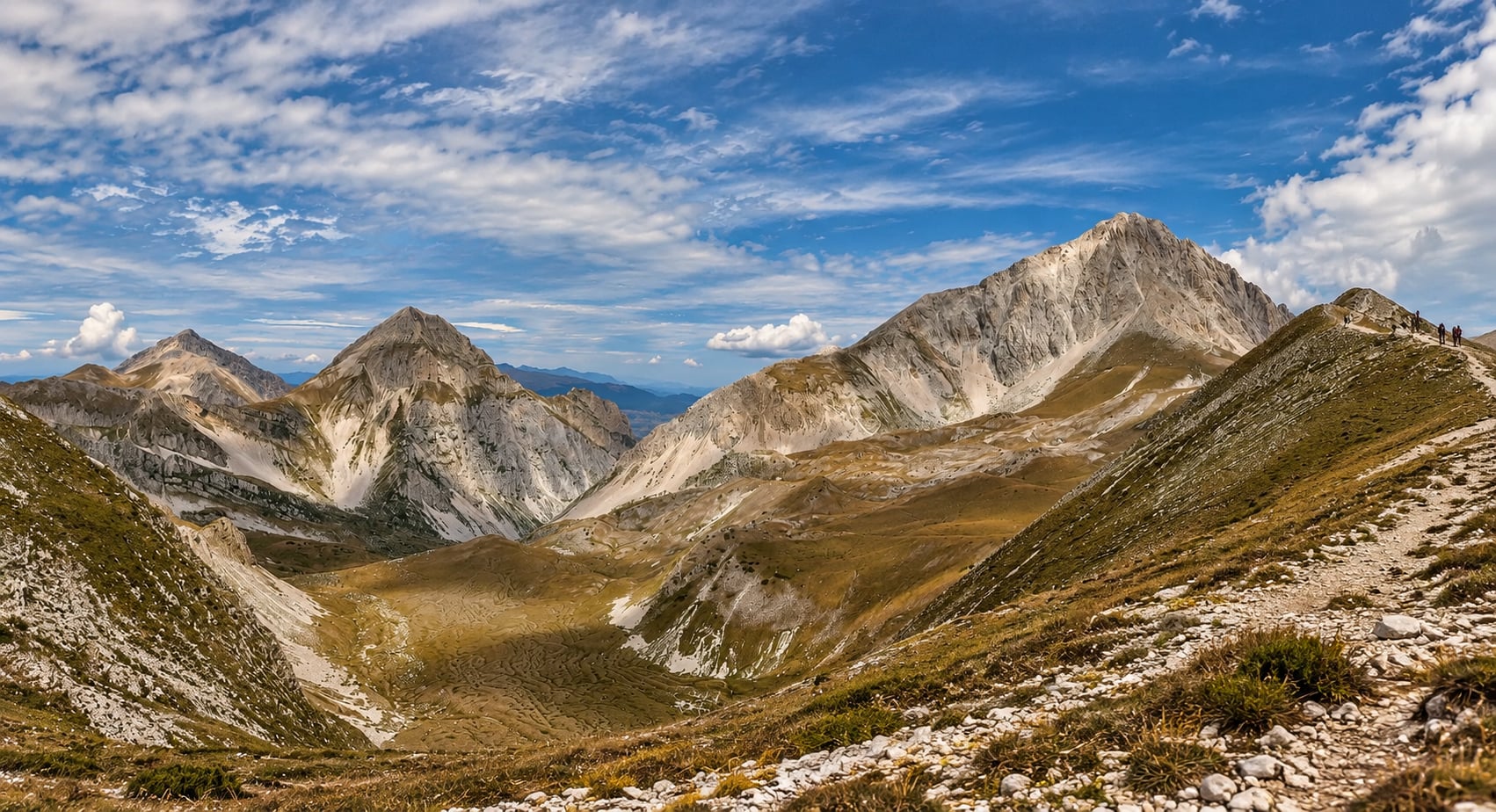
Spring is when Abruzzo shows off. Down on the coast around Pescara it warms up fast, with comfortable days by April and light layers doing the job. Up in the mountains around L'Aquila it's a different story: snow lingers on the high peaks of the Gran Sasso into May, and a March morning at altitude can still be near freezing while the valleys below already feel like spring. By May the lower trails and hill towns are green, the wildflowers are out on plateaus like Campo Imperatore, and the light is clear and bright. Rain is part of the deal, especially in March and April, so pack a shell.
This is also the season's best calendar window. On May 1, the village of Cocullo runs the Festa dei Serpari, where a statue of San Domenico is carried through town draped in live (non-venomous) snakes, with the main procession around midday. The ritual traces back to the pre-Christian snake goddess Angizia, and it's one of Italy's strangest and most genuine local festivals, worth planning a trip around. Spring also brings the daffodil festival (Sagra dei Narcisi) at Rocca di Mezzo in late May and a string of small village feasts as the high country thaws. Go now if you want hiking, wildflowers, and tradition without summer prices.
Summer (June to August)
Summer splits Abruzzo in two. On the Adriatic coast, the beach towns (Pescara, Vasto, Roseto degli Abruzzi) hit their stride: the sea climbs to a warm 26 to 27 degrees Celsius (around 79 Fahrenheit) in July and August, and the swimming is genuinely good. The catch is heat and crowds. Coastal days run hot and humid, and the whole country takes its holiday in August, so beaches and parking fill up and prices climb. The week around Ferragosto (August 15) is the absolute peak, when half of Italy is at the shore at once.
The mountains are your escape hatch. While the coast bakes, the high plateaus and the national parks stay cooler and breezier, with summer highs in the low 20s Celsius (low 70s Fahrenheit) inland and crisp nights. June is the sweet spot: warm, green, and far quieter than August. Summer is also festival season at altitude, with L'Aquila's Perdonanza Celestiniana running in late August (around the 28th and 29th), a UNESCO-listed pardon festival with processions and the opening of the Holy Door at Collemaggio. If you come in high summer, do what locals do and split your days between sea and mountain.
Autumn (September to October)
Early autumn might be the single best time to visit Abruzzo. September keeps the sea warm enough to swim, often into the low 20s Celsius (low 70s Fahrenheit), but the August crowds clear out almost overnight once Italian schools go back. The light softens, the heat eases, and the coast feels relaxed instead of frantic. Inland, the hills turn gold and rust, the trails are dry and clear, and the mountain air is bracing in the morning and warm by afternoon. It's prime hiking weather in the Gran Sasso and Majella parks.
This is also harvest season, which is the heart of how Abruzzo eats and drinks. Grapes come in for Montepulciano d'Abruzzo, the region's big red, and olives go to the press for new oil, both celebrated with small-town sagre (food festivals) through October. By late October the high mountains can see their first snow and the weather turns changeable, so the earlier in the fall you go, the more reliable the conditions. Come now for harvest food, empty trails, and a coast you can still swim.
Winter (December to February)
Winter is the season Abruzzo surprises people. This is genuine ski country: Roccaraso (the Alto Sangro area) is the largest, best-equipped resort in the entire Apennine range, with over 100 kilometers of slopes, and Campo Imperatore, Ovindoli, and Pescasseroli round out a real lineup of downhill and cross-country options. Snow is reliable on the high peaks from December through February, and the Gran Sasso plateau under a fresh fall of it is one of the most dramatic winter landscapes in central Italy. If you ski or want a quiet, snowy mountain escape, this is your window.
Away from the slopes, expect a quiet, cold off-season. L'Aquila and the inland towns sit high (the capital is at 721 meters), so January and February days hover near freezing and nights drop below it, with snow on the ground in the mountains. The coast is milder, around 7 to 8 degrees Celsius (mid-40s Fahrenheit) in the daytime, but the beach resorts largely shut down and the towns feel sleepy. Roads over high passes can close after storms. Winter is for skiers and people who want mountains to themselves, not for sightseeing tours or beach time.
Weather, by the part of Abruzzo
Abruzzo packs three climates into a short drive, and that's the key to timing a visit. The Adriatic coast around Pescara is mild and Mediterranean: warm, swimmable summers, gentle winters around 7 to 8 degrees Celsius, and the longest beach season in the region (roughly June through September). The hill towns and inland valleys are a transition zone, warmer than the peaks but cooler and greener than the shore, and they hold their charm across spring and fall. The high mountains (the Gran Sasso, the Majella, the plateaus around Campo Imperatore) are a different world: the highest peaks in the Apennines, with cold snowy winters, a short intense wildflower spring, and pleasant cool summers that are a relief from coastal heat.
The practical takeaway: you can chase the good weather by changing elevation. In July, leave the hot coast behind and the mountains run several degrees cooler and far less humid. In April, the coast is already pleasant while the high country is still wintry. L'Aquila itself sits at 721 meters in a mountain valley, which makes it one of the highest and coldest provincial capitals in Italy, so it runs colder than you'd expect for central Italy and holds onto snow longer. Plan around the zone you actually want, not a single regional forecast.
Insider timing
The weeks worth circling are mid-to-late May, all of June, and the first three weeks of September. These give you warm days, working festivals or harvest, open restaurants and hotels, and none of the August premium. May 1 specifically is the Cocullo Serpari, a genuine reason to time a trip, but book ahead because the tiny village gets slammed with thousands of visitors that one day. Mid-September is the quiet sweet spot for the coast: still swimmable, suddenly uncrowded, and cheaper.
What to avoid: the week around Ferragosto (August 15), when the coast is at maximum crush, prices spike, and many family-run inland businesses close while their owners take their own holiday. Late October into November gets wet and unpredictable in the mountains, with early snow possible and some seasonal spots closing for winter. And don't expect the beach towns to be alive in winter; most go dormant from November to Easter. One last tip: in shoulder season, call ahead for smaller mountain restaurants and agriturismi, since their hours follow the season and not the website.