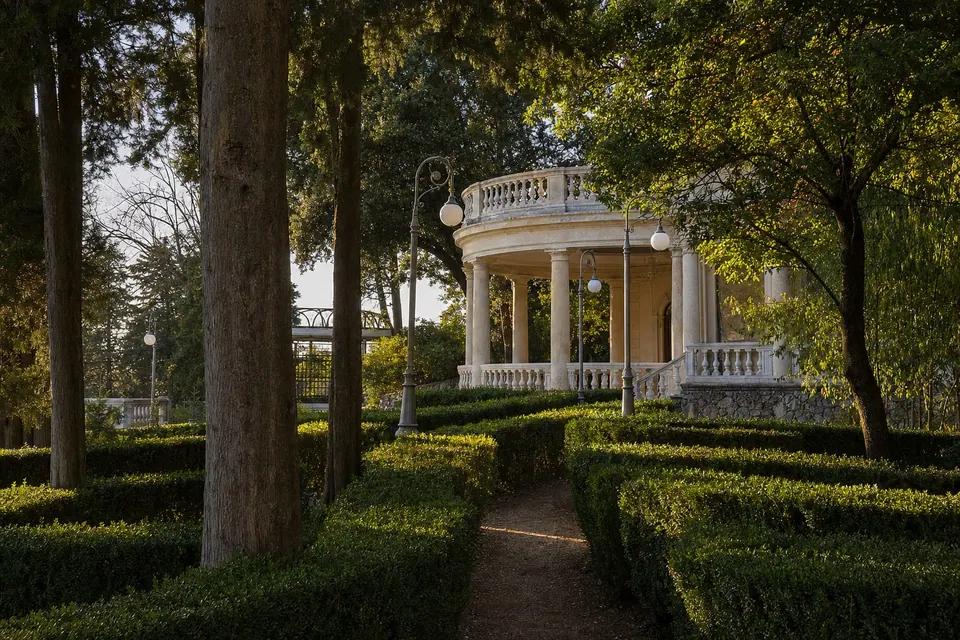
Campobasso's grandest garden began life in the 18th century as private land before being reorganized into a neoclassical park, then donated in 1875 by Countess Marianna de Capoa to the girls' orphanage she had founded, and finally handed to the comune in 1929.
Nearly 16,000 square meters of tree-lined avenues, clipped hedges, statues, a late-15th-century sarcophagus and a grotto still follow that neoclassical plan, restored to its original layout in recent decades. The wrought-iron main gate and Liberty-style lampposts, made by local craftsman Giuseppe Tucci, count among the finest surviving Art Nouveau work in the city, a formal counterpoint to the garden's shaded, informal paths.