Skip to content

Brenta Dolomites

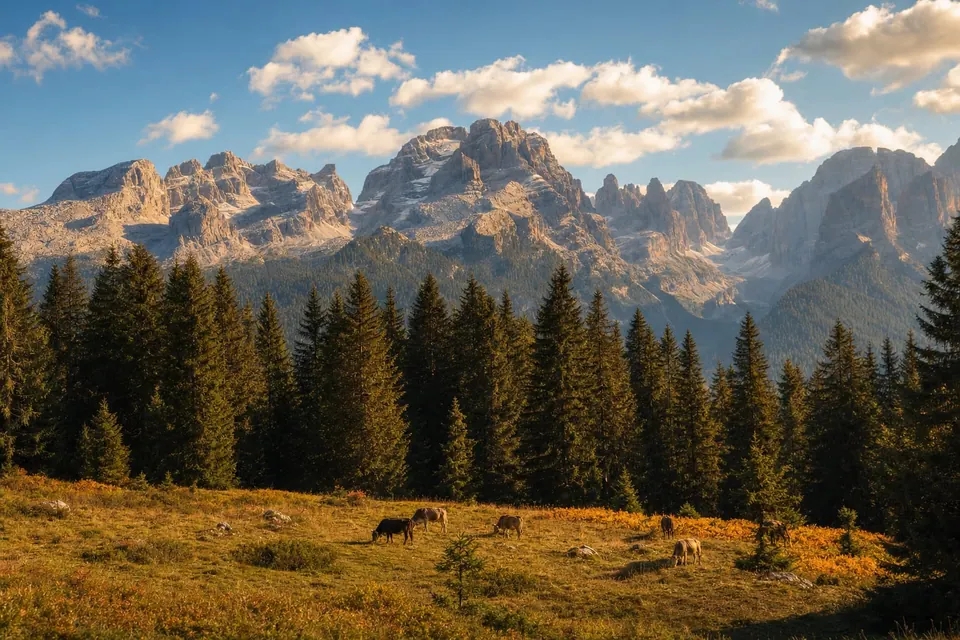
The westernmost Dolomites, its towers strung together by the ledge paths of the Via delle Bocchette.

  • Madonna di Campiglio
  • Nature
Where
Madonna di Campiglio
Best for
Western Dolomite towers
Allow
5 hours
Tickets
Free

West of the Adige and detached from the rest of the range, the Brenta group gives the Dolomites their most vertical face: sheer grey towers laced together by the Via delle Bocchette, a network of ledges and iron rungs bolted into the rock starting in 1935.

Madonna di Campiglio sits at its base, a ski resort each winter and the trailhead for hut-to-hut treks the rest of the year. The peaks anchor the Adamello Brenta Nature Park, a 650-square-kilometer reserve established in 1967, where brown bears, once nearly gone from the area, were reintroduced from Slovenia in a project that began in the late 1990s and now roam the beech forests below the rock. UNESCO folded the Brenta into its Dolomites World Heritage listing in 2009, the only group west of the Adige to make the cut.
Four things worth finding

If you see nothing else, see these.

  1. Via delle BocchetteBolted ledge routes, from the 1930s

    Ledges and iron rungs across the vertical face; the Bocchette Centrali are the classic section.Central Brenta

  2. Campanile Basso

    A lone rock tower that rises above the ledges, the emblem of the range.Central Brenta

  3. Rifugio Tuckett and Rifugio BrenteiAlpine huts

    Two of the huts on the hut-to-hut routes, good for a lunch and a view.High trails

  4. The Vallesinella waterfalls

    An easy forest walk to waterfalls, a low-effort alternative to the high routes.Near Madonna di Campiglio

Plan your visit

Everything you need before you go.

Tickets
Free
Booking
No booking needed
Time needed
5 hours
Best time
Late June through September, once huts and cable cars are running and snow has cleared.
Getting there
Madonna di Campiglio is reached by car via the SS239 or by bus from Trento's train station, about ninety minutes away. Cable cars from town (Grostè and Pradalago) lift hikers onto the Brenta's high trails without a long approach walk.
Accessibility
The high routes and via ferrata are not accessible; the Adamello Brenta park runs a "barrier-free park" program with a handful of easier, wheelchair-friendly nature trails at lower elevation.

Free and open access to trails and viewpoints; mountain huts (rifugi) and via ferrata routes operate only from late June to late September, and meals or beds at the huts are paid separately.

Take the Grostè cable car up and walk the first stretch of the Bocchette Centrali without committing to the full via ferrata: the exposure builds gradually, so you can turn back at any point.

Get directionsGoogle MapsApple Maps

Good to know

How long should you spend in the Brenta Dolomites?

A day trip with a cable car and a hut is about five hours. Hut-to-hut trekking takes several days, and completing the whole Bocchette network is a multi-day undertaking.

Is the Via delle Bocchette dangerous?

It is a via ferrata: exposed, and needs proper gear, experience or a guide. It is not a casual walk.

Can non-climbers enjoy the Brenta Dolomites?

Yes. Cable cars from Madonna di Campiglio lift you to high trails with no long approach, and there are easy walks and huts. Late June to September is best.

A letter from Italy, once a month.

The places, tables and makers we found worth your time. One email, no noise.

One letter a month. Unsubscribe at any time. We never share your address.

Help us get it right

What is it about?