

When to visit Puglia
Typical climate in Bari, the regional capital.
The short version
Come to Puglia in late May, June, or September. The sea is warm enough to swim, the days are long and bright, the trulli and Baroque towns aren't packed, and you can still get a table at the good restaurants without booking weeks out. June leans a little quieter and a touch cooler; September gives you a sea that's been warming all summer plus the energy of the olive and grape harvest. Either one is the sweet spot.
July and August are gorgeous but intense: 30 to 35°C heat, beaches shoulder to shoulder, and prices at their peak, especially around Ferragosto (August 15), when most of Italy takes its holiday at the same time. Spring and fall shoulder weeks suit travelers who want towns, food, and coastline without the crush. Deep summer suits beach lovers who don't mind heat and crowds. Winter is for the curious, the budget-minded, and anyone who likes a quiet, cheap, low-key Italy.
Spring (March to May)
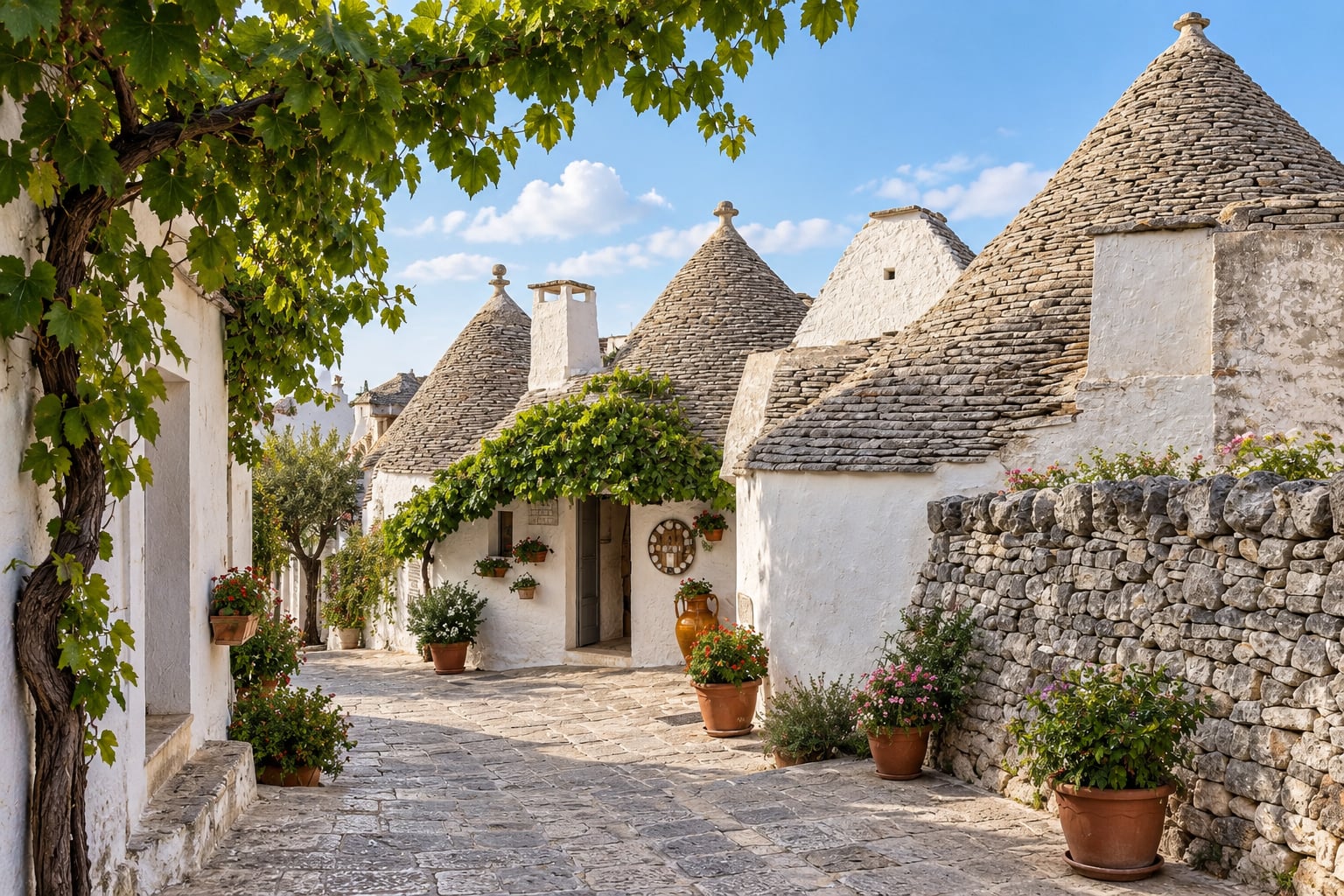
Spring is when Puglia wakes up. March is still cool and changeable, with highs in the low to mid teens (Celsius) and the odd rainy day, but by late April and May the light turns golden and afternoons climb into the low 20s. The countryside is green and full of wildflowers before the summer sun bleaches everything silver and gold, and the olive groves and stone towns look their best. This is prime time for walking Lecce's Baroque streets, exploring the trulli around Alberobello, and driving the coast without fighting for parking.
The catch is the sea. Even in May the water sits around 18°C, fine for a quick, brave dip but not for lounging in the shallows for hours. Many beach clubs and seasonal lidos haven't fully opened yet, and a few coastal hotels and restaurants are still ramping up for the season. If your trip is about towns, food, hiking, and photography rather than long beach days, spring (especially the second half of May) is close to perfect. One thing to plan around: Easter and the May 1 holiday draw Italian weekend crowds to the bigger towns, so book those dates ahead.
Summer (June to August)
Summer is what most people picture when they think of Puglia, and it delivers: deep blue Adriatic and Ionian water, sea temperatures climbing from the low 20s in June to about 26°C in August, and the whole coast humming. June is the standout, hot but not brutal (highs around 28°C), the sea finally swimmable, and the worst of the crowds still a few weeks away. This is the month to get the postcard version of Puglia without the full chaos.
July and August are a different animal. Highs run 30 to 35°C, and the inland plains can push past 40°C during the heatwaves that have become a regular summer feature; the Tavoliere flatland around Foggia is the hottest corner of the region. Beaches and towns fill up, prices peak, and the week around Ferragosto (August 15) is the busiest of the year, when Italians themselves descend on the coast. The flip side is that summer is festival season: pizzica nights ripple through Salento all August under the banner of La Notte della Taranta, building to a massive free finale in Melpignano around the third or fourth Saturday of the month, and Lecce turns Baroque squares into open-air cinemas. If you come in deep summer, book early, plan beach days for mornings and late afternoons, and accept that you're sharing the place with everyone else.
Autumn (September to November)
September is one of the best-kept secrets of the Puglian year. The sea is at its warmest, holding around 24 to 25°C after a full summer of heating, the crowds thin out as Italian families head back to school and work, and daytime highs stay in the comfortable mid to high 20s. Prices drop, restaurant tables open up, and the light goes soft and clear. If you want warm-sea summer without the August squeeze, September is the answer, and it edges out even June for many travelers.
October is gentler and more low-key, still warm in the low 20s early on but cooling and getting wetter as it goes, with the first real rains arriving. It's a lovely time for the olive harvest, food, and quiet towns, though beach days become hit or miss. By November the season has clearly turned: highs in the mid teens, shorter days, more rain, and many seaside places closing up for winter. Early autumn is gold; late autumn is for travelers who prize calm and low prices over swimming.
Winter (December to February)
Winter in Puglia is mild by northern standards but genuinely low season. Highs sit around 12 to 14°C, nights get cold, and you'll see real rain and gray stretches, especially in January and February. The sea drops to around 14°C, so swimming is off the table, and a fair number of coastal hotels, lidos, and restaurants shut down entirely until spring. This is not the Puglia of the brochures, and you should come knowing that.
What you get in exchange is space and value. Lecce, Bari, and the historic towns are quiet and atmospheric, hotel prices fall sharply, and you can have major monuments almost to yourself. Christmas brings presepi (nativity scenes) and festive markets, and the food turns hearty: orecchiette with greens, slow-cooked meats, citrus from the groves. Winter suits travelers who care more about culture, food, and a calm, affordable trip than about beaches and sunbathing. Pack layers and a rain jacket, and base yourself in towns rather than on the coast.
Weather, by the part of Puglia
Puglia is long and thin, so where you are matters. The Gargano promontory in the north (the spur of the boot) is greener, hillier, and a few degrees cooler than the rest, with the Foresta Umbra forest offering real shade in high summer; its coast and the Tremiti Islands stay a touch fresher than the deep south. Inland, the flat Tavoliere plain around Foggia is the region's heat extreme, the spot most likely to crack 40°C in a heatwave, while the Murge and Alta Murgia highlands behind Bari and Ostuni sit higher and drier, with hot afternoons in summer and noticeably colder, sometimes frosty nights in winter.
Down in the Salento, the heel itself, the land flattens out between two seas, the Adriatic on the east and the Ionian on the west. It's the warmest, sunniest, and driest part of the region, which is why it draws the biggest summer crowds and stays pleasant latest into autumn. The Ionian side around Gallipoli tends to have calmer, slightly warmer water and long sandy beaches like Pescoluse, while the Adriatic side near Otranto is rockier with clearer, cooler swimming. Cities like Bari and Lecce trap a bit more heat in their stone centers on still summer days, so a coastal base will always feel a few degrees more forgiving.
Insider timing
Target the shoulder weeks: the last two weeks of May, all of June up to the school-holiday rush, and the first three weeks of September. These give you warm-enough or genuinely warm sea, open lidos and restaurants, and a fraction of the August crowds. September after the first week is arguably the single best window of the year, with warm water, thinning crowds, and lower prices all at once.
The thing to avoid is the Ferragosto period, roughly August 10 to 20, when most of Italy is on holiday at the same time. Beaches are packed, coastal roads jam, the best agriturismi and restaurants book out months ahead, and prices peak. If you do come in August, reserve everything early, plan beach time for before 11am or after 4pm to dodge the worst heat and crush, and use the midday hours for shaded towns, museums, or a long lunch. One bonus of late August: La Notte della Taranta's grand finale in Melpignano is a genuine spectacle, drawing well over 100,000 people, if you don't mind the crowds. And whenever you visit between May and September, remember that many towns and beaches run on a real lunch break, with shops and some monuments closing in the early afternoon, so plan around it rather than fighting it.