

When to visit Molise
Typical climate in Campobasso, the regional capital.
The short version
The honest answer is May to June and September. In late spring the wheat fields are green going gold, the hill towns are mild and walkable, the Samnite theater at Pietrabbondante sits empty, and you can still get a table at a Termoli trattoria without booking ahead. September gives you the same easy weather plus warm Adriatic water and the start of the grape harvest. Both months suit travelers who want a slow, real Italy with no lines and no performance staged for visitors, because there basically are no visitors here.
Summer (July and August) is for beach time at Termoli and for the big folk festivals, but the inland towns go quiet and hot in the early afternoon. Winter is for skiers at Campitello Matese and for one unforgettable Christmas fire ritual, not for sightseeing. If you want the easiest version of Molise, come in the shoulder months and you will have the region nearly to yourself.
Spring (March to May)
Spring arrives slowly in Molise because so much of the region sits high. March can still be cold and wet in Campobasso (the city is over 700m / 2,300ft up), with daytime highs around 11 to 13C (52 to 55F) and snow lingering on the Matese peaks. The coast at Termoli warms up first and feels a season ahead of the hills. April is the real turn: the countryside greens up, wildflowers come out along the old sheep-droving tracks (the tratturi), and afternoons get genuinely pleasant. Pack layers, because mornings and evenings in the hill towns stay cool well into the month.
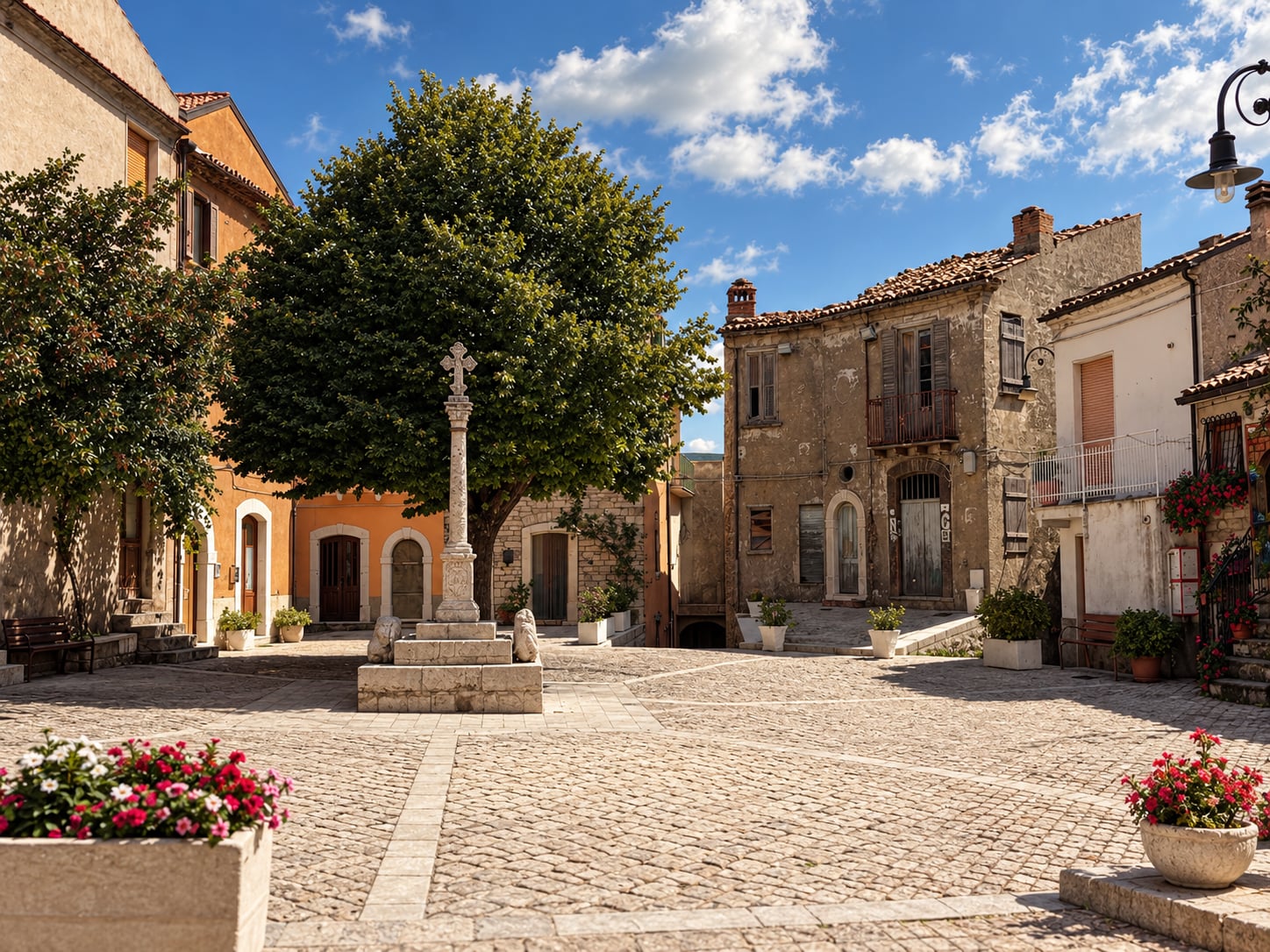
By May the region is at its best. Days run warm and clear, the wheat fields around Larino and the inland valleys glow green, and you can walk the Roman town at Sepino or climb to the Samnite theater at Pietrabbondante in comfort. Crowds are essentially nonexistent. The one date to watch is Corpus Christi, when Campobasso stages the Sagra dei Misteri: a procession of 13 wrought-iron frames, designed by local artist Paolo Saverio Di Zinno back in 1748, with costumed children and adults harnessed onto them so they seem to float above the street as angels, saints, and devils. It is one of the most striking things you can see in Molise, so check the date (it moves each year, usually early to mid-June) and plan around it.
Summer (June to August)
June is the quiet star of summer: warm but not yet brutal, with Campobasso highs in the mid-20s C (mid-70s F) and the coast lively but not packed. The sea at Termoli is swimmable from June onward, and the old town on its rocky spit is lovely in the long evening light. This is the easiest beach-and-towns combination of the year. July and August are when the Adriatic peaks (water around 26C / 79F in August) and the coast fills with Italian families, while inland highs climb into the low 30s C (high 80s to low 90s F) and the hill towns hit pause in the early afternoon.
Summer is also festival season, which is the real reason to brave the heat. On July 26, the Festa del Grano in Jelsi honors Sant'Anna by parading traglie, farm carts decorated with woven wheat, through the streets in thanks for the harvest. Late July also brings the international bagpipe festival at Scapoli, which celebrates the zampogna, the instrument these mountains are known for. Then plan around Ferragosto (August 15), when Italians take their own holiday: the coast is at its fullest, inland shops and restaurants may close for a week or more, and some towns feel half-shuttered. If you come in high summer, base yourself near Termoli and treat inland day trips as morning-and-evening outings.
Autumn (September to November)
September is the other best month of the year, and arguably the single smartest time to come. The summer heat breaks, Campobasso settles into the low 20s C (low 70s F), and the Adriatic stays warm from a full summer of sun (still around 24C / 75F), so you get swimmable water at Termoli with almost none of the August crowd. Inland, the wheat is long cut and the land turns gold and brown, the grape harvest gets going, and the hill towns feel like working towns again rather than empty ones. For a region this quiet, September is as good as it gets.
October stays mild and is prime time for food: olive harvest, new wine, truffles in the Alto Molise woods around Agnone, and mushroom season in the Matese. Days are shorter and the first real rain returns, especially inland, but a crisp October afternoon walking a hill town is hard to beat. By November the region turns cold and gray, with frequent rain, early dark, and snow possible on the high peaks. Many coastal spots wind down for the year. November is for travelers who truly want solitude and don't mind the weather.
Winter (December to February)
Winter in Molise splits sharply by altitude. Campobasso and the hill towns are genuinely cold, with highs around 8C (46F), frequent rain, and real snow and frost when cold air pushes in from the northeast (the city averages roughly a meter of snow a year). Days are short and many smaller towns feel shut down. This is not a sightseeing season, with one huge exception: the 'Ndocciata in Agnone. On December 8 and again on Christmas Eve, the town parades enormous fans of burning fir torches through the streets in a fire ritual with roots going back to the ancient Samnites. If you can handle the cold, it is one of the most extraordinary nights in southern Italy.
Up on the Matese, winter is the whole point. Campitello Matese, under Monte Miletto (2,050m / 6,730ft), is the region's main ski area, with runs between roughly 1,400 and 1,870m and a busy weekend scene of families from Molise and Campania. The coast at Termoli stays milder than the interior but is firmly off-season: quiet, cheap, and a little sleepy. Come in winter only if you want snow sports, the Christmas fire festival, or true emptiness, and pack for genuine cold inland.
Weather, by the part of Molise
Molise is small but it stacks up three very different climates in a short drive. The Adriatic coast around Termoli is the mild zone: Mediterranean, with warm dry summers, gentle winters (January highs around 12 to 13C / 54 to 55F), and a swimmable sea from June through October that peaks near 26C (79F) in August. This is where you go when the inland is too cold or too hot, and it is the most consistently comfortable part of the region across the whole year.
Move inland and up, and the weather turns continental fast. Campobasso and the hill towns (the city sits above 700m / 2,300ft) get colder winters, more rain, and cooler nights even in summer, which is a gift in July when the coast is sticky. Higher still, the Matese and the Alto Molise around Agnone are true mountains: snow from late autumn into spring, cold clear winters built for skiing, and short comfortable summers. The simple rule is to follow the elevation. When the hills are raw in spring or fall, drop to the coast; when the coast is roasting in midsummer, climb into the hills for the evening.
Insider timing
Target the second half of May, the first half of June, and all of September. These weeks give you warm stable weather, green or golden countryside, open restaurants, and effectively no crowds anywhere except the few days around a major festival. If your trip can flex, line it up with the Sagra dei Misteri in Campobasso (Corpus Christi, usually early to mid-June) or with September's harvest season, and you get the landscape at its best with food and life in the towns.
What to avoid: the week around Ferragosto (August 15), when the coast is jammed, inland towns half-close, and you fight for everything you want; and deep November through February for general travel, when cold, rain, and early dark shut a lot of the region down. Two small but real tips: many inland trattorias and family-run spots close for the long lunch pausa and don't reopen until 7:30 or 8pm, and outside Termoli and Campobasso public transport is thin, so a rental car is close to essential. Molise rewards people who slow down and don't over-plan, so leave room to follow a back road into a town you have never heard of.