

When to visit Marche
Typical climate in Ancona, the regional capital.
The short version
The best months in Marche are May to June and September. You get warm, settled days, sea that's swimmable by June, hill towns that aren't melting in the heat, and a fraction of the August crowds. Late spring leans green and floral; September trades a little of that for warm sea, the wine harvest, and lighter prices. Either way, this is the sweet spot.
Summer (July and August) is for committed beach people who don't mind heat, full parking lots, and peak prices, though it's also when the great open-air opera and the historic jousts happen. Autumn from October on is for food travelers chasing white truffles and quiet hill towns, with the tradeoff of cooler, wetter weather. Winter is the cheapest and emptiest, best if you want cities, museums, and the odd ski day rather than the coast.
Spring (March to May)
Spring in Marche starts hesitant and ends gorgeous. March is still cool and changeable, with daytime highs around 14C (57F) and chilly nights near 5C (41F), plus a real chance of rain blowing in off the Adriatic. April warms up and the countryside turns green, with wildflowers across the Sibillini foothills and the broom in bloom. By May you're into the good stuff: comfortable 20-23C (68-73F) days, long light, and hill towns like Urbino, Ascoli Piceno, and Macerata at their most walkable.
This is prime time for the inland Marche, the part most travelers underrate. You can tour the Ducal Palace in Urbino, hike around the Frasassi Caves area, and drive the hill roads without summer haze or heat. The catch is the sea: even in May the Adriatic sits around 16-18C (61-64F), too cold for most people to swim, so spring is about landscapes, monuments, and food rather than beach days. Pack layers, because evenings inland still cool off fast.
Summer (June to August)
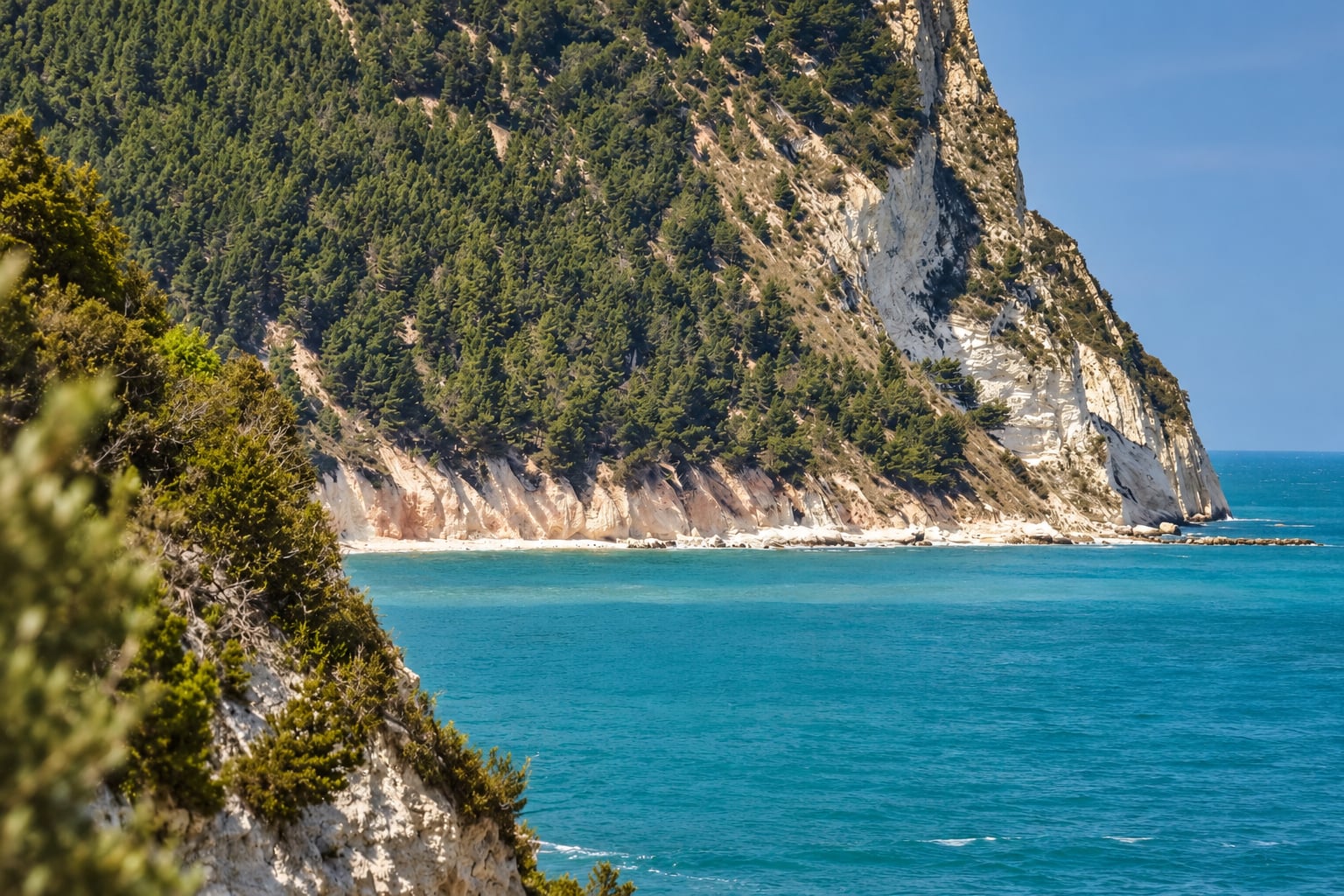
Summer is when the coast comes alive. The Riviera del Conero, with its white-pebble coves below Monte Conero and towns like Sirolo and Numana, is the showpiece, and the long sandy beaches around Senigallia and Pesaro fill with Italian families. The water is genuinely warm and swimmable from June, sitting around 22-24C (72-75F) early in the season and climbing toward 25-26C (77-79F) by August. June is the smart summer month: warm and lively but not yet at full pressure. July and August bring highs of 28-29C (82-84F), humid coastal nights around 19C (66F), and the busiest, priciest stretch of the year.
Summer is also the season of Marche's signature events. The Macerata Opera Festival stages grand open-air opera in the Sferisterio arena from mid-July into early August, and the Quintana di Ascoli Piceno fills the city with a 15th-century procession and a thundering horseback joust between its six districts, once in July and again on the first Sunday of August. The honest tradeoff: inland cities can be hot and sleepy at midday, and the coast around Ferragosto (August 15) is packed wall to wall. If you come in high summer, book beach lodging and opera tickets well ahead.
Autumn (September to November)
Early autumn is one of the best-kept secrets here. September is close to perfect: days still in the mid-20s C (high 70s F), a sea that holds around 23-24C (73-75F) into early October, thinning crowds, and falling prices. The grape harvest is on across the Verdicchio and Rosso Conero vineyards, and the light goes golden over the hills. If you want beach plus hill towns plus good value in one trip, September is the month to target.
From mid-October the mood shifts inland and toward the table. The Acqualagna white truffle fair, one of Italy's biggest, fills the Pesaro hills across November weekends and pulls in food travelers from all over, while the Sibillini mountains turn red and gold. Weather gets cooler and wetter as the season goes on, with November bringing real rain and short days, so this stretch is about truffles, wine, hearty food like olive all'ascolana, and quiet towns rather than the coast, where many beach businesses have closed for the year.
Winter (December to February)
Winter is Marche at its quietest and cheapest. The coast is cold and largely shut down, with January averaging around 6C (43F), nights near freezing, and the Adriatic dropping toward 12C (54F), so this is not a beach season. What works in winter is the cities: Urbino, Ascoli Piceno, and Ancona are atmospheric and nearly tourist-free, museums and churches are open and uncrowded, and Ascoli's grand travertine piazzas look especially good under low winter light.
Inland and up high it gets properly cold, with snow in the Sibillini and Monti della Laga. There's modest skiing and snowshoeing around resorts like Frontignano and Sarnano, though don't expect Alpine-scale slopes. The big winter event is the Carnival of Fano in February, dating to 1347 and one of Italy's oldest, famous as the only Italian carnival where the floats shower the crowd with real sweets (the "getto"). Bring warm clothes, expect some restaurants and hotels in smaller towns to close for the season, and check opening hours before you drive out to anything remote.
Weather, by the part of Marche
Marche has three distinct climates packed into a small region. The Adriatic coast (Ancona, Pesaro, Senigallia, the Conero Riviera) is the mildest: warm, humid summers, gentle winters, and a swimming sea from June through early October. The central hills, where most of the famous towns sit (Urbino, Macerata, Ascoli Piceno, Jesi), run a few degrees cooler than the coast, with crisper evenings year-round and a real spring and autumn rather than the coast's long warm shoulder.
The Apennine mountains in the southwest, above all the Monti Sibillini, are a different world. Summers stay cooler and fresher up there, ideal for hiking when the coast is sweltering, while winters are cold and snowy. Microclimate matters for packing: on the same June day you might want shorts on the beach at Sirolo and a fleece for an evening in a Sibillini village. Rain is fairly even through the year on the coast (roughly 740mm annually around Ancona), with the wettest stretch in autumn (October and November) and the driest in summer.
Insider timing
Target the shoulder weeks. Mid-to-late May and the first half of June give you warm-but-not-hot days, swimmable-by-mid-June sea, and far fewer people than July. On the back end, the second half of September into early October is arguably the single best window: warm sea, harvest food, and prices that have dropped from their August peak. These weeks reward travelers who can avoid school holidays.
The thing to avoid is the Ferragosto stretch (roughly August 8 to 20), when Italians take their own vacations: the Conero coast is jammed, prices spike, and some inland family-run restaurants and shops actually close because the owners are at the beach. If you do come in summer, plan around the events rather than against them, and book Macerata opera nights and Quintana di Ascoli tickets in advance, because both sell out. In the off-season, always check that mountain restaurants, smaller museums, and beach-town hotels are actually open before you commit to a long drive, because winter hours in rural Marche can be thin.