

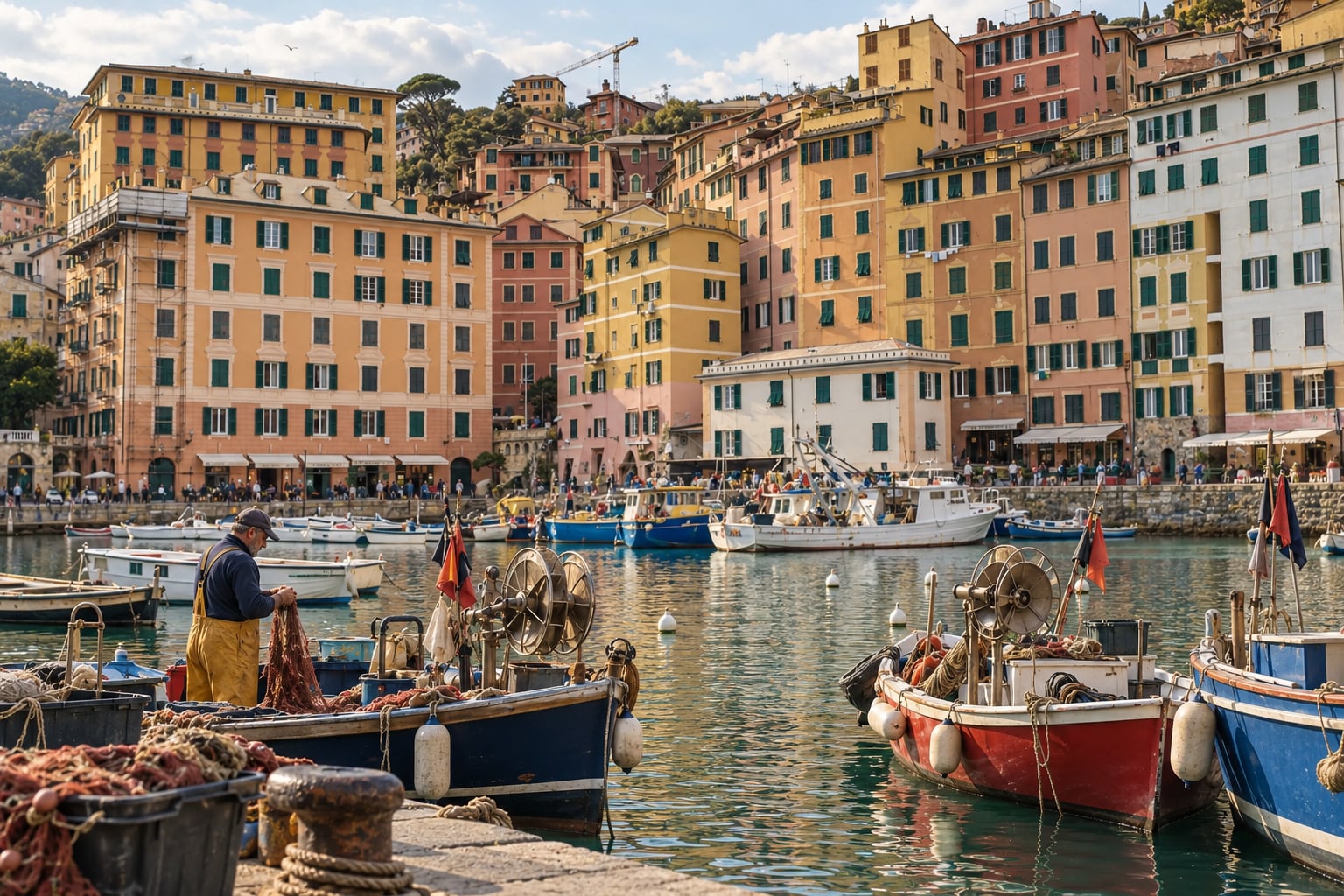
When to visit Liguria
Typical climate in Genoa, the regional capital.
Month by month
- Jan
- Mild coastal winter. Sea breezes keep temperatures moderate.
- Feb
- Cool but pleasant by the sea. Fewer crowds to enjoy.
- Mar
- Spring awakens the coast. Mild temperatures and blooming gardens.
- Apr
- Beautiful coastal spring. Ideal for hiking and exploring.
- May
- Warm days perfect for beach visits. Water warming up.
- Jun
- Summer season begins. Beach weather with warm seas.
- Jul
- Peak beach season. Hot days, warm Mediterranean waters.
- Aug
- Height of summer. Hot and sunny, perfect for swimming.
- Sep
- Late summer warmth continues. Great time for coastal visits.
- Oct
- Pleasant autumn by the sea. Warm enough for beach days.
- Nov
- Autumn arrives. Fewer tourists, still mild temperatures.
- Dec
- Quiet winter coast. Mild compared to inland areas.
The short version
The best time to visit Liguria is May to June and September. You get warm, sunny days, long light, and the Cinque Terre, Portofino, and Genoa without the July and August crush. Late spring greens up the trail terraces and the lemon and bougainvillea start showing off, while September keeps summer's warmth on land and a sea that is still warm from the long hot stretch behind it. Either window gives you the region at its best without paying peak prices or waiting in line for the train between villages.
Pick May to June if you want flowers, festivals, and hiking weather that won't cook you on the cliff paths. Pick September if your priority is swimming with elbow room, since the water is still warm but the August crowds clear out fast after the first week. July and August are hot, packed, and expensive, and they suit only travelers locked into school holidays who don't mind sharing every harbor. Winter is quiet and cheap, but many coastal hotels and restaurants close, so it works best as a Genoa city break rather than a Riviera beach trip.
Spring (March to May)
Spring is when Liguria wakes up, and it's one of the two windows we'd send a friend to. March can still be cool and damp, with daytime highs around 14 to 16°C (57 to 61°F) and a real chance of rain, so it's more of a city-and-trattoria month. By late April and especially May, highs climb into the low 20s°C (low 70s°F), the terraced vineyards turn green, and the coastal paths between the Cinque Terre villages are at their most pleasant for walking. The sea is still cold for swimming (around 15 to 17°C / 59 to 63°F), so this is a season for hiking, harbor lunches, and pesto rather than beach days.
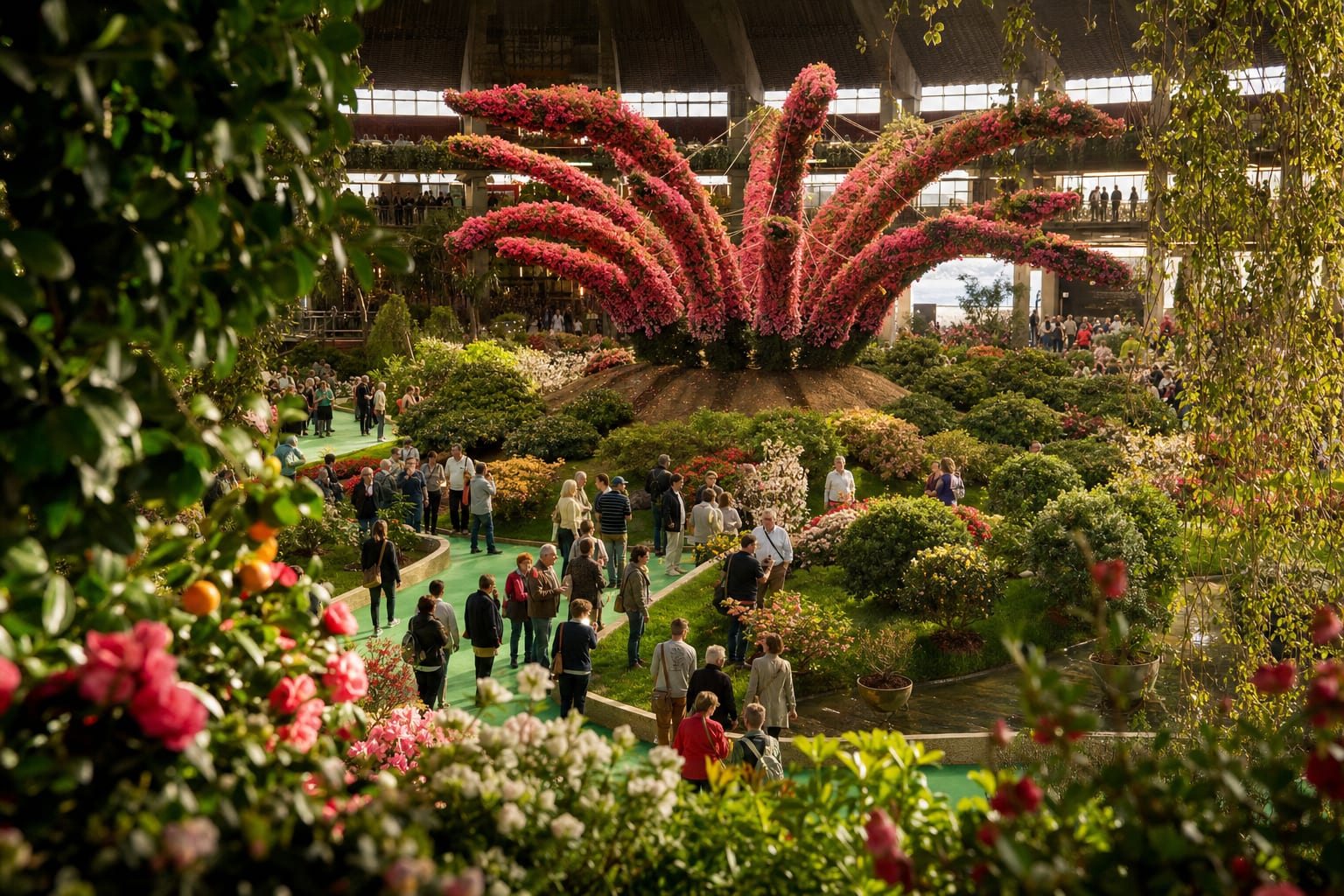
Spring also brings two events worth planning around. In Sanremo, the Corso Fiorito (the Sanremo in Fiore flower parade, a descendant of the old Belle Epoque flower battles) rolls floral floats through town in late March, a fitting show for the Coast of Flowers. Then on the second Sunday in May, Camogli holds its Sagra del Pesce, frying tons of fish in a four-meter pan on the waterfront for anyone who shows up. May is the sweet spot: warm enough for everything outdoors, green and blooming, and still ahead of the summer wave. The one tradeoff is that spring carries more rainy days than fall, so build in a flexible day or two and don't pin your whole trip to a single clear-sky forecast.
Summer (June to August)
Summer is when Liguria is warmest, busiest, and most expensive. June is the gentlest of the three: highs in the mid-20s°C (high 70s°F), long daylight, and crowds that haven't fully arrived yet, though the sea is still on the cool side early in the month before it warms toward swimmable by late June. We'd happily call early-to-mid June part of the shoulder sweet spot. July and August are a different story: daytime highs sit around 28 to 30°C (low-to-mid 80s°F), the humidity makes the cliff trails sweaty, and the Cinque Terre, Portofino, and the beaches at Levanto and along the Riviera get genuinely packed.
The upside of high summer is the water. The sea peaks near 24 to 25°C (75 to 77°F) in August, the warmest it gets all year, so if swimming is your reason for coming, this is when it delivers. The downside is logistics. The Cinque Terre train fills up, parking near Portofino is a nightmare, restaurants need reservations, and prices climb across the board. Mid-August around Ferragosto (August 15) is the absolute peak, when Italians themselves are on holiday and the coast is at its most crowded. If you must come in summer, aim for June or very early July and book everything well ahead.
Autumn (September to November)
Autumn, and specifically September, is the other window we'd recommend above all others. Early September keeps summer's warmth (highs in the mid-to-high 20s°C / high 70s to low 80s°F), but the school-holiday crowds thin out fast after the first week. The sea is still warm too, around 22°C (72°F), because water gives up its heat more slowly than air does. It isn't quite as warm as August's peak, but it's plenty swimmable, and you get it with a fraction of the August crowds, which is the real win. Up in the hillside vineyards the grape harvest is underway, and the light turns soft and golden in the late afternoons over the harbors.
October cools to highs in the low 20s°C (low 70s°F) and stays pleasant for walking and city visits, though it usually overlaps the Genoa International Boat Show (late September into early October), which fills the city's hotels, so check dates if you're basing yourself there. The catch with fall is rain: October and November are the wettest stretch of the year in Liguria, with heavy downpours and a real risk of trail closures and landslides on the Cinque Terre paths. So target September and early-to-mid October, and treat November as a city-only, bring-an-umbrella month.
Winter (December to February)
Winter in Liguria is mild by Italian standards but quiet on the coast. Genoa and the Riviera stay relatively gentle, with daytime highs around 9 to 12°C (48 to 54°F) and nights that rarely freeze near the sea, thanks to the mountains that shield the coast from northern cold. It rains a fair amount, and the sea drops to its coldest (around 13°C / 56°F in February), so this is firmly a city-and-culture season, not a beach one. The payoff is that Genoa is at its most local and affordable, with its old port, palaces, and food scene all to yourself.
The honest catch is closures. Many hotels, beach clubs, and restaurants in the smaller coastal towns, including parts of the Cinque Terre and Portofino, shut down or run reduced hours from roughly November through March. If you're set on a winter trip, base yourself in Genoa, which stays fully open year-round, and treat the villages as day trips rather than bases. Late February also brings the Sanremo Music Festival, Italy's biggest TV event of the year, which packs out that town and its hotels for a week, so book early or steer clear if crowds aren't your thing.
Weather, by the part of Liguria
Liguria is a thin crescent squeezed between the sea and the mountains, and that shape creates real microclimate differences over short distances. The coast itself is the mildest strip in northern Italy: the Riviera di Ponente in the west (around Sanremo and Bordighera) is the warmest and sunniest, sheltered enough that palms and citrus thrive, which is why it earned the nickname the Riviera dei Fiori (Coast of Flowers). The Riviera di Levante in the east (Portofino, the Cinque Terre, the Gulf of La Spezia) is a touch cooler and wetter, with more cloud catching on the steeper hills, though still mild.
Step inland and uphill and conditions change quickly. The vineyard terraces just above the Cinque Terre stay close to coastal temperatures, but the Apennine ridges behind the coast are noticeably colder, can see snow in winter, and pull down cooler, damper air. Genoa sits in the middle of the arc and gets the region's heaviest rainfall, sometimes in intense bursts, because moist sea air slams straight into the mountains right behind the city. The practical takeaway: the coast is your reliable warm-and-mild zone in any season, the western Riviera is your best bet for winter sun, and the hills are always a few degrees cooler than the harbor you started from.
Insider timing
The weeks worth targeting are mid-May through mid-June and the first three weeks of September. These shoulder windows give you warm weather, open restaurants, working trains, and noticeably thinner crowds than peak summer. If you can be flexible, aim for midweek rather than weekends in the Cinque Terre and at Portofino, since day-trippers and Italians pour in on Saturdays and Sundays year-round, and start your village hopping early in the morning before the cruise and train crowds arrive around late morning.
What to avoid: mid-August, full stop. The week around Ferragosto (August 15) is the most crowded, most expensive, and hottest stretch of the year, and many family-run shops and restaurants actually close because the owners take their own holidays. Watch two date-specific crunches outside summer too: the Sanremo Music Festival in late February and the Genoa International Boat Show in late September or early October both fill regional hotels far in advance, so check those dates before you book. Finally, if you're coming for the Cinque Terre trails, skip November, when rain and landslide risk lead to frequent path closures, and always check the official Cinque Terre Card site for live trail status before you go, in any season.