

When to visit Campania
Typical climate in Naples, the regional capital.
Month by month
- Jan
- Cold winter weather with occasional rain. Layer up and bring a warm coat.
- Feb
- Still winter-like with cold temperatures. Expect some rainy days.
- Mar
- Spring begins with mild temperatures. Weather can be changeable.
- Apr
- Pleasant spring weather with blooming flowers. Light jacket recommended.
- May
- Warm late spring days. Perfect for outdoor activities.
- Jun
- Summer arrives with warm, sunny days. Stay hydrated.
- Jul
- Peak summer heat. Best enjoyed with coastal breezes or air conditioning.
- Aug
- Hot summer continues. Many locals take vacations.
- Sep
- Pleasant early autumn. Still warm enough for light clothing.
- Oct
- Autumn weather sets in. Bring layers for cool evenings.
- Nov
- Cool autumn weather with increasing rain. Light jacket essential.
- Dec
- Winter conditions return. Cold and occasionally rainy.
The short version
The best months in Campania are April to June and September to October. You get warm, mostly sunny days, a sea that's swimmable from late May and still warm into October, and crowds that are a fraction of the midsummer crush on the Amalfi Coast. Late spring is the greenest stretch, with the lemon groves above Amalfi in full perfume and wildflowers on the cliffs. Early autumn brings the year's best swimming, the grape and chestnut harvests, and the Feast of San Gennaro in Naples on September 19.
July and August are hot, expensive, and packed, with the coast road gridlocked and the worst of it around Ferragosto in mid-August. They suit you only if you want guaranteed beach heat and don't mind paying for it. Winter is quiet, rainy, and cheap, good for Naples and Pompeii without the lines, less good for the coast, where a lot of Amalfi hotels and restaurants close from November to March.
Spring (March to May)
Spring is when Campania wakes up. March is still cool and changeable, with highs around 16C (61F) and a real chance of rain, so it works better for Naples and Pompeii than for the coast. By April the weather steadies into the high teens and low 20s Celsius (upper 60s to low 70s Fahrenheit), the lemon groves above Amalfi are heavy with fruit, and the hillsides turn green and bloom. May is close to perfect: warm, long days, highs near 23C (73F), and everything open but not yet mobbed.
The catch is the sea. The water sits around 16C to 18C (61F to 64F) through April and most of May, fine for a quick dip but cold for real swimming until the very end of the month. Spring is the season for hiking the Path of the Gods (the cliff trail from Bomerano to Nocelle), wandering Pompeii and Herculaneum in comfortable temperatures, and exploring Naples on foot before the summer heat lands. Pack a light layer and a rain jacket for the shoulder weeks, and start coastal hikes early, since shade is scarce once the sun is up.
Summer (June to August)
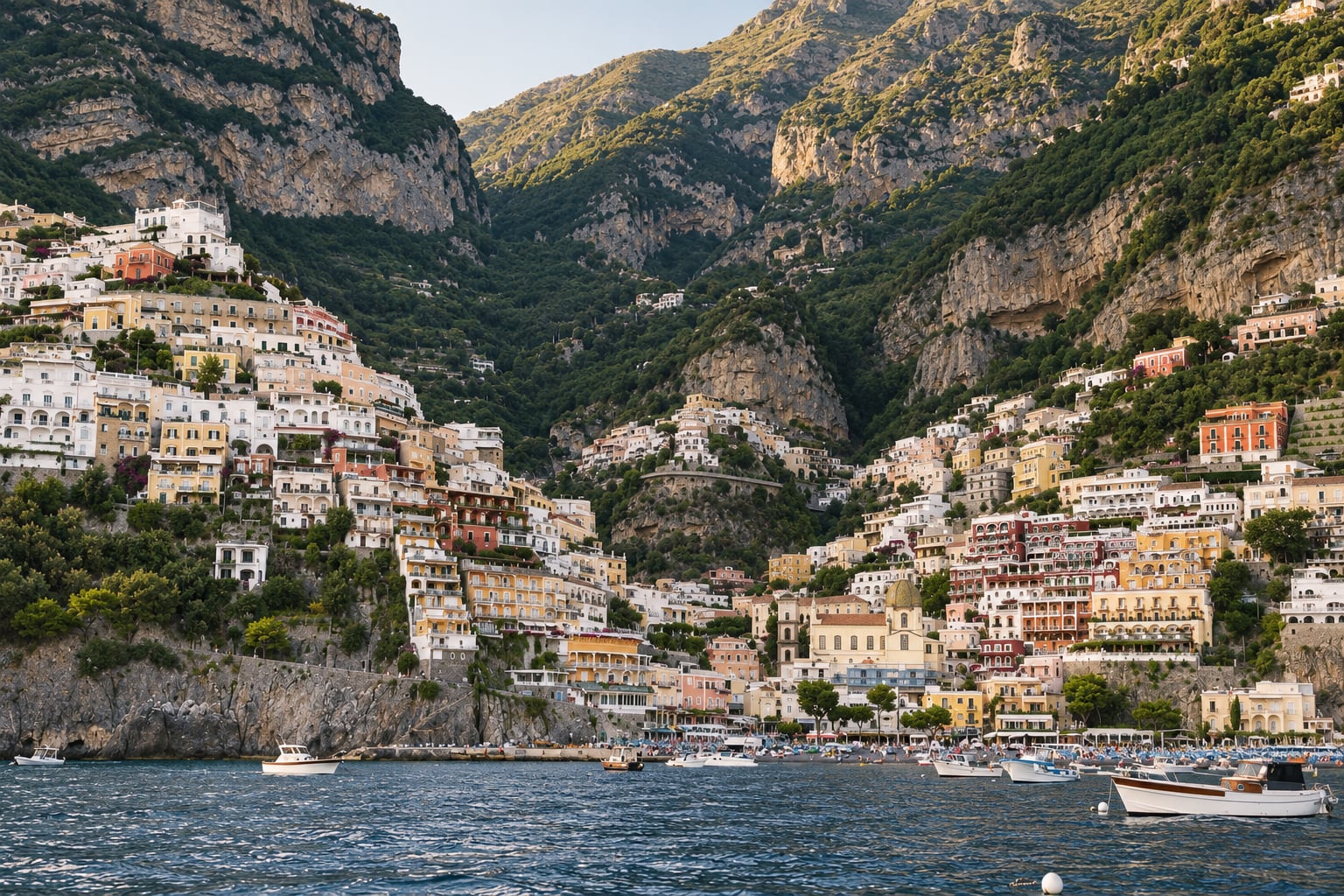
Summer is hot, bright, and busy. June is the standout month: highs around 27C (81F), a sea finally warm enough to swim in (about 23C, 73F, and climbing), and crowds that haven't yet peaked. By July and August, daytime highs sit near 29C (84F) and feel hotter in the sun, the sea is at its warmest (25C to 26C, around 77F to 79F), and the Amalfi Coast runs at full capacity. Positano, Capri, and the coast road get genuinely overwhelmed.
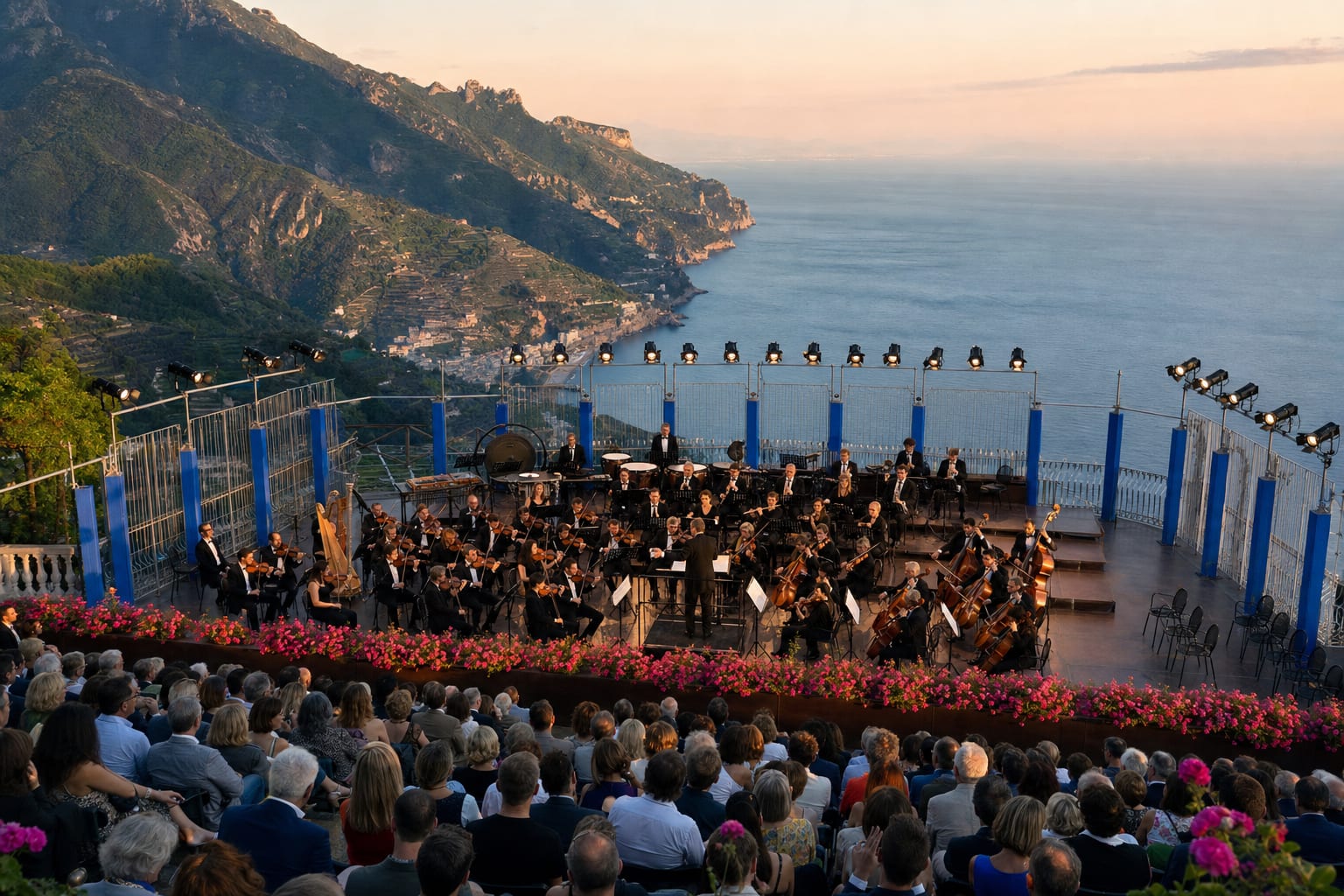
Naples itself empties out in August as locals head for the water, and the heat in the city can turn heavy and still. If you come in summer, this is when the calendar shines: the Ravello Festival runs from early July into early September with concerts on the cliffside terrace of Villa Rufolo, and on Ferragosto (August 15) midnight fireworks light up the sea at Positano and Maiori for the Feast of the Assumption. Just book accommodation and ferries months ahead, expect premium prices, and brace for slow traffic on the SS163 coast road.
Autumn (September to November)
Early autumn is arguably the best time of all. September keeps summer's warmth (highs around 26C, 79F) with the sea still at its warmest after a full season of heating, so swimming is excellent and the crowds thin noticeably after the first week. The light turns golden, the harvest begins, and on September 19 Naples fills for the Feast of San Gennaro, when the faithful pack the Duomo to watch for the famous liquefaction of the saint's dried blood. October stays mild (highs near 22C, 72F) and is one of the loveliest, quietest months to visit.
The tradeoff is rain. Autumn is Campania's wettest season, and October and November bring the heaviest downpours of the year, often sudden and intense. November turns cool and grey, highs slipping toward 17C (63F), and many Amalfi Coast hotels and restaurants begin shutting for the season. Come in September or early October for the best balance, and pack for the occasional heavy shower.
Winter (December to February)
Winter in Campania is mild by northern standards but wet and low-key. Naples sees highs around 13C to 14C (55F to 57F) and lows near 8C (46F), with frequent rain and the occasional clear, crisp day. It rarely freezes on the coast, and snow is essentially unheard of except on the high inland mountains. This is the cheapest, quietest season, and a genuinely good time for Naples, Pompeii, and the museums, where you can wander without the high-season lines and crowds.
The Amalfi Coast, by contrast, largely shuts down. A good share of hotels, restaurants, and boat services close from November through March, ferries run a reduced or paused schedule, and the coast feels sleepy and shuttered. Naples, though, is alive: Christmas brings the famous presepe (nativity) workshops on Via San Gregorio Armeno, the streets are lit and busy, and the food scene runs full tilt. Winter suits culture-first travelers who don't mind rain and aren't here for the beach.
Weather, by the part of Campania
Campania packs several climates into a small space. The coast (the Amalfi towns, Sorrento, Capri, the Naples seafront) is the mildest, warmed and steadied by the Tyrrhenian Sea, with hot dry summers and gentle wet winters. Naples sits at the heart of the bay and shares that mildness, though the dense city traps summer heat and can feel stifling in July and August. The sea itself lags the air: it's coldest in February (around 14C, 57F) and warmest in August (about 26C, 79F), which is why September swimming beats June swimming even though the air temperature is similar.
Inland and uphill, the story changes. The hill towns above the coast (Ravello sits about 350 meters up) are noticeably cooler and breezier than the beaches below, a real relief in summer. Go further inland to the Apennine zones (Irpinia, the Sannio, the Matese mountains) and you get a continental climate: colder winters with genuine snow, hot dry summers, and big swings between day and night temperatures. The Cilento, in the south, is rugged and drier, with its own wild coastline and a long, hot summer.
Insider timing
Target the shoulder weeks: late April through mid-June, and the back half of September into early October. The single best window for many travelers is the second and third weeks of September, when the sea is at its warmest, the summer crowds have thinned, and prices start to ease, all before the autumn rains arrive. Late May and early June give you spring greenery, open everything, and pre-peak prices, though the sea is still cool early on.
Avoid the first three weeks of August if you can, and especially the days around Ferragosto (August 15), when Italians take their own holidays, the coast is jammed, prices peak, and traffic on the SS163 crawls. If you do come in high summer, base yourself somewhere with a ferry stop and travel by boat rather than the coast road, which spares you the worst gridlock. Book Amalfi accommodation and the Capri ferry well ahead in any peak or shoulder month, and if you're coming for San Gennaro on September 19, reserve Naples lodging early, because the city fills up. For winter visits, double-check that your coastal hotel and its restaurant are actually open before you book, since plenty close for the off-season.