

I monumenti
Tutti i monumenti, città per città
I luoghi e i capolavori attorno a cui vale la pena costruire una giornata.
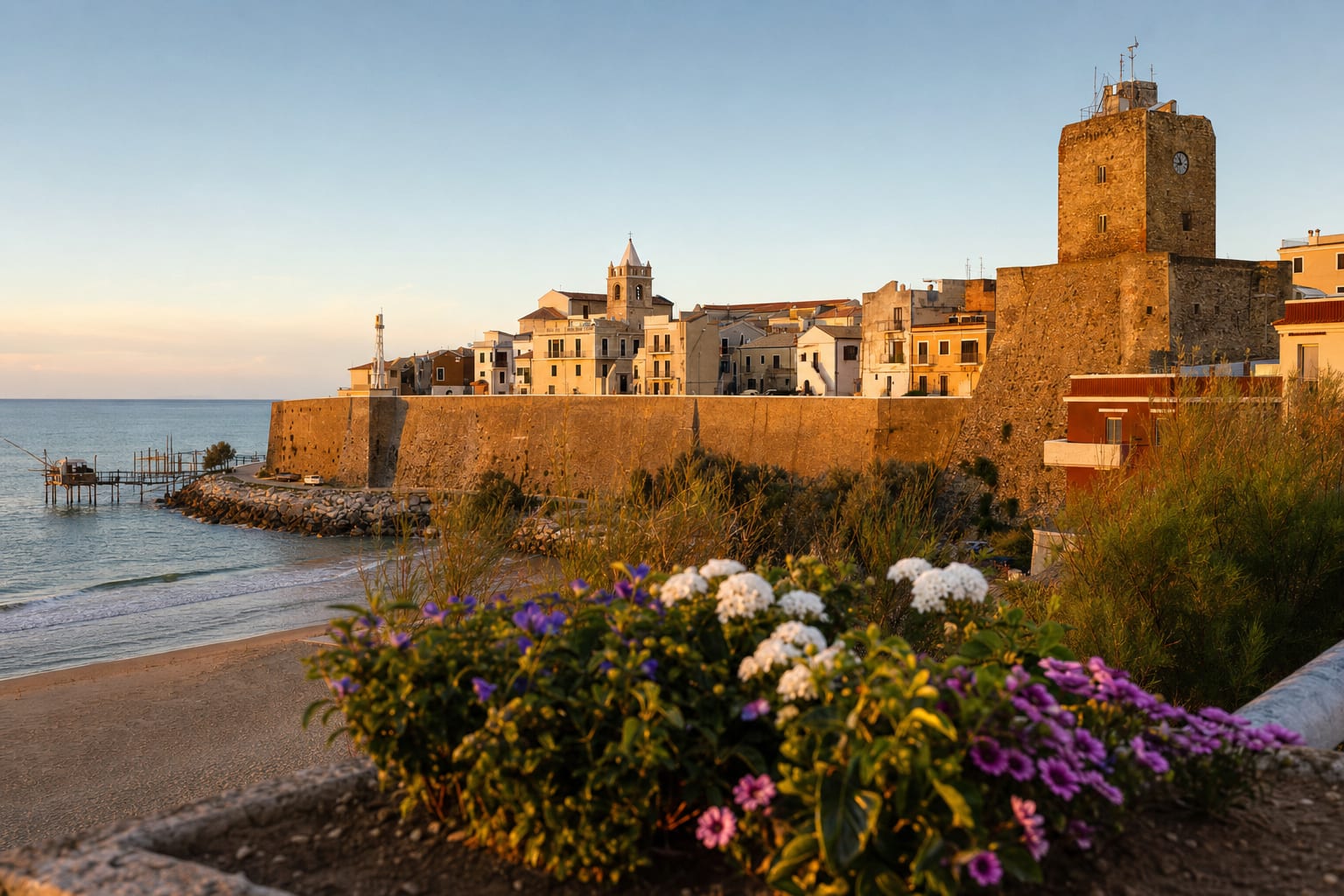 TermoliBorgo Antico di TermoliWalled village on the point, pastel lane A Rejecelle, Swabian tower, trabucco fishing machinesTermoli's old quarter packs pastel houses inside sea walls on its little promontory, including A Rejecelle, candidate for Italy's narrowest lane. The Swabian tower guards one side, a wooden trabucco fishes off the other.Pianifica la visita
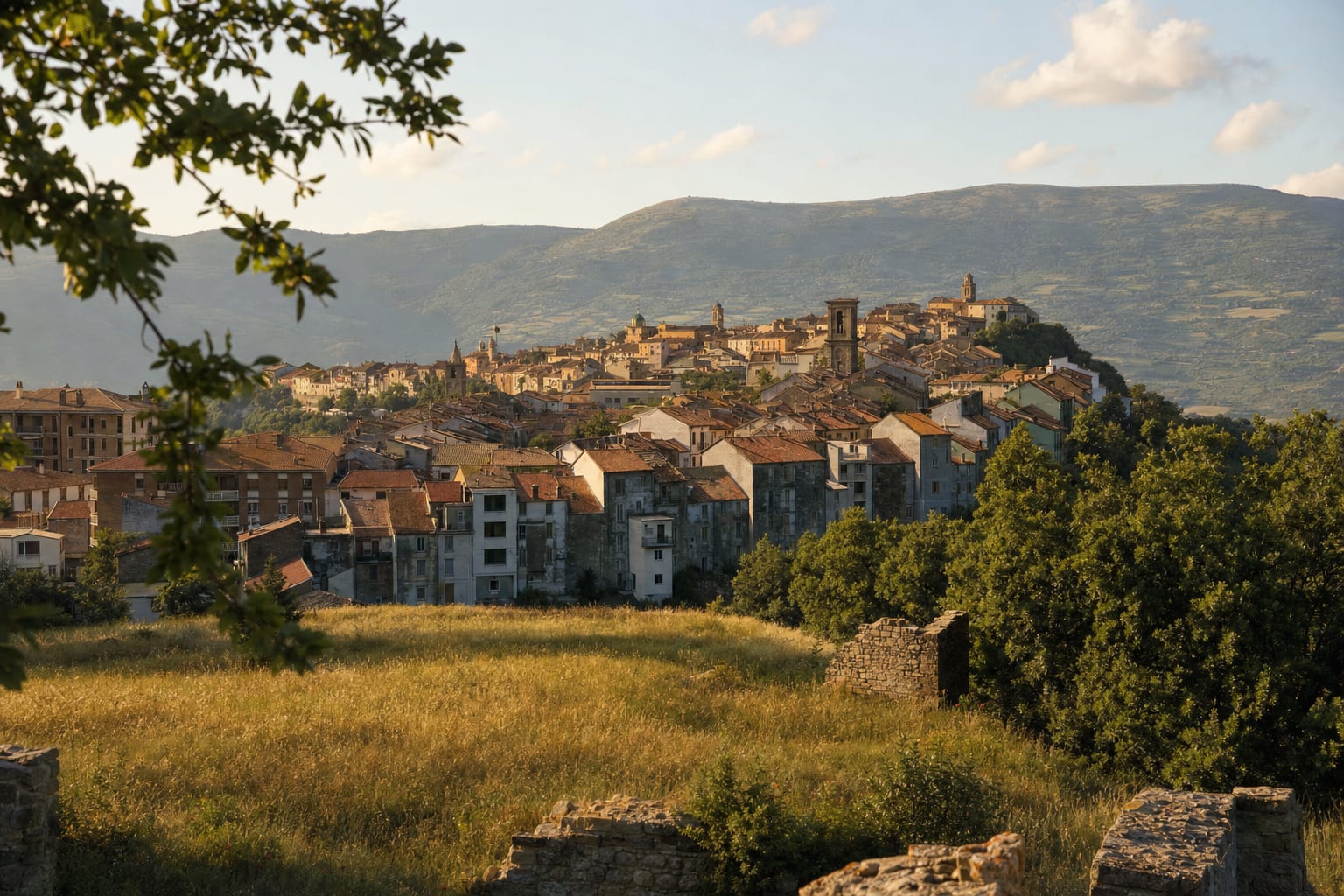 AgnoneAgnoneBells for the popes since 1339, oldest family firm in Italy, lost-wax casting visits, bell museumThe Marinelli family has cast bells in Agnone since at least 1339, papal coat of arms earned and kept. Visitors watch the lost-wax method unchanged in seven centuries, then ring the results in the museum.
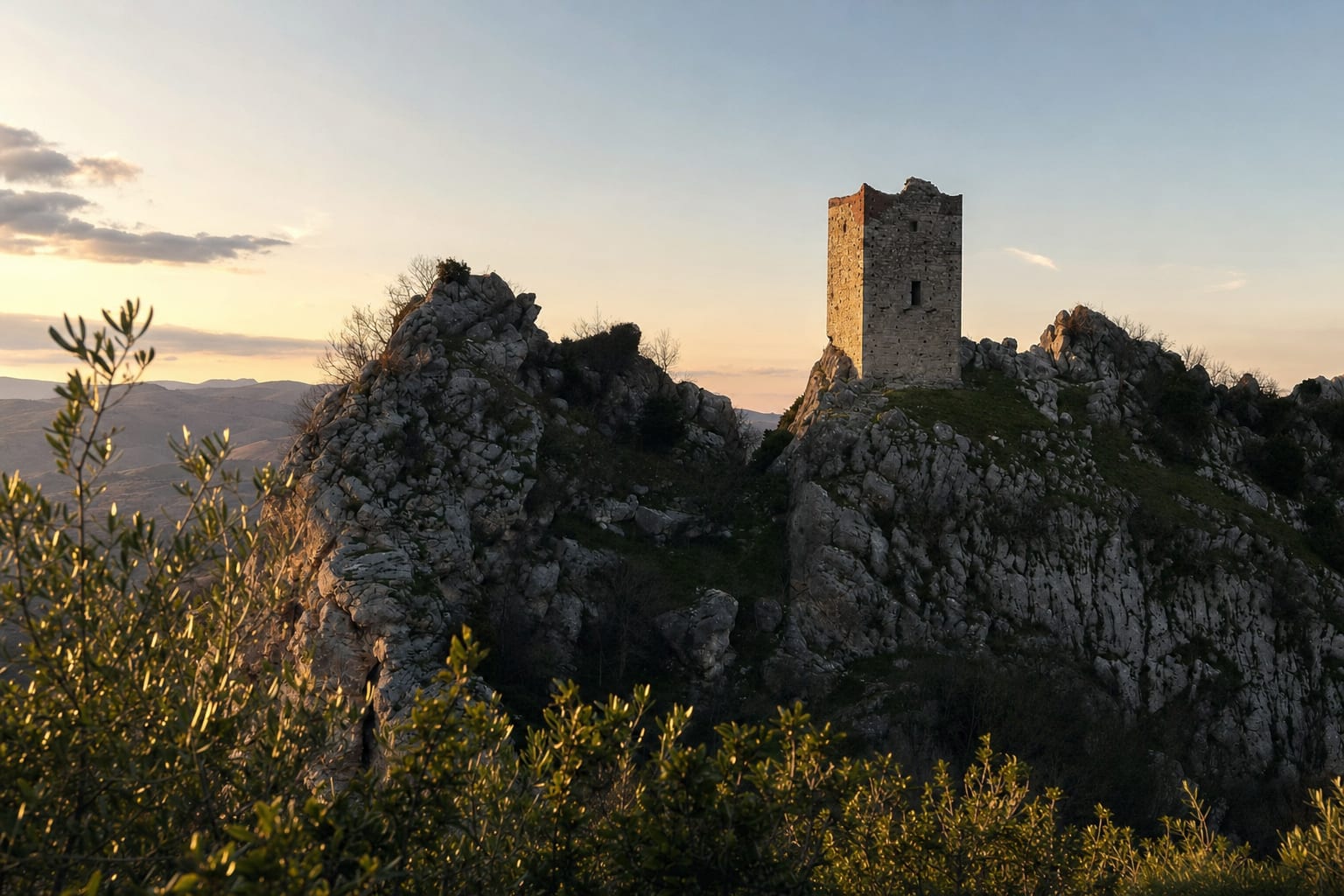 OratinoOratinoStone-carvers' village, most beautiful borghi list, Rocca tower on the cliff, Biferno valley viewsOratino bred generations of stone-cutters and gilders, and their craft shows in every lintel of the tiny borgo. The medieval Rocca tower stands apart on its crag, watching the Biferno valley below.
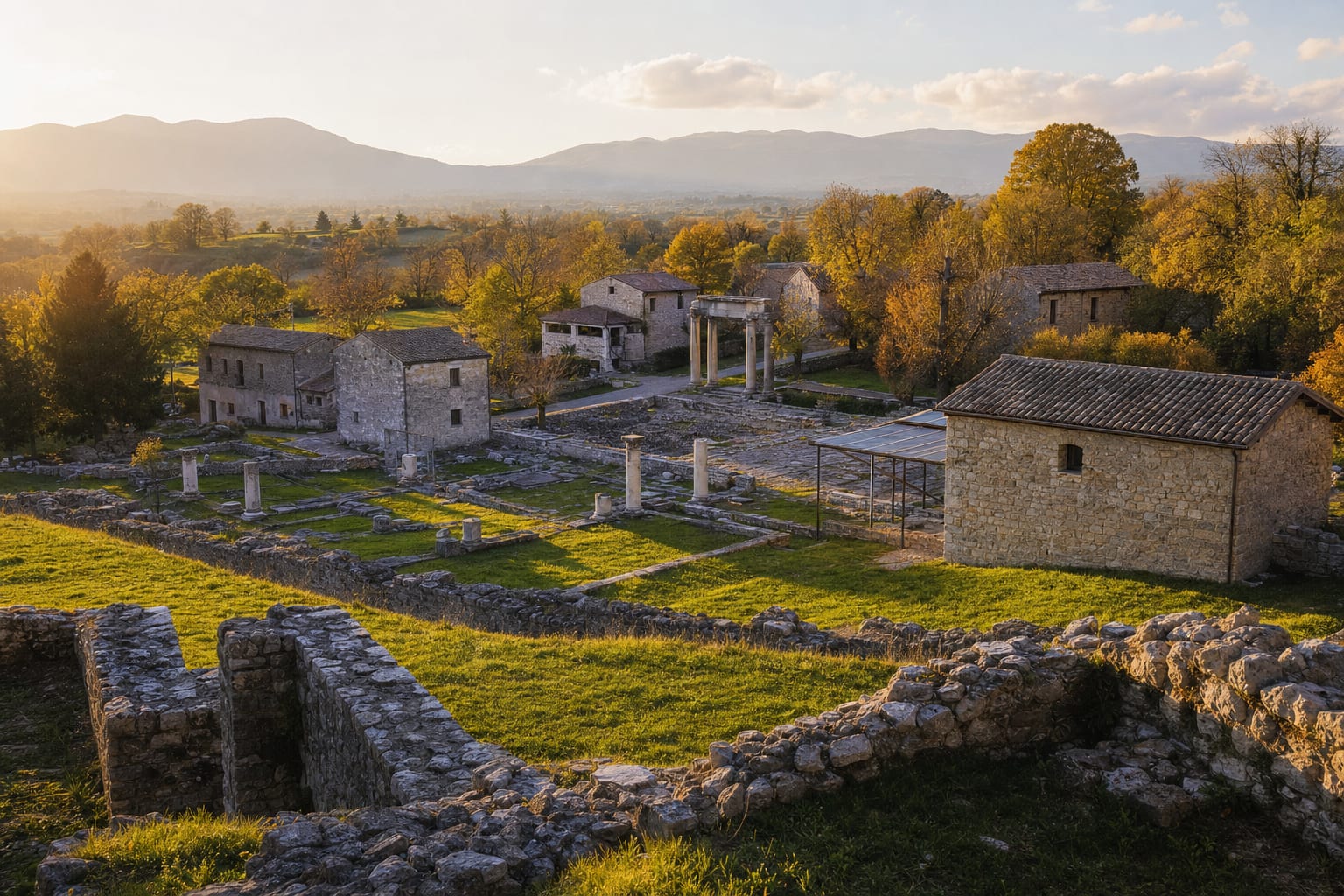 SepinoGemma nascostaArea Archeologica di SaepinumRoman town among wheat fields, theatre with farmhouses grown in, intact gates, tratturo crossroadsSaepinum is the Roman provincial town time forgot to demolish: walls, forum, basilica and gates stand among working fields. Farmhouses grew into the theatre's curve centuries ago and remain, the site's most touching detail.
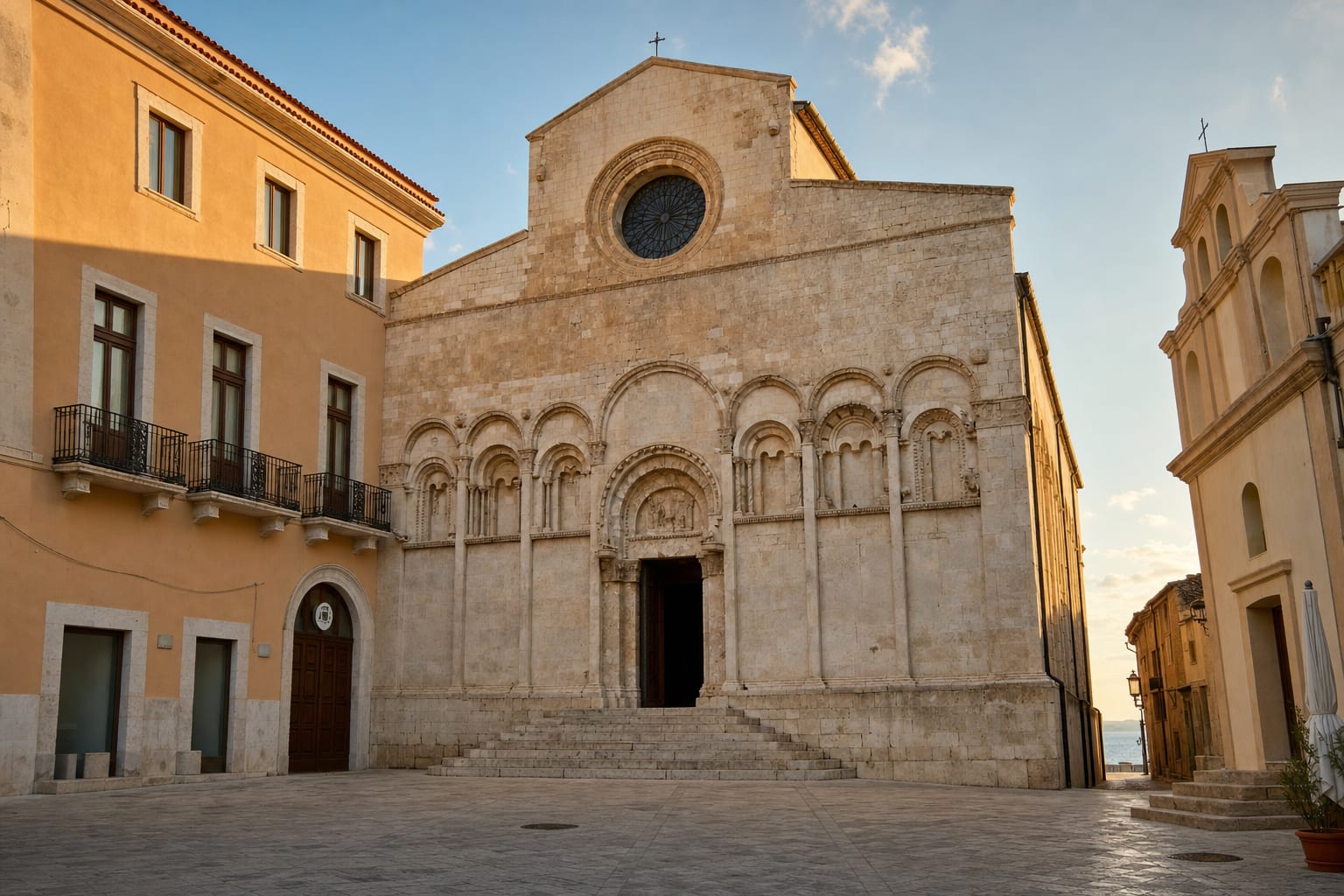 TermoliCattedrale di TermoliApulian Romanesque on the sea wall, relics of San Timoteo, arcaded facade, old town pointTermoli's cathedral brings Apulian Romanesque north along the coast, its arcaded facade filling the old town's small summit. The relics of Saint Timothy, Paul's companion, were rediscovered in its walls in 1945.
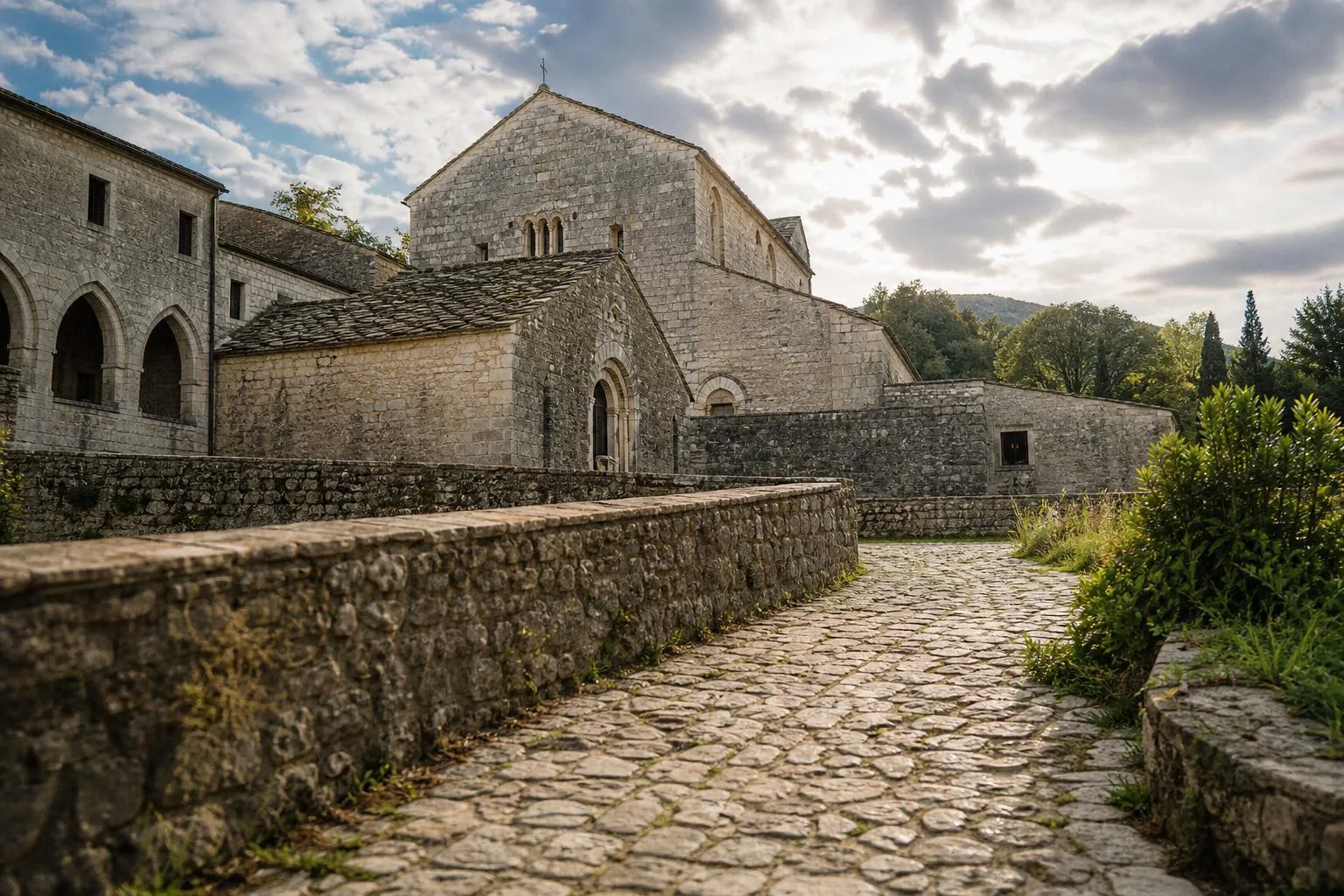 IserniaGemma nascostaAbbazia di San Vincenzo al VolturnoA Benedictine monastery founded in 731 near the Volturno's source, renowned for its mid-9th-century frescoes in the Crypt of Epiphanius and visitable as both an active abbey and an early-medieval archaeological monastery, far less known than Monte Cassino.
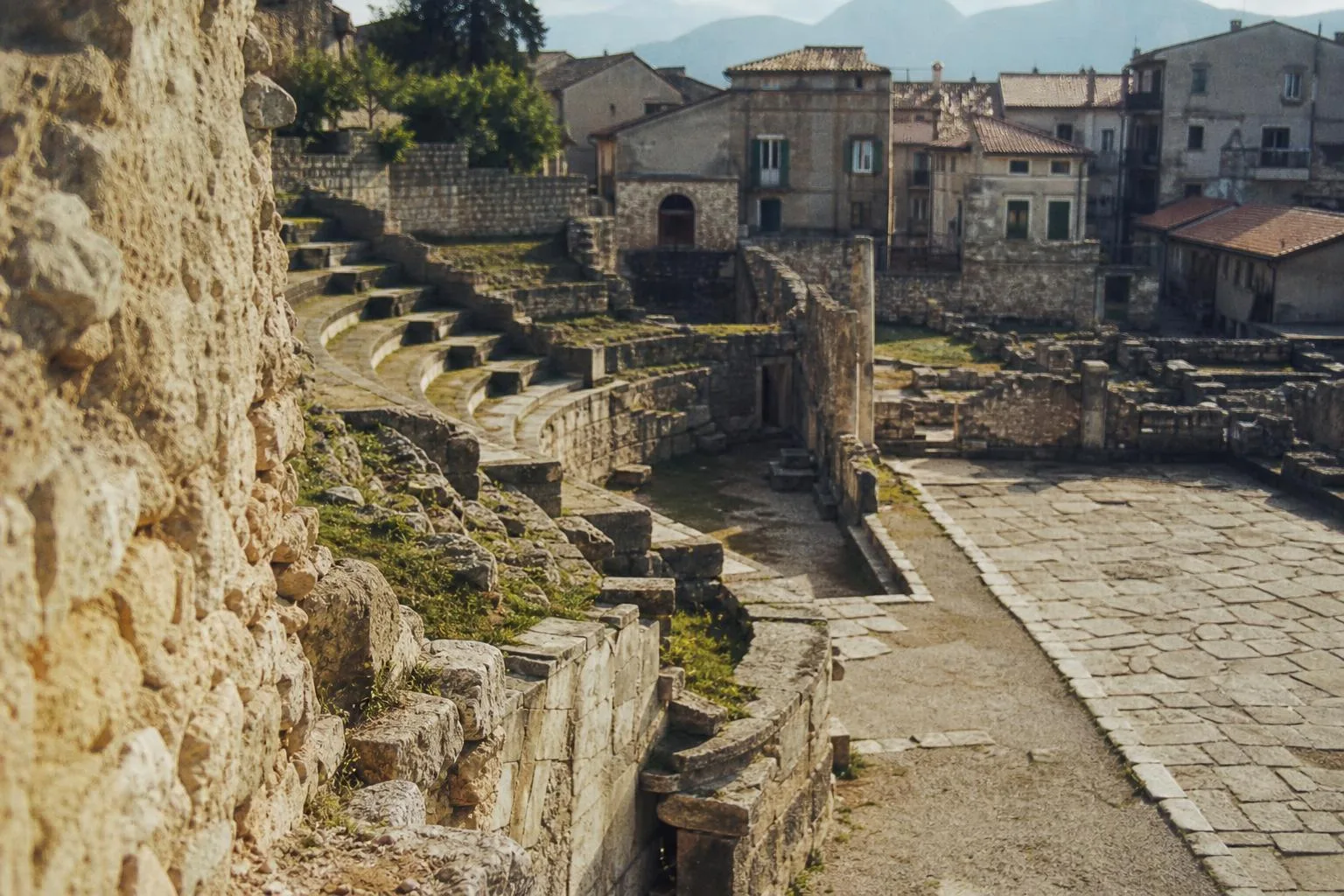 IserniaGemma nascostaVenafro romana (teatro e anfiteatro Verlasce)The Roman colony of Venafrum underlies modern Venafro and left visible remains including a large excavated theatre and the elliptical 'Verlasce' amphitheatre embedded in the town centre.
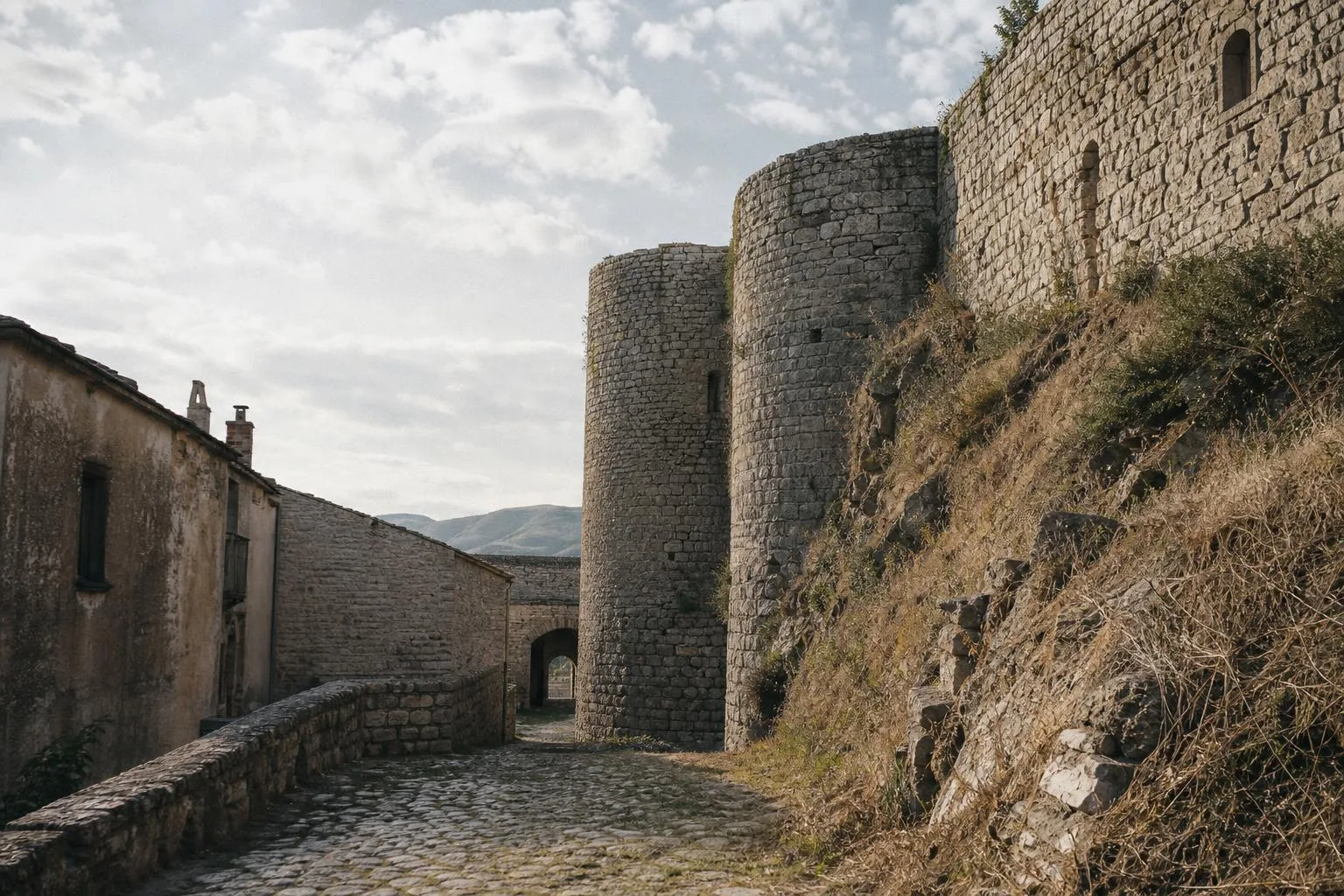 CampobassoGemma nascostaCastello di PianisiA hilltop medieval castle near the Fortore at Sant'Elia a Pianisi, built between the 10th century and 1275 and now a municipally owned archaeological site excavated by the University of Molise, largely unknown beyond the region.
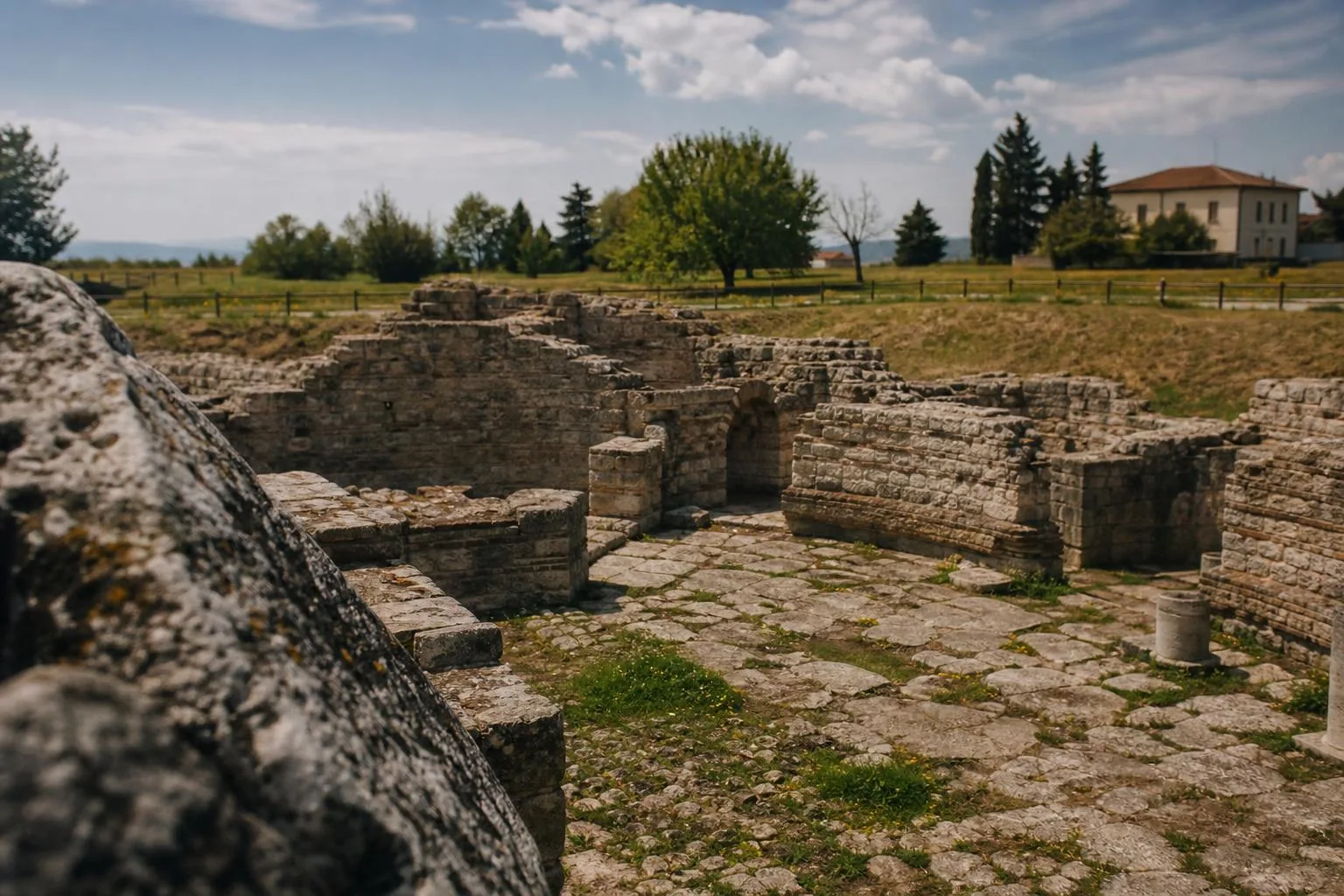 TermoliGemma nascostaLarinumA Frentanian-then-Roman site at Larino whose visitable remains include a Roman amphitheatre, baths with polychrome marine mosaics and forum buildings, drawing only about 1,566 visitors in 2016 with free admission.
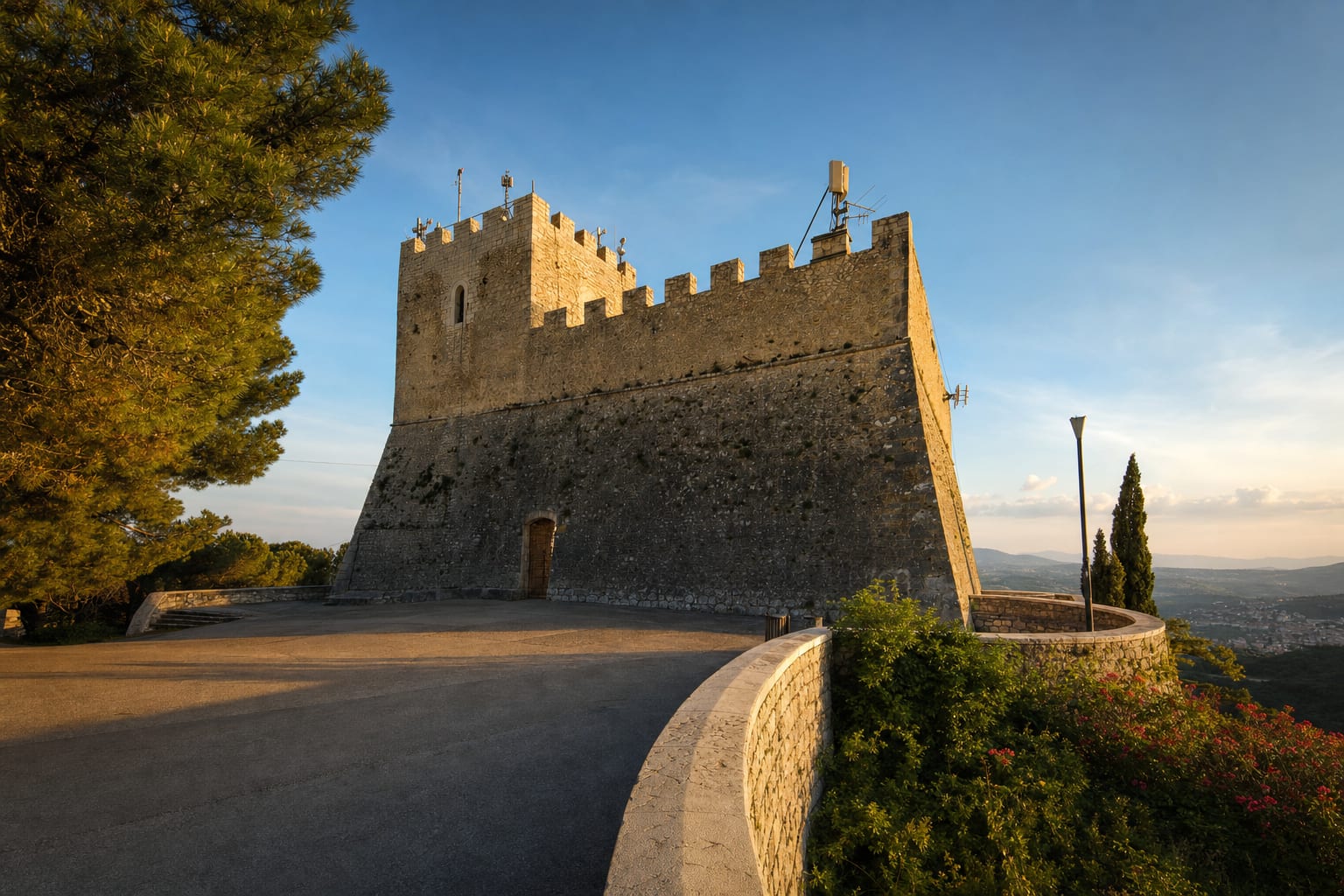 CampobassoCastello MonforteHilltop above Campobasso, six-tower silhouette, 1458 rebuilding, Misteri city belowCampobasso's castle crowns its conical hill with the blunt geometry Count Nicola Monforte gave it in 1458. The terrace circles the horizon from the Matese to the Maiella, the whole region in one slow turn.
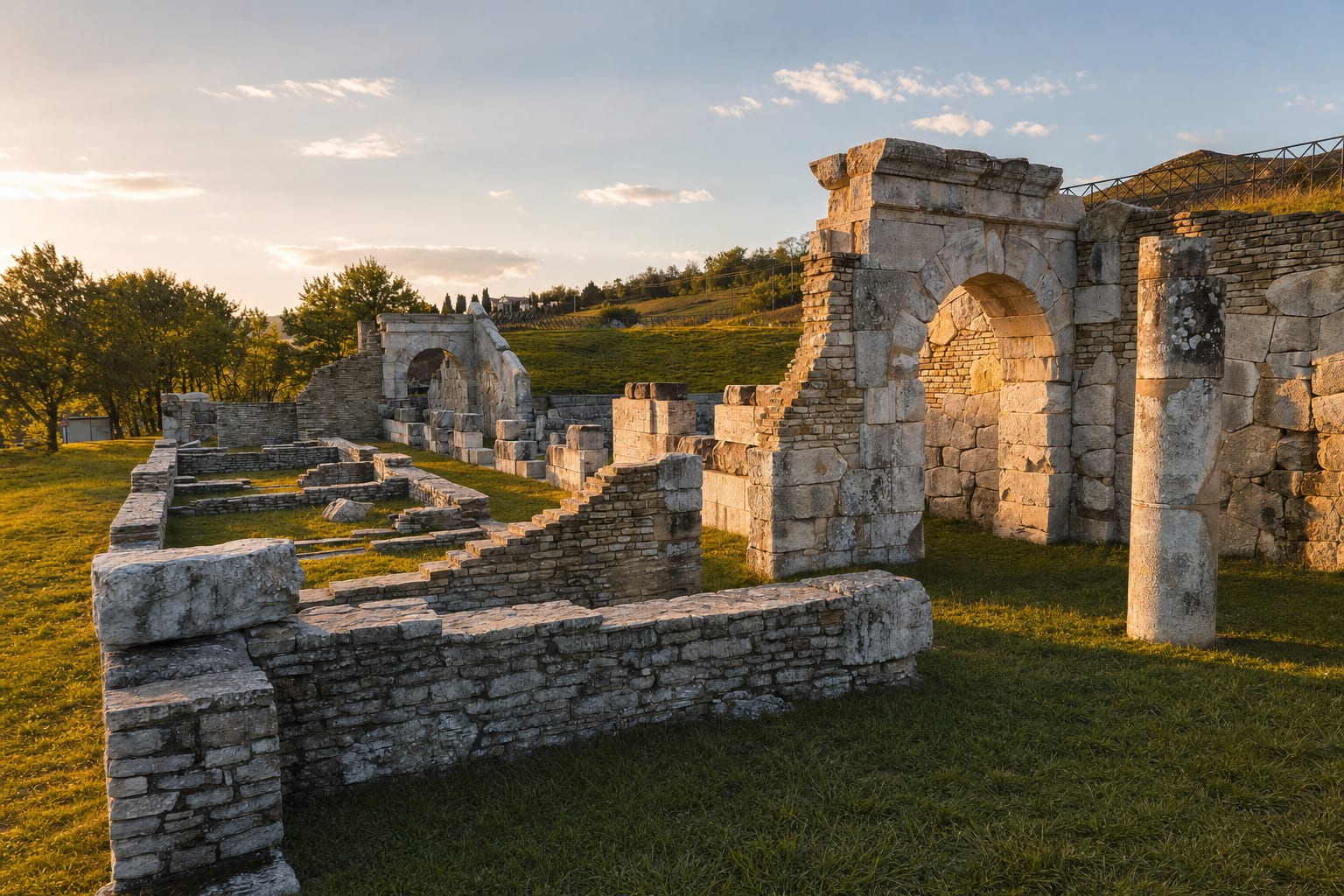 PietrabbondanteSantuario Italico di PietrabbondanteSamnite stone theatre, Italic temple terrace, Oscan inscriptions, views over the Trigno valleyThe Samnites built their grandest sanctuary high on the slopes of Monte Saraceno, a stone theatre and temple terrace gazing across the hills of ancient Samnium. The theatre's curved seats, carved with ergonomic backrests, have kept their comfort for more than two thousand years.
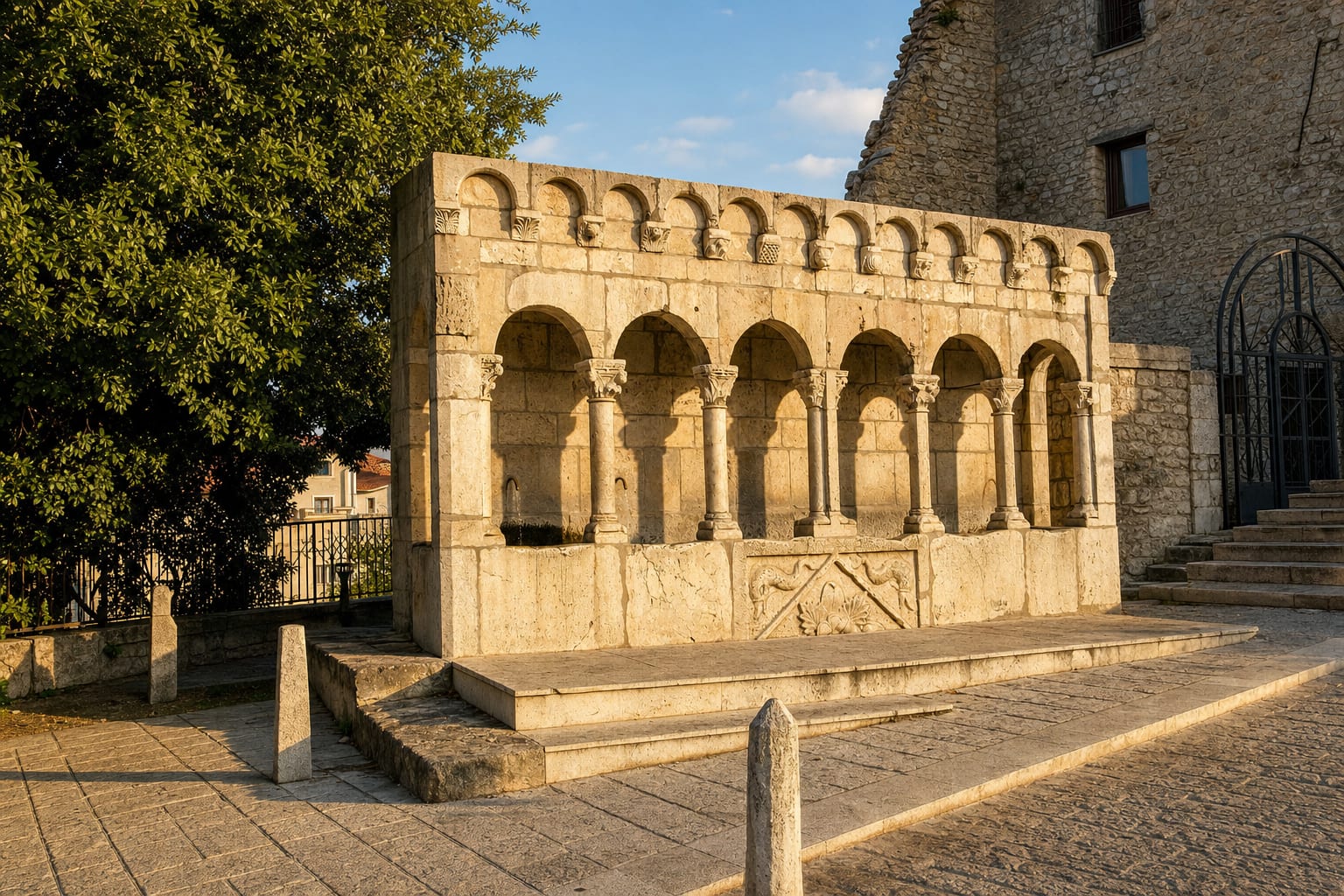 IserniaFontana FraternaSix-arched public fountain, recycled Roman stones, symbol of Isernia, fourteenth-century assemblyIsernia assembled its emblem from Roman blocks and medieval arches, a six-spout public fountain like a small loggia. It has survived earthquakes and the 1943 bombing, patched each time with its own stones.
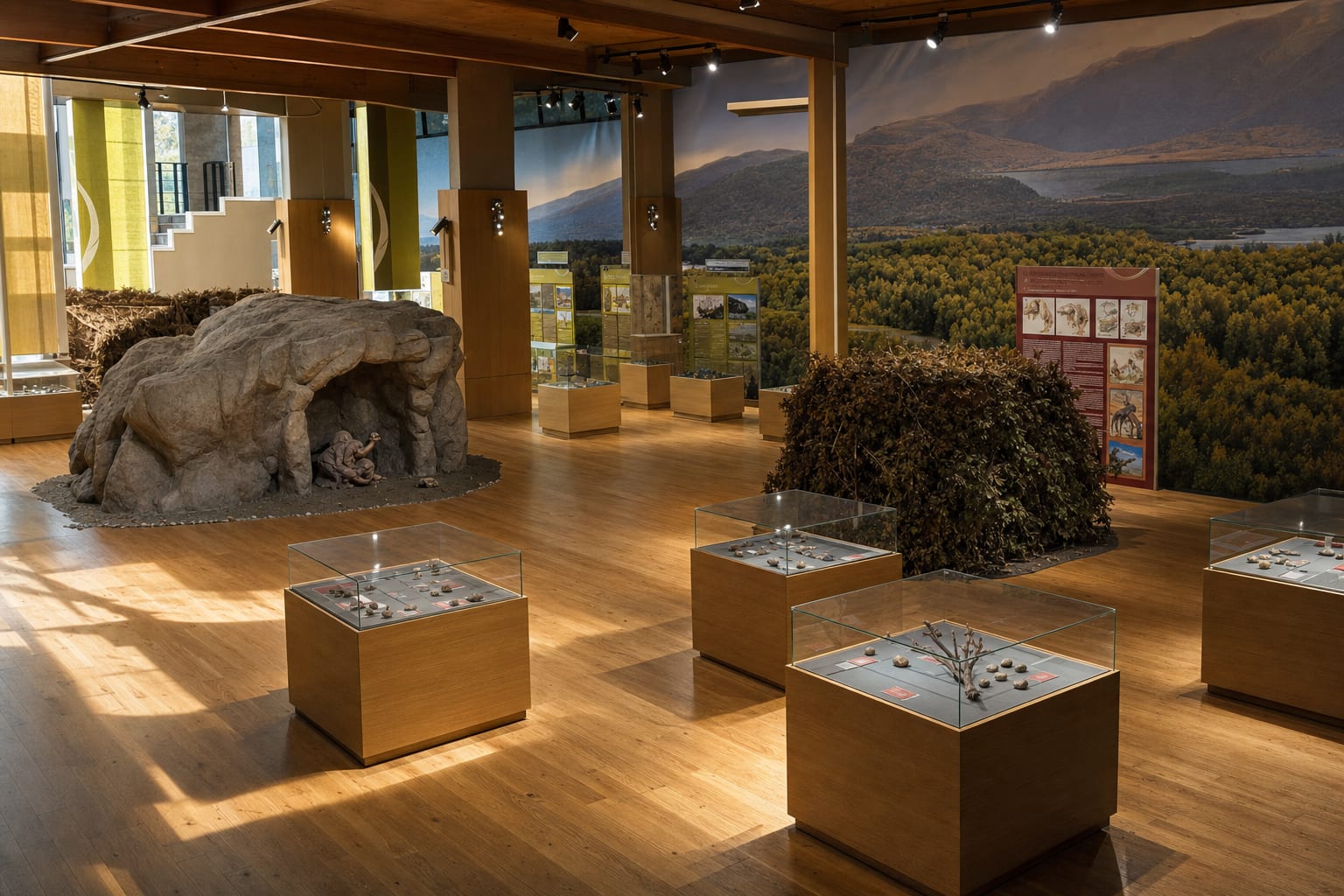 IserniaMuseo Nazionale del Paleolitico di IserniaLa Pineta site of 600000 years ago, oldest human traces in Italy, in-place excavation hall, child's tooth findRoad works in 1979 cut into a camp where humans butchered bison some 600000 years ago, the oldest major trace of people in Italy. The museum roofs the excavation itself, bones and tools left exactly in their clay.
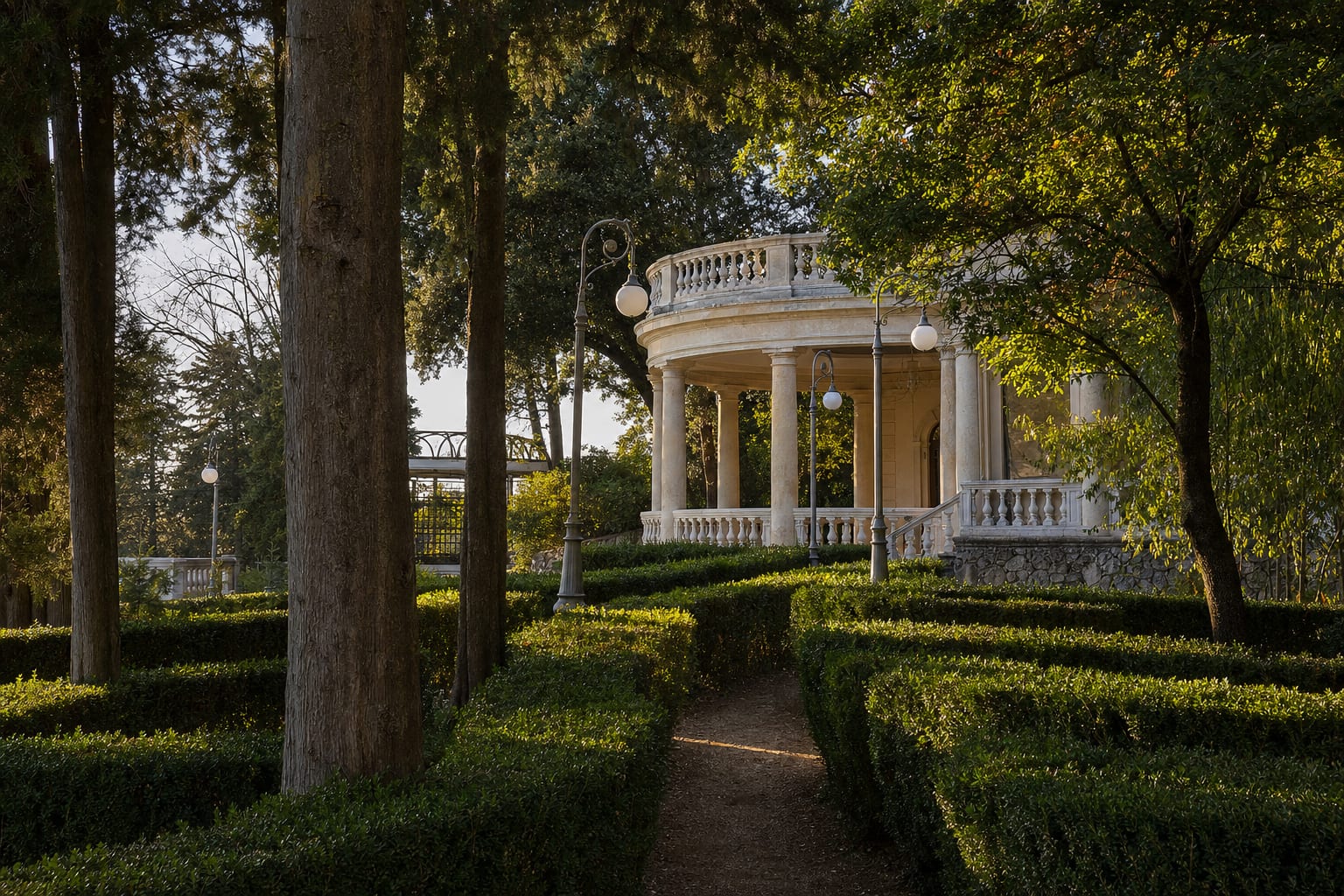 CampobassoVilla De CapoaMonumental town garden, sequoias and cedars among statues, Counts di Capoa legacy, restored nineteenth-century designCampobasso's noble garden survived as the town's green parlor, its avenues lined with statues, sequoias and cedars of Lebanon. Restored to its nineteenth-century plan, Villa De Capoa is the gentlest stop in Molise's capital.
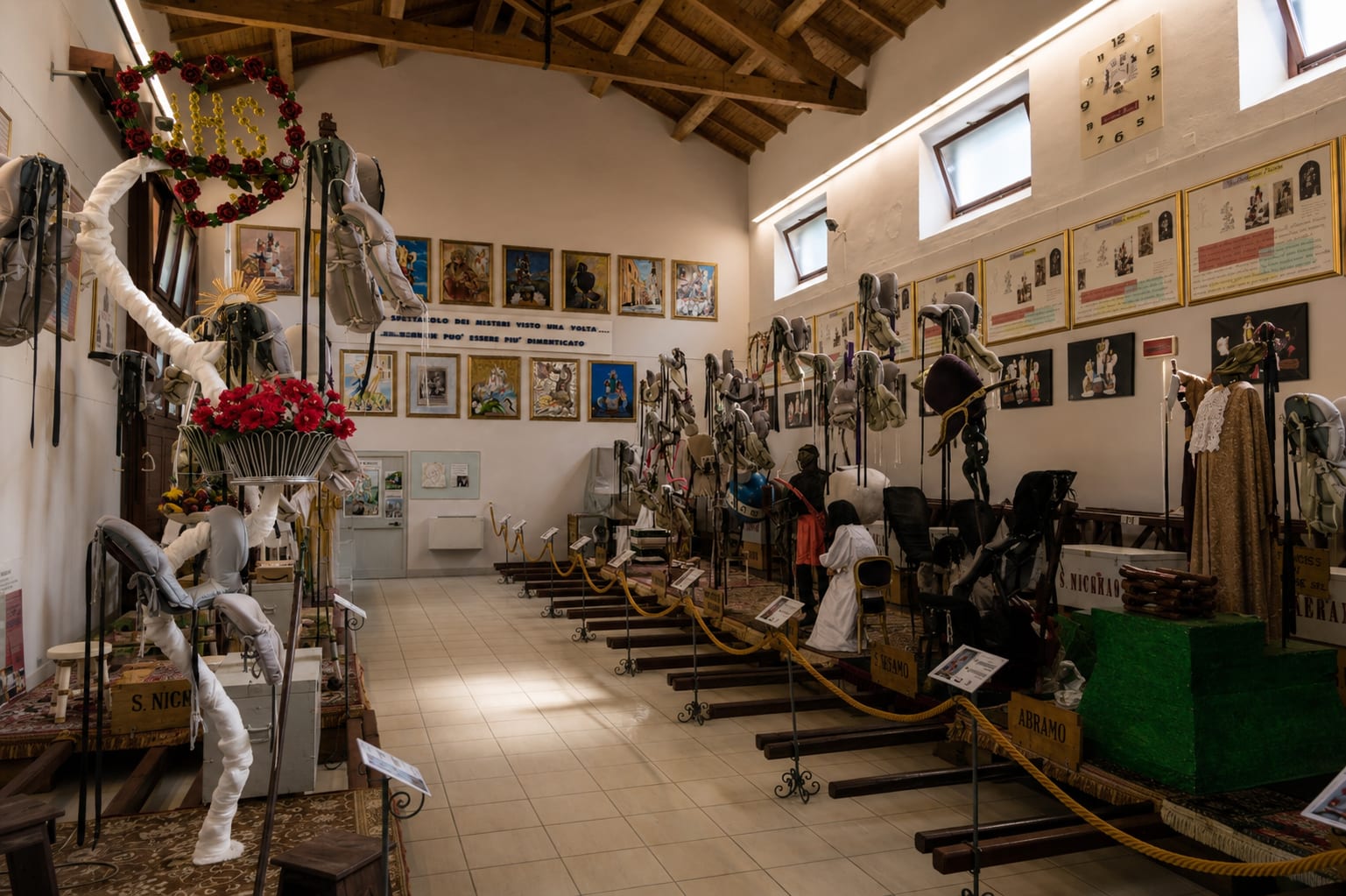 CampobassoMuseo dei MisteriThirteen flying machines of 1748, children borne as angels, Corpus Domini procession, Di Zinno's engineeringSculptor Paolo Di Zinno built thirteen steel-and-wood machines that let children float as angels and saints above Campobasso's Corpus Domini crowds. The museum keeps the Mysteries and their films the rest of the year, ready for June.
Città
Città per città
Dove si concentrano i monumenti in Molise.