

I monumenti
Tutti i monumenti, città per città
I luoghi e i capolavori attorno a cui vale la pena costruire una giornata.
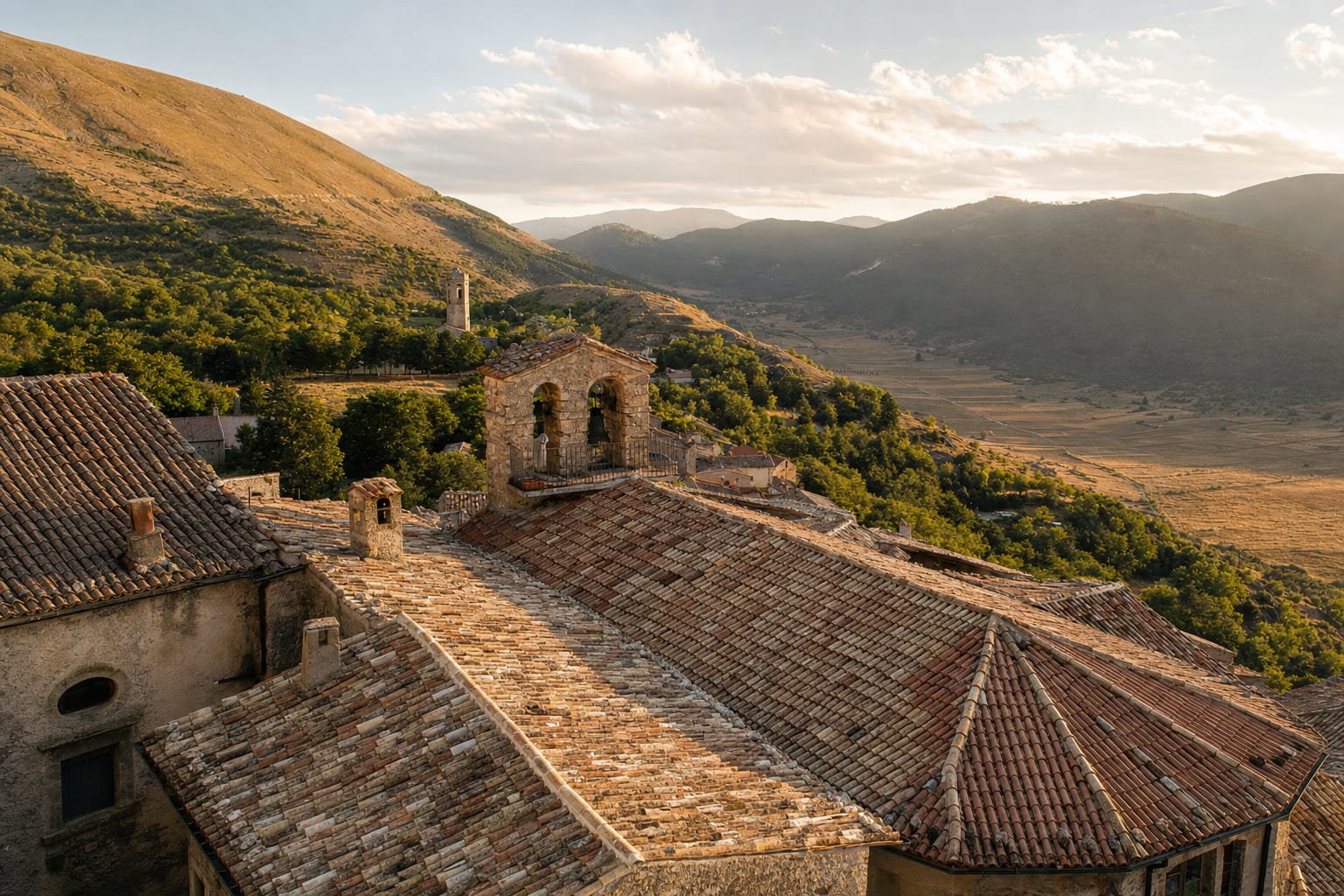 Santo Stefano di SessanioSanto Stefano di SessanioMedici mountain borgo, scattered-hotel revival, lentil terraces, stone lanes intactThe Medici once owned this fortified wool village on Gran Sasso's slopes, and their crest remains over the gate. Restored as a scattered hotel, its stone houses and famous lentils brought life back without breaking the spell.Pianifica la visita
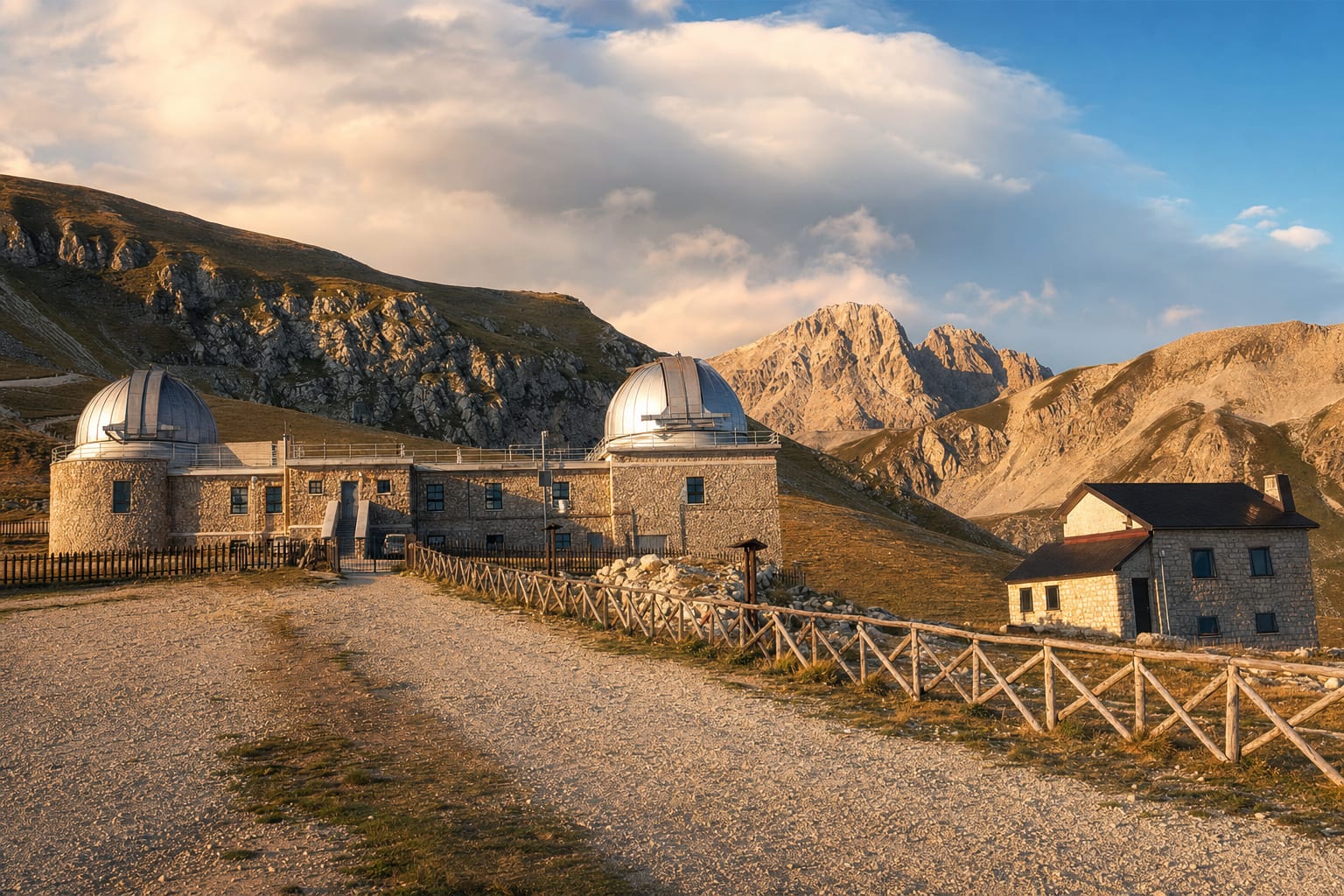 L'AquilaCampo ImperatoreLittle Tibet plateau, Gran Sasso backdrop, Mussolini's mountain prison, transhumance pasturesThey call Gran Sasso's high plateau Little Tibet, twenty kilometers of treeless pasture under Corno Grande's wall. The hotel where Mussolini was held and rescued in 1943 still stands at the cable car's top station.
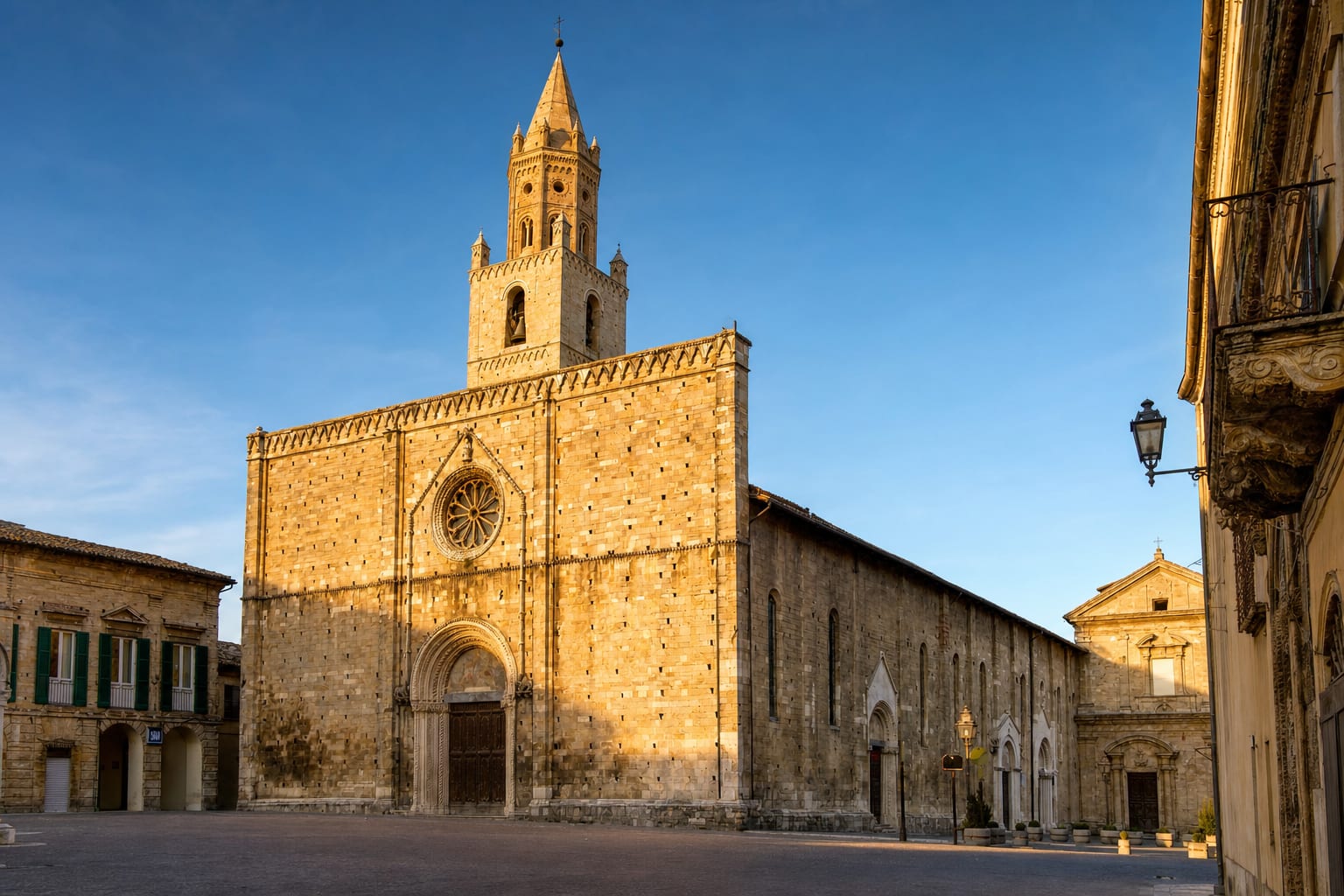 AtriCattedrale di AtriAndrea De Litio fresco cycle, Abruzzo's Sistine choir, Roman cistern crypt, calanchi badlands settingAtri's cathedral hides the Renaissance of Abruzzo: Andrea De Litio frescoed its choir with a Life of the Virgin in full color and personality. The crypt below was a Roman cistern, and the calanchi badlands ripple beyond the town.
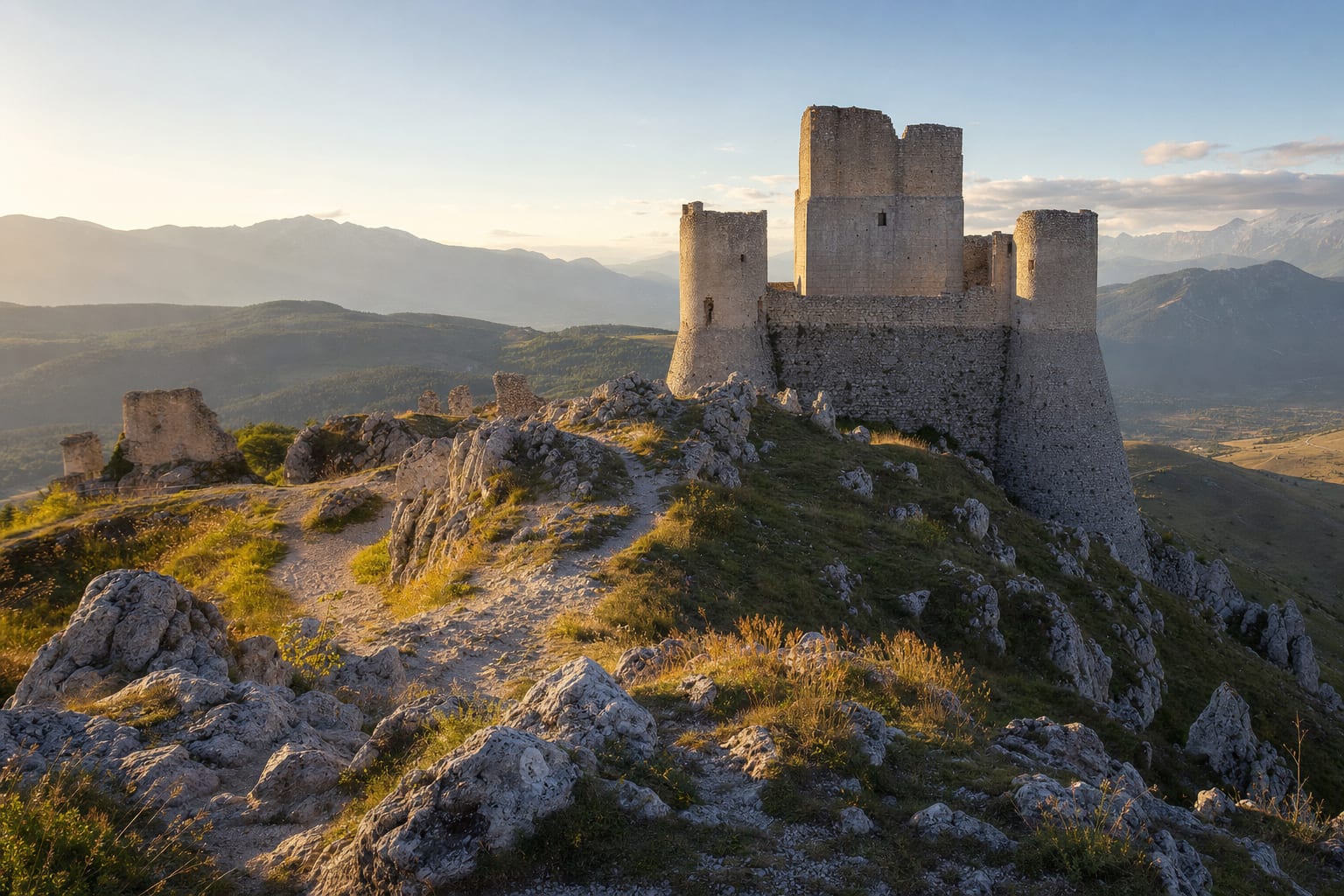 CalascioRocca CalascioApennine fortress at 1460 meters, Gran Sasso panoramas, Ladyhawke film location, Santa Maria della Pieta chapelA medieval watchtower grew into this fortress of pale limestone at 1,460 meters, the highest in the Apennines, watching over shepherd roads beneath the Gran Sasso. Earthquakes emptied it centuries ago, leaving a ruin so cinematic that Ladyhawke and The Name of the Rose were both filmed beneath its walls.
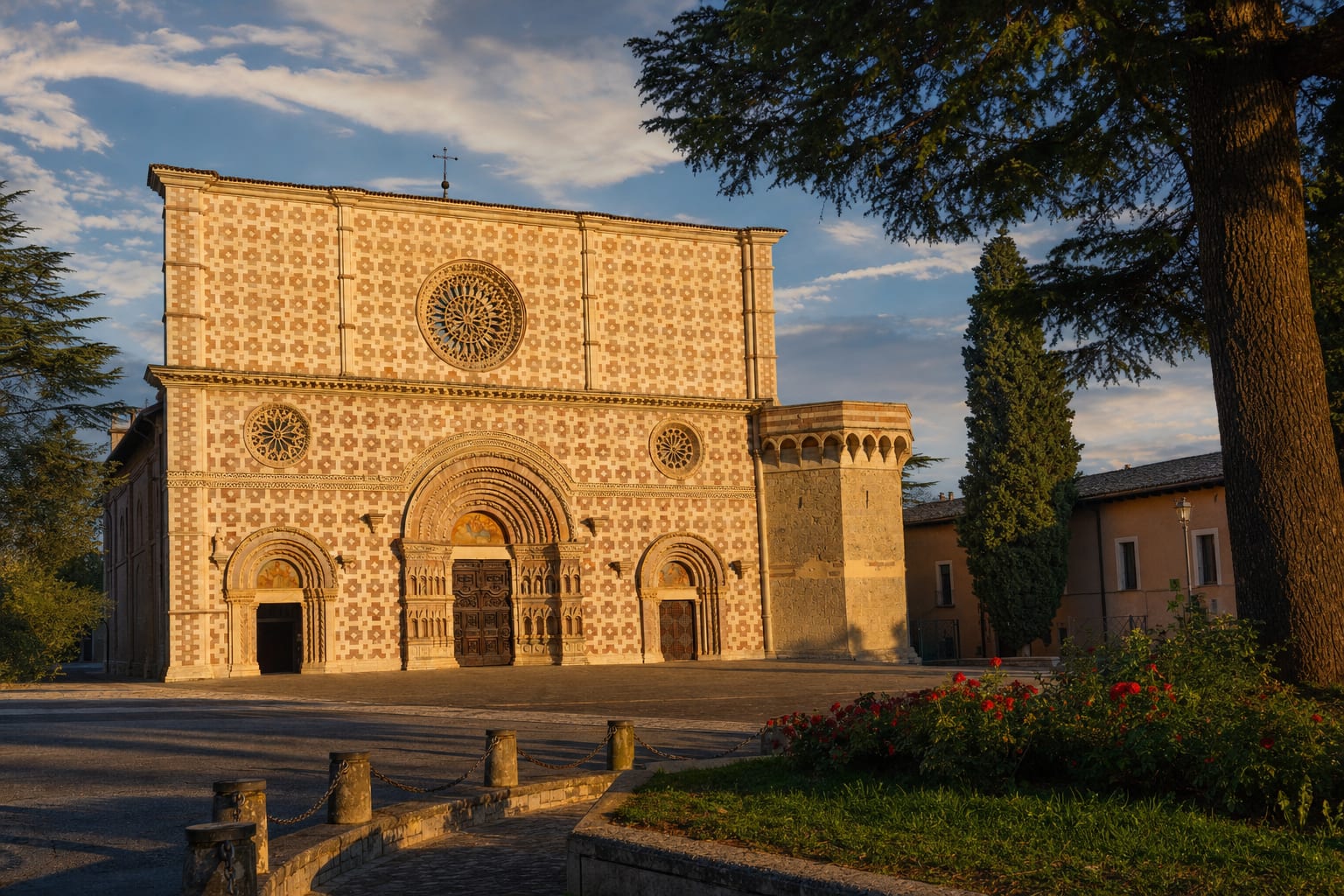 L'AquilaBasilica di Santa Maria di CollemaggioPink and white checkerboard facade, Celestine V's tomb, Holy Door pardon, post-quake rebirthL'Aquila's great basilica wears a checkerboard of pink and white stone and keeps the tomb of Celestine V, the pope who resigned. His Perdonanza pardon still opens the Holy Door every August, the first jubilee's unbroken thread.
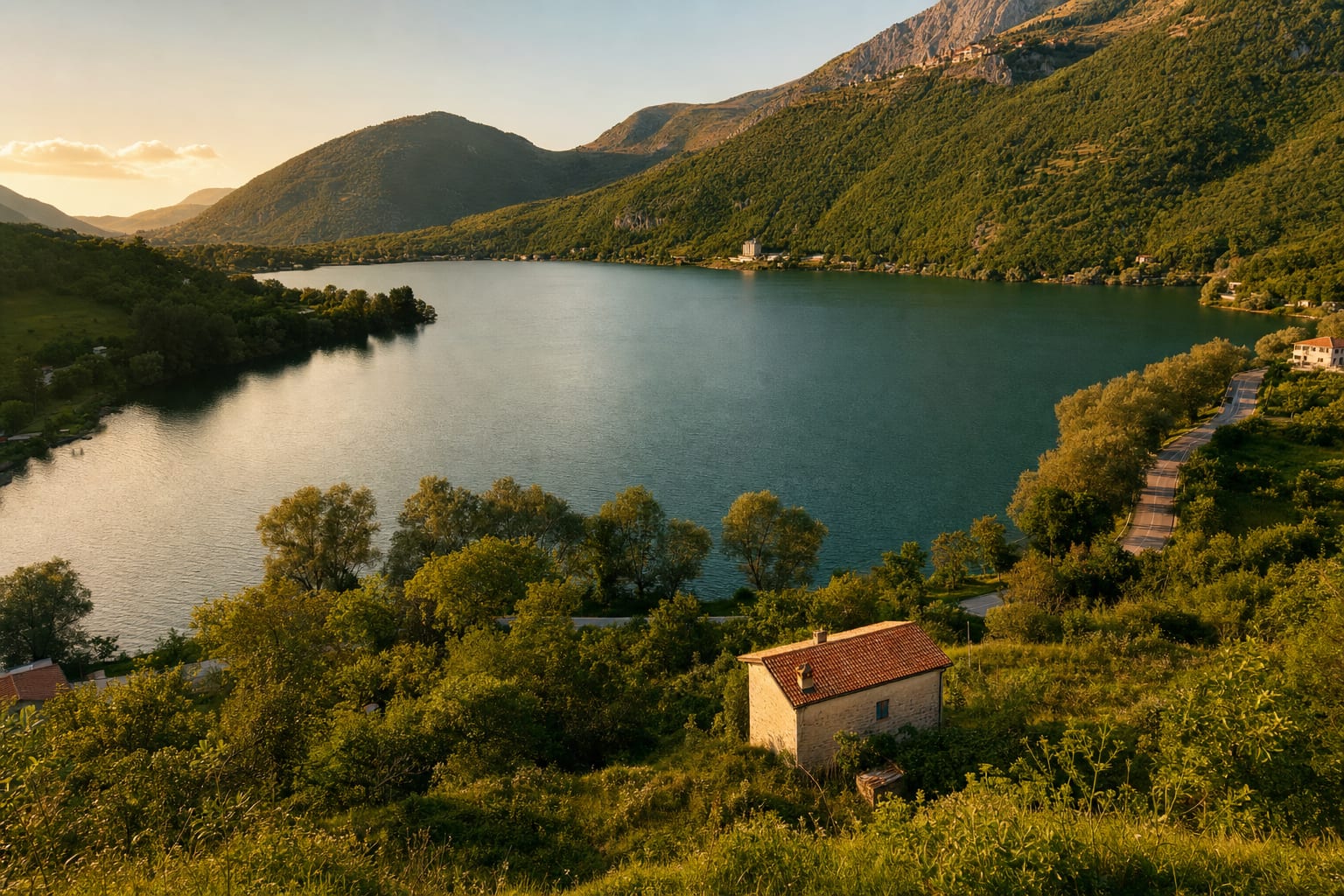 ScannoLago di ScannoHeart-shaped mountain lake, landslide origin, Sagittario gorges approach, photographers' village aboveA prehistoric landslide dammed the Sagittario and left Abruzzo a lake that shows a heart from the right path. The village above kept its costumes and goldsmiths long enough for Escher and Cartier-Bresson to fall for it.
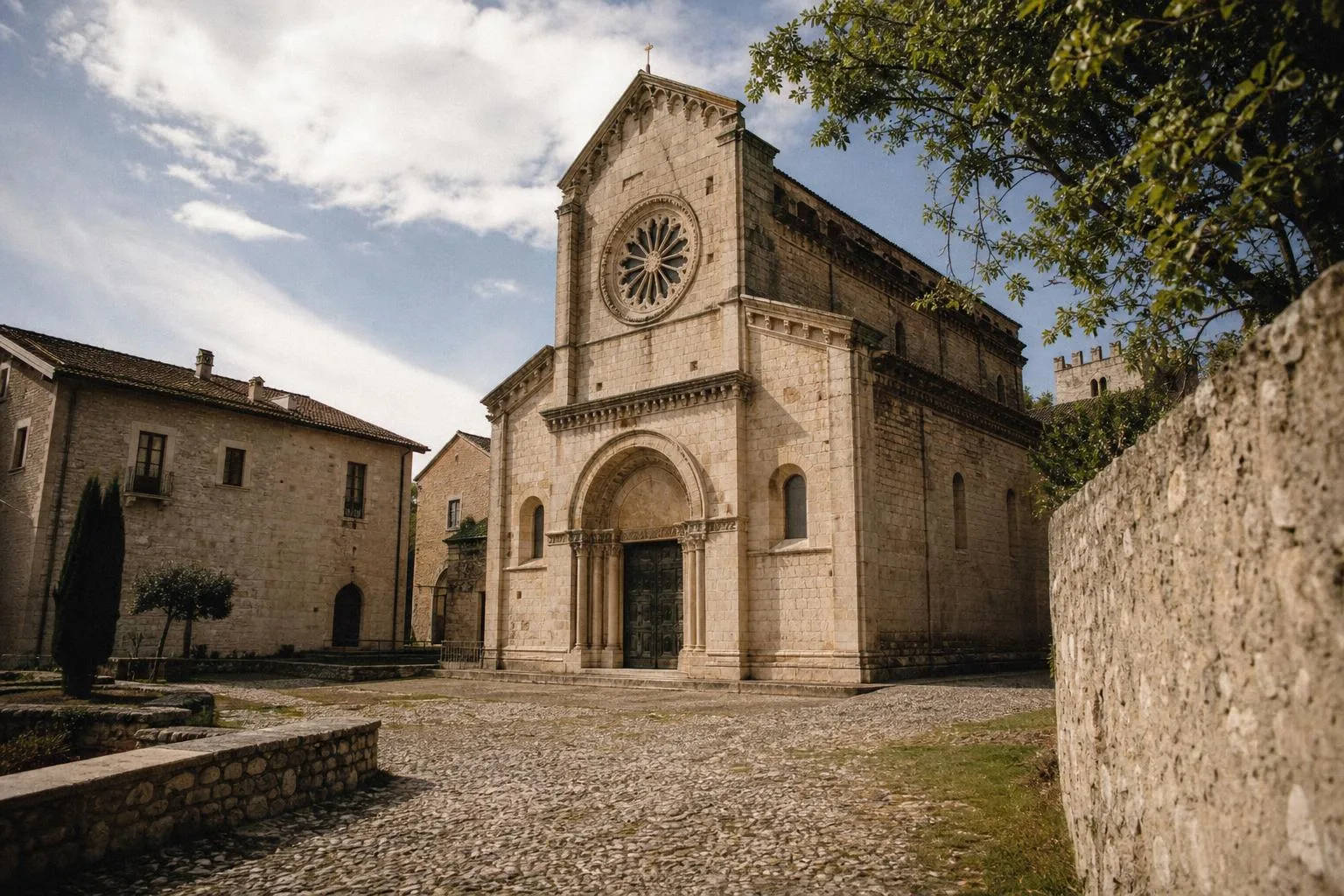 SulmonaGemma nascostaAbbazia di San Clemente a CasauriaA Benedictine abbey founded in 871 with a 12th-century Romanesque church famed for its 1191 bronze doors, now state-managed, restored after the 2009 earthquake and reopened with an on-site museum.
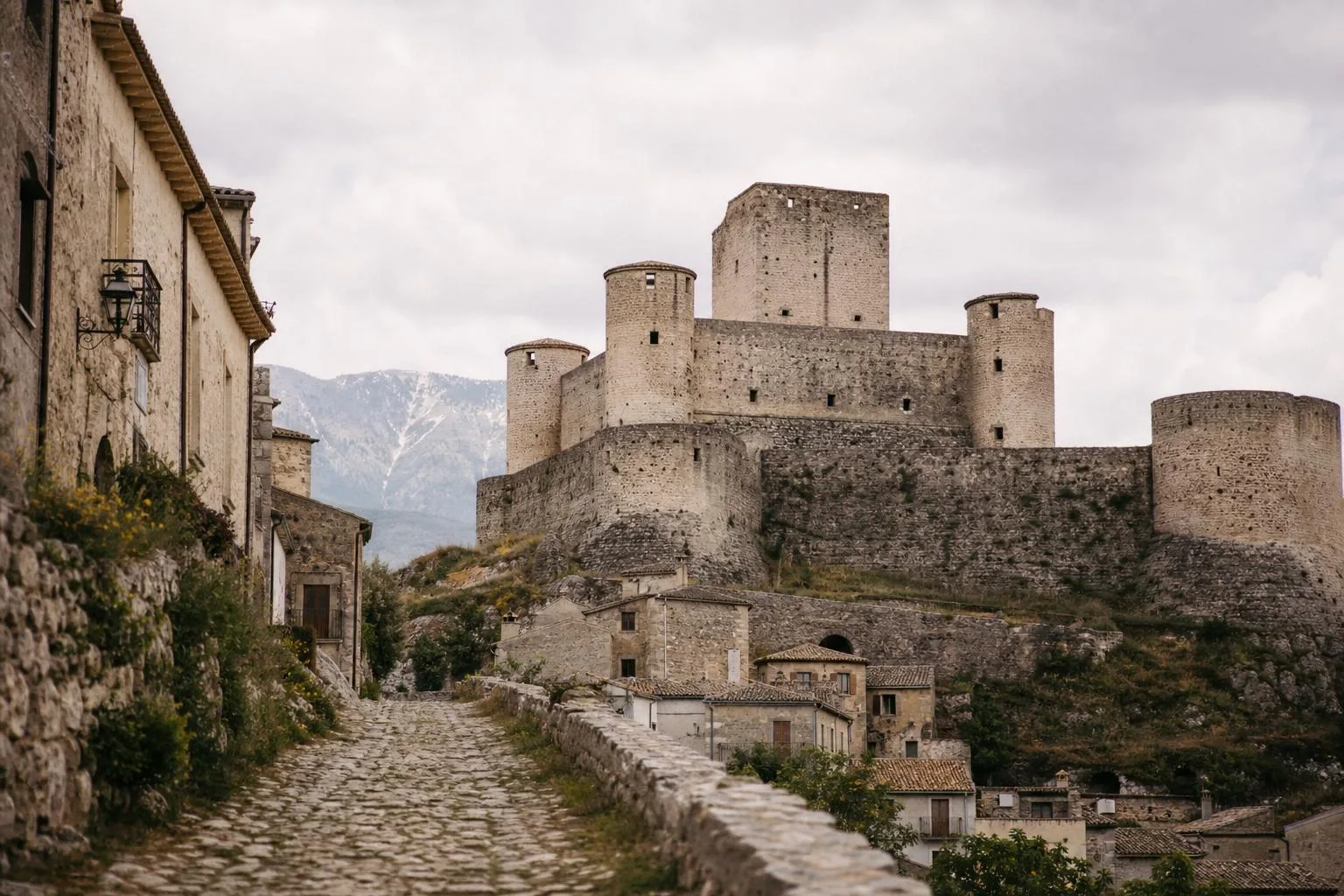 SulmonaGemma nascostaCastello CaldoraA medieval castle of 11th-15th-century origin with a trapezoidal plan, square towers and three circular bastions, dominating the hill-town of Pacentro near Sulmona.
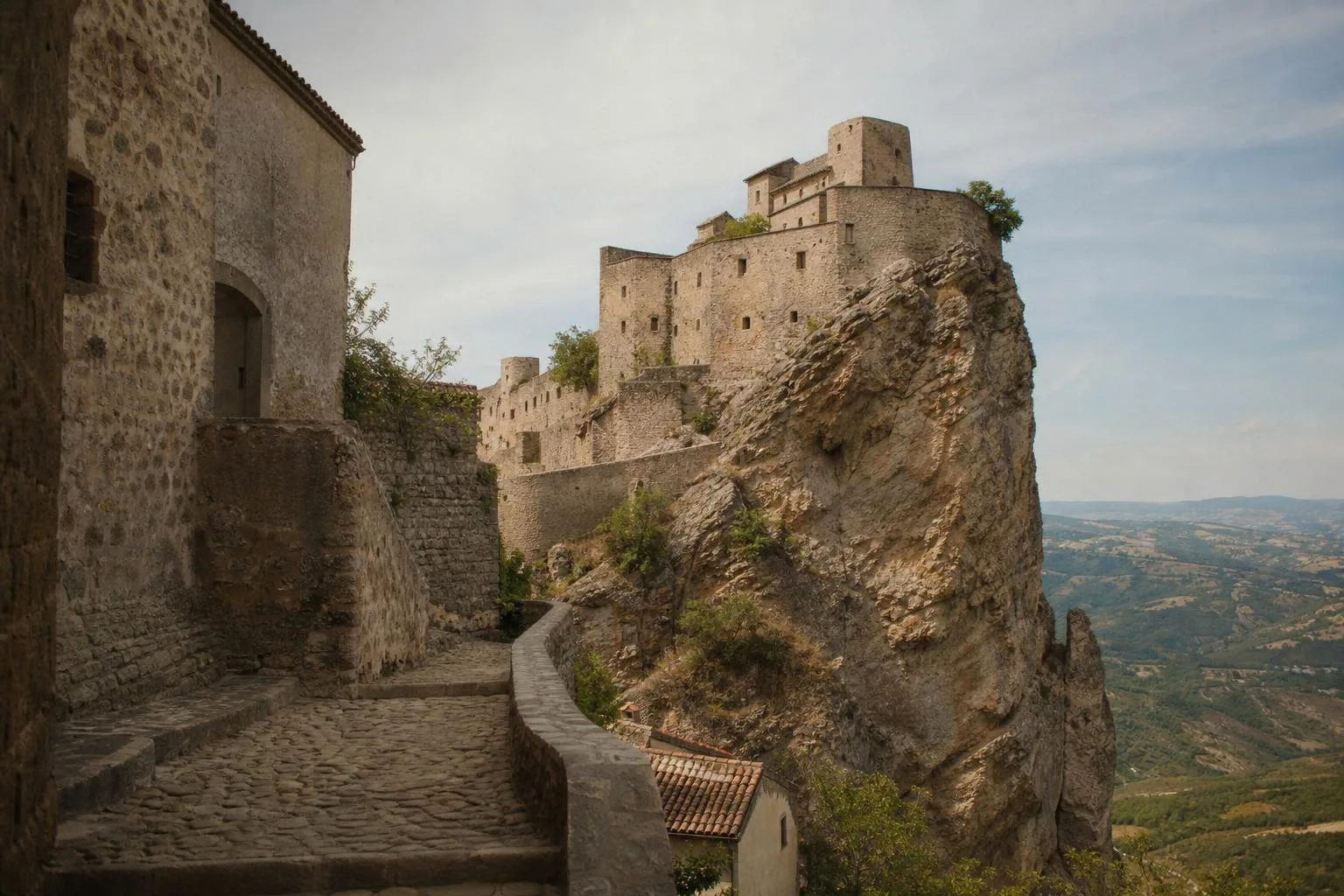 FossacesiaGemma nascostaCastello di RoccascalegnaA medieval castle (12th-16th c.) perched dramatically on an overhanging rocky outcrop above the village, restored in the late 20th century and now open to visitors.
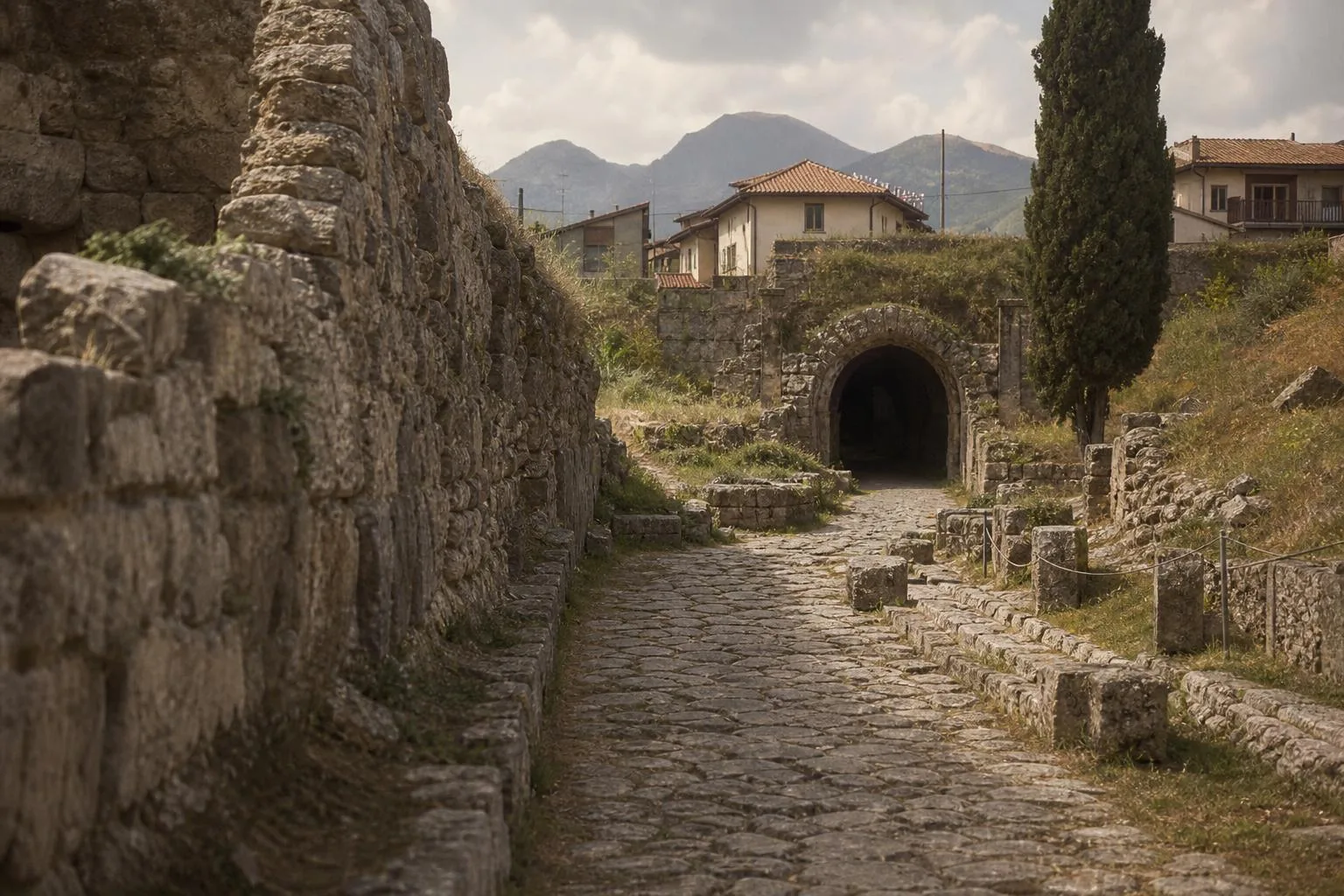 L'AquilaGemma nascostaCunicoli di ClaudioA Roman hydraulic complex built under Emperor Claudius c. 52 AD to drain the Fucine Lake - the longest tunnel in the world until 1871 - a national monument set within the Archaeological Park of Claudius.
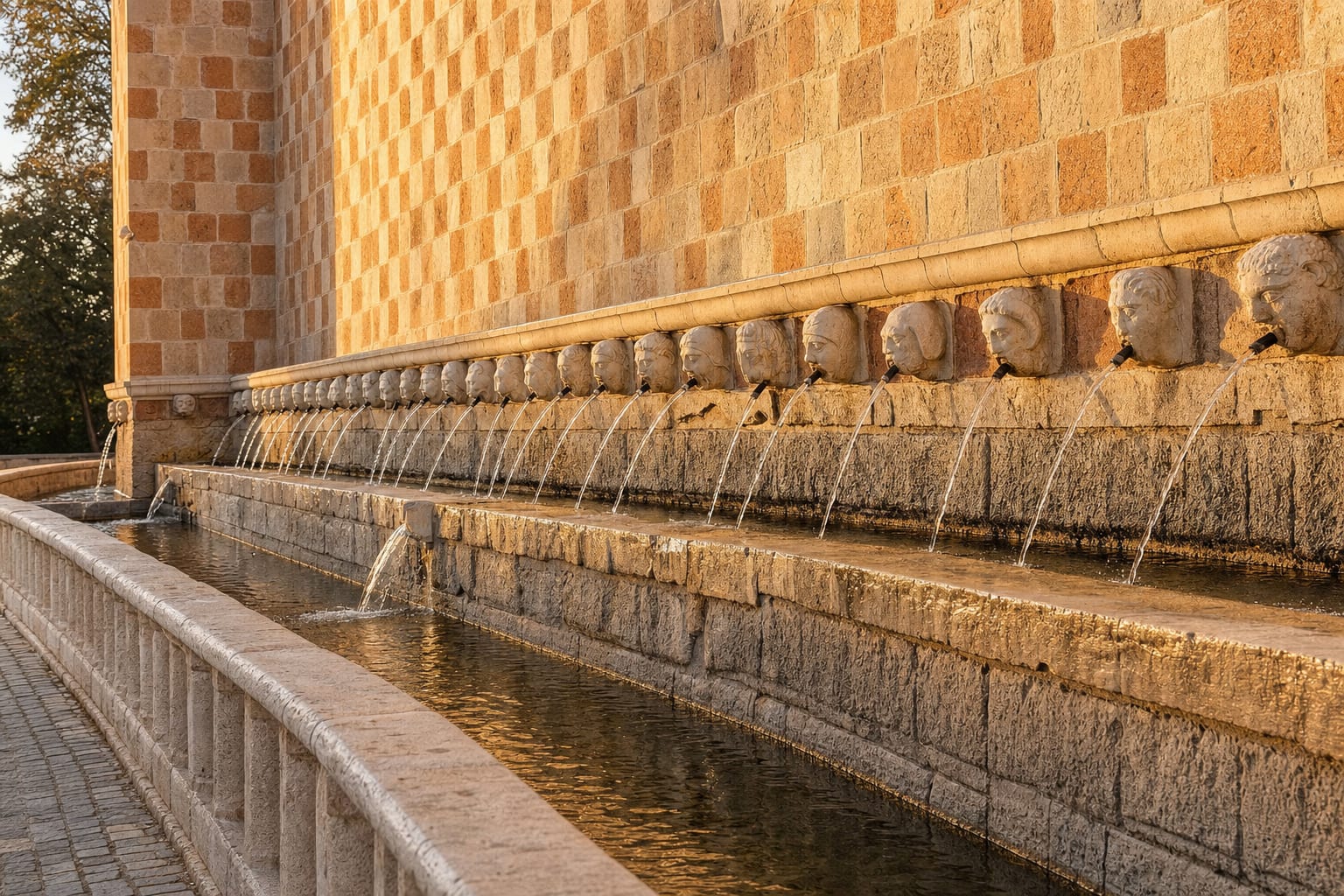 L'AquilaFontana delle 99 CannelleNinety-nine masks and spouts, founding legend of 99 castles, medieval trapezoid court, unknown springNinety-nine carved masks have poured water since 1272, one for each castle said to have founded L'Aquila. The spring that feeds them has never been identified, a secret the trapezoidal courtyard keeps.
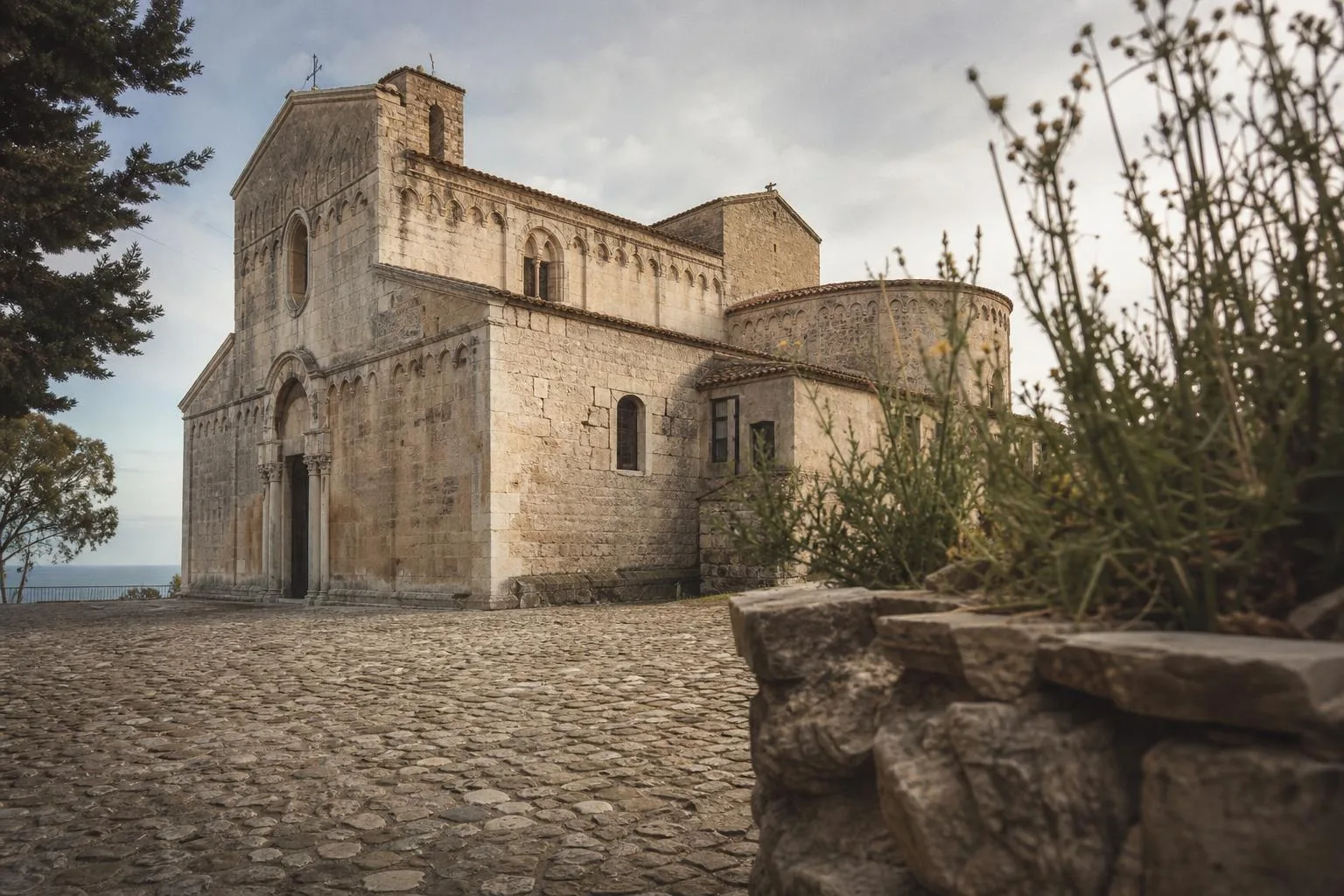 FossacesiaGemma nascostaAbbazia di San Giovanni in VenereA 13th-century Benedictine abbey on a hill overlooking the Adriatic, built over a 6th-century site and an earlier temple of Venus, tended since 1954 by a Passionist community and open to visitors.
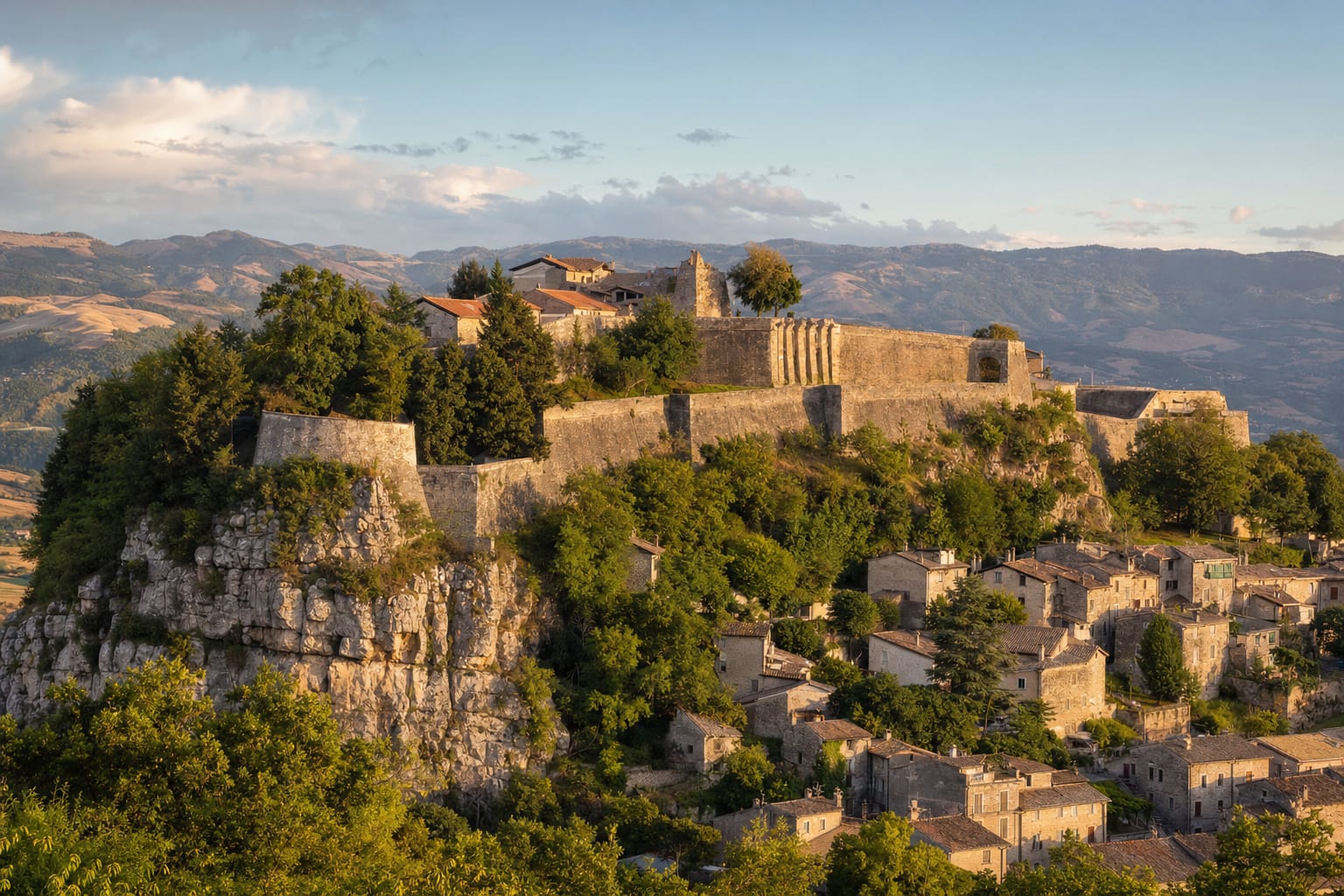 Civitella del TrontoFortezza di Civitella del TrontoHalf-kilometer ridge fortress, last Bourbon stronghold, 1861 final surrender, weapons museumOne of Europe's largest fortresses stretches half a kilometer along its ridge, and it was the last place the Bourbon flag flew in Italy. Civitella surrendered in March 1861, days after Italy itself had been proclaimed below.
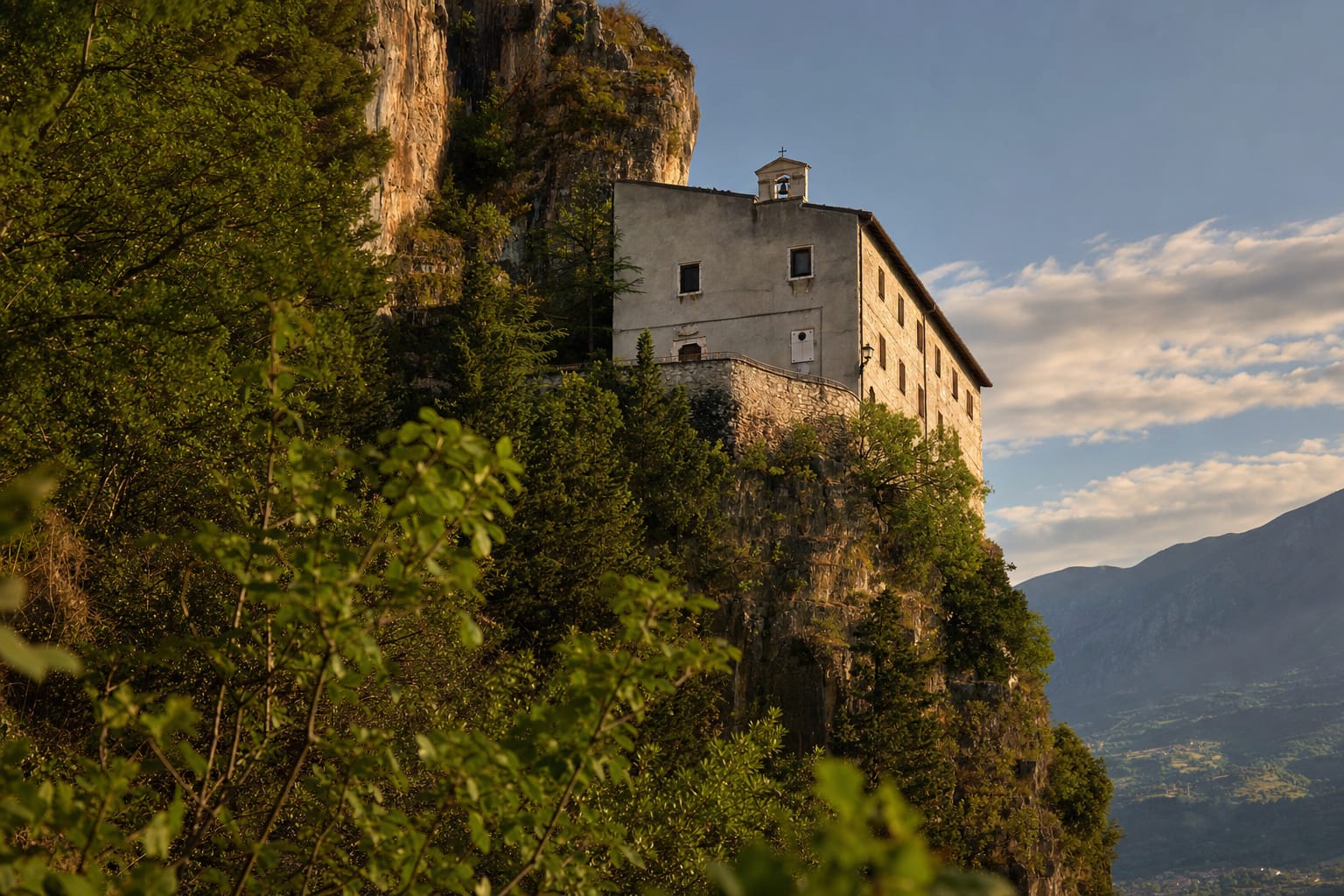 SulmonaEremo di Sant'Onofrio al MorroneCelestine V's cliff hermitage, Morrone mountainside perch, frescoed oratory, Peligna valley panoramaPietro da Morrone prayed on this cliff ledge before the cardinals climbed up to make him Pope Celestine V. The white hermitage still clings to the mountainside, its small oratory frescoed and the whole Peligna valley spread below.
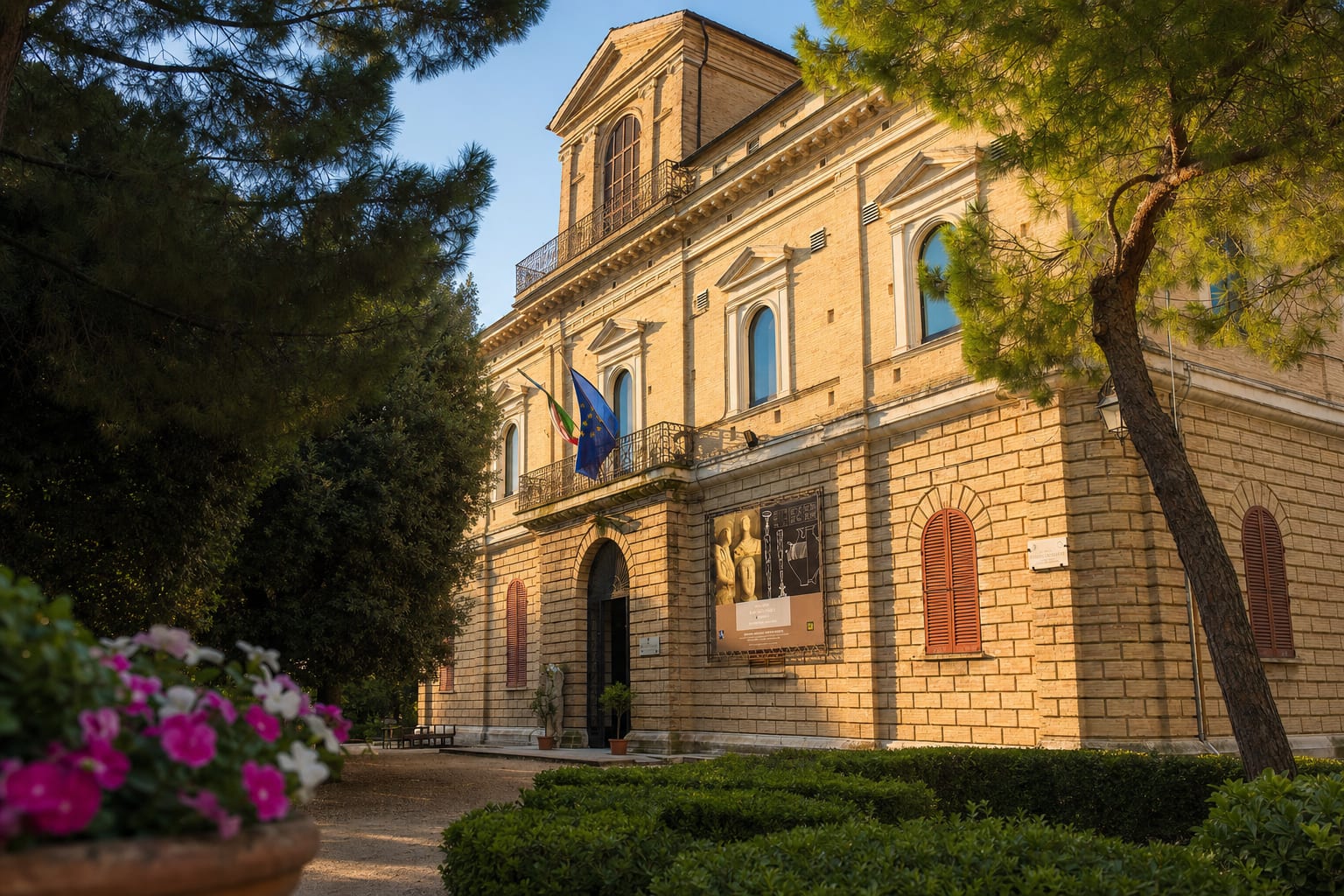 ChietiMuseo Archeologico Nazionale d'AbruzzoSixth-century BC funerary colossus, wide-brimmed disk helmet, Picene king Nevio Pompuledio, Villa Frigerj museumA farmer's plow turned up Italy's strangest ancient statue in 1934: a Picene king in a vast disk hat, arms crossed over armor. The Warrior rules the archaeological museum at Chieti as the emblem of pre-Roman Abruzzo.
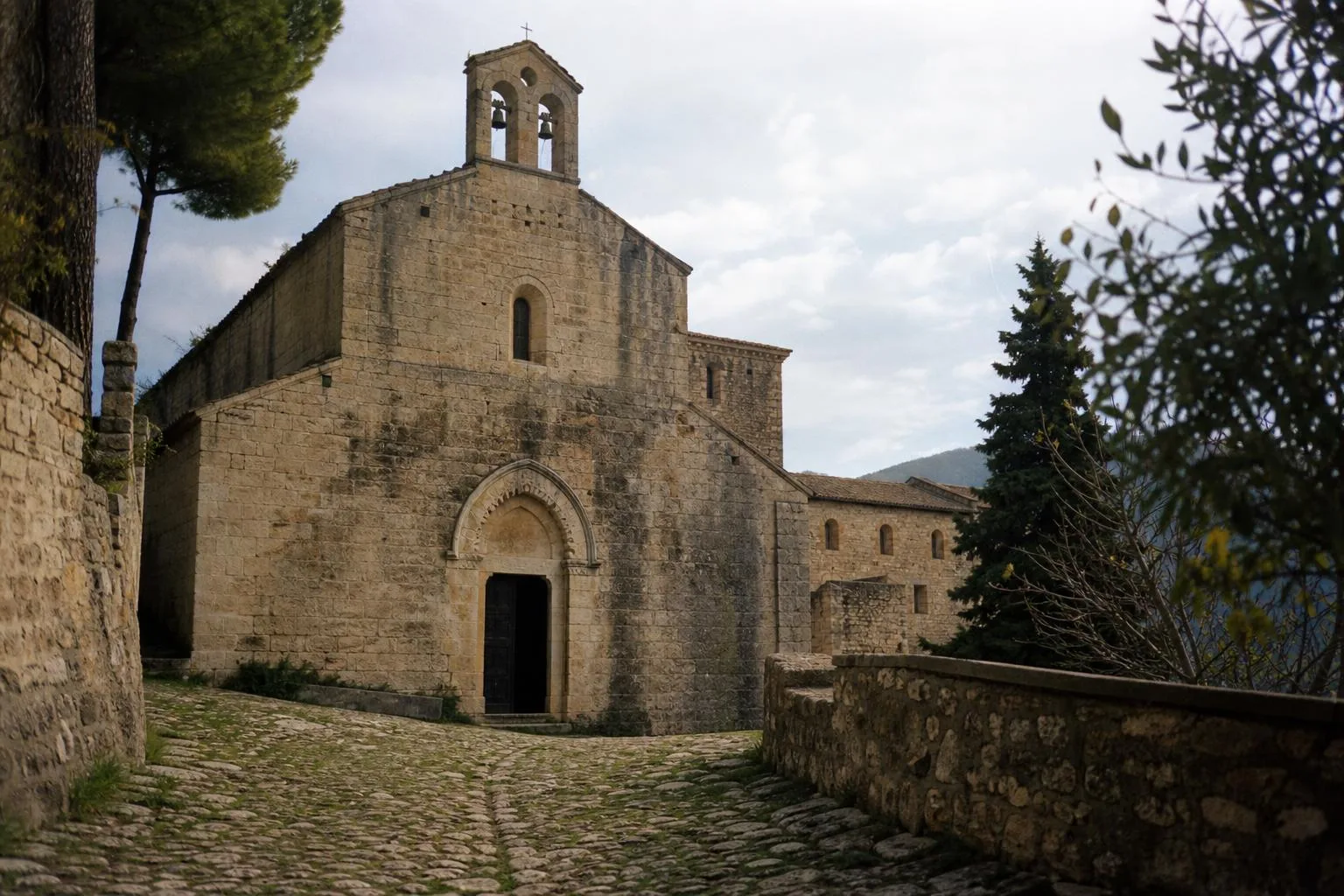 ChietiGemma nascostaAbbazia di San Liberatore a MaiellaA Benedictine abbey on the slopes of the Maiella, with a 9th-century foundation rebuilt in 1080 under Desiderius of Montecassino, preserving Lombard-Romanesque architecture, medieval frescoes and a c.1200 mosaic floor.
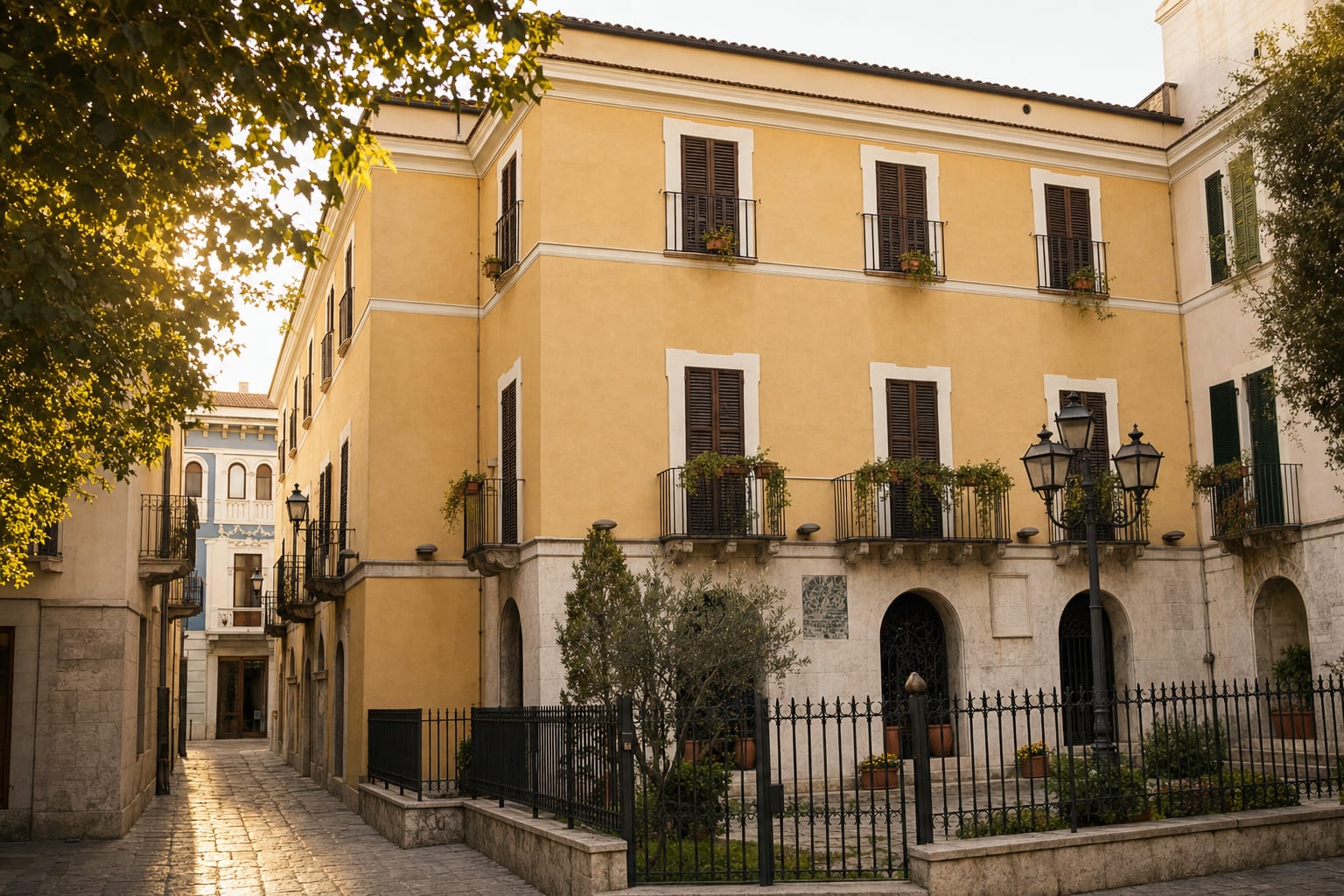 PescaraCasa Natale di Gabriele d'AnnunzioPoet's bourgeois childhood home, nine restored rooms, manuscripts and relics, old Pescara survivorThe poet of excess began in this sober bourgeois house in old Pescara, now nine rooms of manuscripts, portraits and family furniture. It survived the 1943 bombings that erased the quarter around it.
Città
Città per città
Dove si concentrano i monumenti in Abruzzo.