
Salta al contenuto
Italia Magnifica

Grana Padano

Grana Padano

Italy's most produced DOP cheese, made across the Po Valley.

Fotografia · Grana Padano

La storia

Che cosa stai assaggiando

Grana Padano DOP is Italy's most produced protected cheese, with over 4.5 million wheels made annually across a vast production zone that encompasses 32 provinces in five regions: Lombardy, Emilia-Romagna, Veneto, Piedmont, and Trentino. Aged for a minimum of 9 months (though often 16-20 months or longer), this hard, granular cheese develops nutty, savory flavors with a slightly milder profile than Parmigiano Reggiano, making it versatile for both grating and table use.

Grana Padano emerged from the same medieval cheesemaking traditions that gave rise to Parmigiano Reggiano, with production methods developed by Cistercian monks in the Po Valley during the 12th century. The name "Grana" refers to the granular texture of the cheese, while "Padano" derives from the Po Valley (Pianura Padana) where it has been produced for over a millennium. Unlike Parmigiano Reggiano, which is restricted to a smaller, more specific geographic area, Grana Padano's production zone encompasses the entire Po Valley, reflecting the broader distribution of the cheesemaking tradition across northern Italy. Historical records from monasteries document the production of large, long-aging cheese wheels as early as the 1100s, with the techniques refined over centuries to create what would become one of Italy's most accessible and widely consumed cheeses. The cheese gained particular importance during the Renaissance and Baroque periods, when it became a staple in the diets of both rural and urban populations across northern Italy. The 20th century saw the establishment of the Grana Padano Consortium in 1954, which formalized production standards and began the process of protecting the cheese's name and methods. The DOP designation, granted in 1996, codified the production regulations, geographic boundaries, and quality standards that ensure Grana Padano maintains its traditional character while allowing for the scale necessary to meet global demand. Today, Grana Padano represents the democratization of Italy's grana tradition, offering the same fundamental qualities as Parmigiano Reggiano—granular texture, complex aging, and exceptional versatility—while being produced on a scale that makes it accessible to a broader audience.
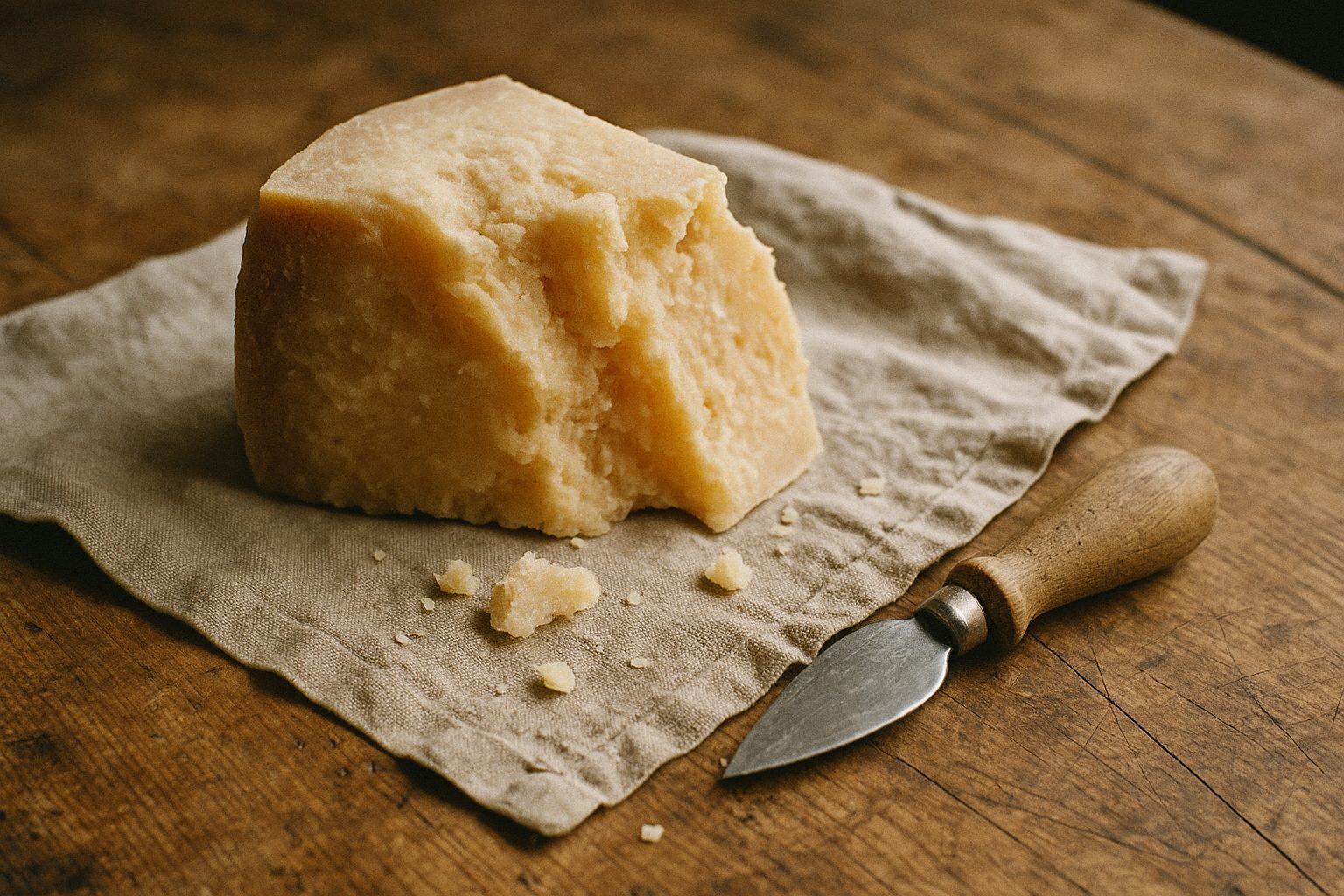
A craggy split chunk of Grana Padano with its almond knife

Conoscerlo

Prima di comprarlo

Si dice
GRAH-nah pah-DAH-noh
Al palato
Rich, nutty, and savory with granular texture. Slightly milder than Parmigiano Reggiano, with balanced flavors that develop complexity with age. 9-month is mild and milky, 16-month is balanced and nutty, 24-month is intensely savory.
Latte
Cow
Consistenza
hard
Stagionatura
9-24+ months
Come si compra
Look for the DOP seal and fire-branded rind markings with the four-leaf clover symbol. Check the age (9, 16, or 24+ months). Buy from reputable cheesemongers.
Riconoscere i falsi
Verify the DOP fire-branded markings on the rind, including the four-leaf clover symbol. Check for proper granular texture. Beware of generic "Grana" without DOP designation.
Conservazione
Unopened: 9-24+ months. After opening: 3-4 weeks if properly stored.

La lavorazione

Come si fa

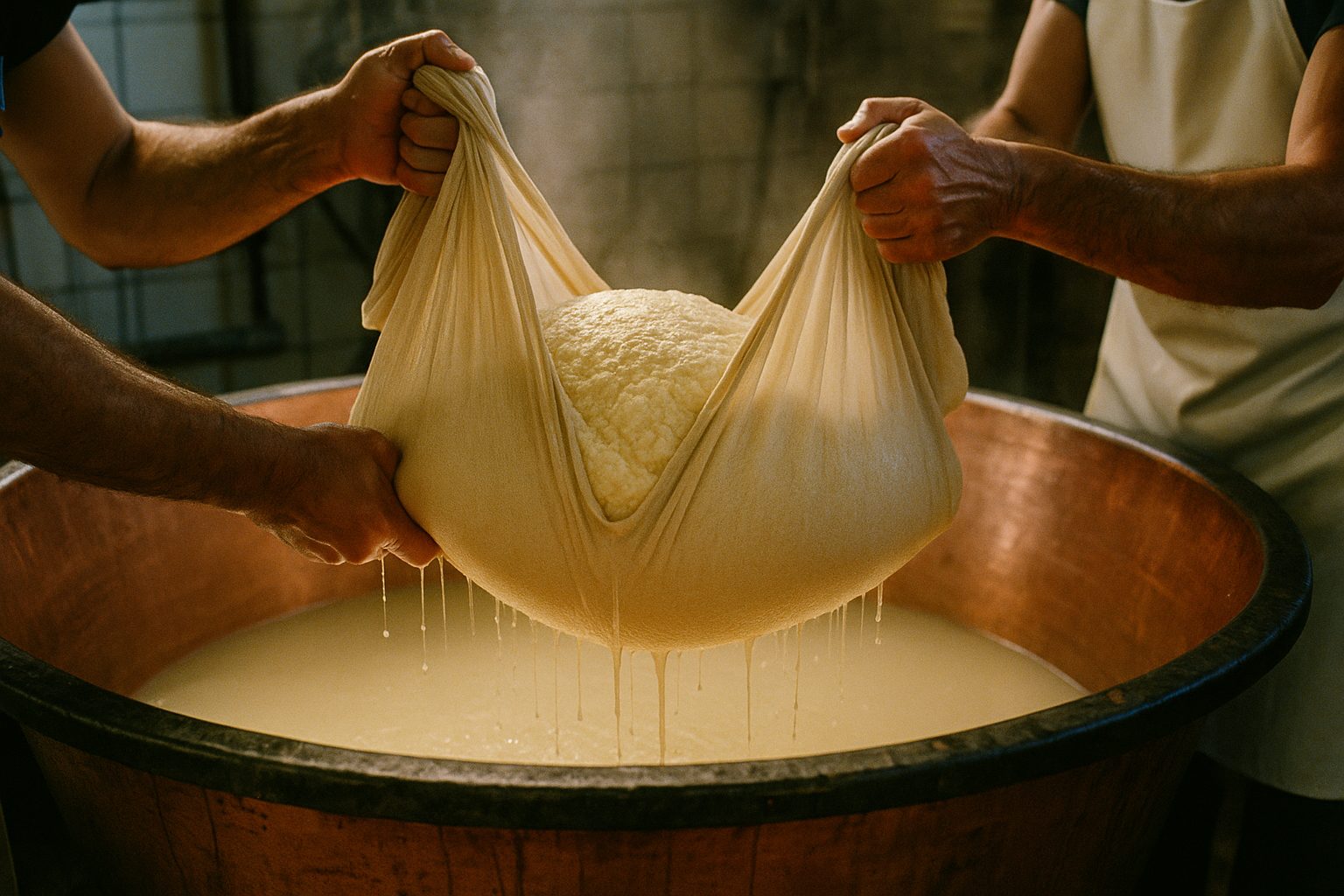
Grana Padano production follows traditional methods similar to Parmigiano Reggiano, though with some key differences that reflect its broader production zone and slightly different regulations. The process begins with fresh, partially skimmed cow's milk from the designated production area, with the evening milk left to rest overnight in shallow pans to allow natural cream separation. The partially skimmed evening milk is then combined with the following morning's whole milk in traditional copper cauldrons, where it is heated and coagulated using natural calf rennet. The curd is cut into tiny granules using traditional tools, then heated to approximately 53-56°C while being continuously stirred—a slightly lower temperature than Parmigiano Reggiano, which contributes to Grana Padano's slightly softer texture. The curd mass is lifted from the whey and divided into two portions, each forming a wheel that weighs approximately 24-40 kilograms. The wheels are placed in circular molds that imprint the distinctive "Grana Padano" markings around the rind, including the four-leaf clover symbol and production codes. After initial pressing, the wheels are brined in saturated salt solution for 14-30 days, where they absorb salt and begin forming the characteristic hard rind. The cheeses are then transferred to aging rooms where they mature for a minimum of 9 months, though most are aged 16-20 months, with premium examples aged 24 months or longer. During aging, the cheeses are regularly turned, brushed, and monitored, with the rind developing a hard, golden-brown exterior while the interior gradually loses moisture and develops complex flavors. The extended aging creates the granular texture and crystalline structures that give Grana its name, while enzymatic breakdown creates the nutty, savory profile. Each wheel is tested by expert graders who evaluate quality through visual inspection, aroma, and the characteristic sound when tapped. Wheels that pass inspection receive the DOP fire-branded markings on the rind, while those that don't meet standards are sold without the protected designation. The finest examples develop exceptional complexity while maintaining the slightly milder, more accessible flavor profile that distinguishes Grana Padano from its more restricted cousin.

Grana Padano is essential to northern Italian cuisine, used throughout the Po Valley in traditional dishes from risotto to polenta. It represents the accessible side of Italy's grana tradition.

Lifting Grana Padano curd from the copper cauldron in muslin

Dettagli verificati

Ogni affermazione qui sotto rimanda alla fonte o all'istituzione che la documenta.

Grana Padano è registrato come denominazione di origine protetta (DOP), prodotto agricolo.1

La geografia di produzione registrata include la Provincia autonoma di Trento e territori nelle regioni Emilia-Romagna, Lombardia, Piemonte e Veneto.1

Il registro e il disciplinare confermano solo identità, status legale e geografia legale. Non provano il sourcing attuale, i menu dei ristoranti, etichette alimentari, prezzi, disponibilità, licenze media o stagionalità correnti.1

Fonti e citazioni (1)
  1. MASAFElenco delle DOP e IGP dei prodotti agricoli e alimentariAlphabetical entry Grana Padano, DOP columnLeggi la fonte